


Çine köftesi
Grilled beef köfte
Finely minced beef kneaded with suet, onion, salt and cumin, rested overnight and grilled over charcoal.
Aegean Region
In Aydın, sour and sweet meet at the same table, and following those two tastes leads you to different corners of the province. On one side sits Çine köftesi, seasoned with cumin and grilled over charcoal. On the other comes paşa böreği, its stock-soaked yufka layered with minced beef and pine nuts, served with butter and strained yogurt. The sour thread runs through Germencik ekşili tavuk, where village chicken meets a tomato sauce soured with unripe grape juice. Every August, on the Dedebağ plateau in Karacasu, wheat and young billy-goat meat cook in copper cauldrons and are pounded with wooden mallets until the keşkek turns stretchy. For something sweet, there is syrupy pumpkin dessert finished with crushed walnuts or hazelnuts. Around these dishes stand the province’s own products: Aydın figs, eaten fresh in season and dried for the rest of the year, olive oil from the Memecik olive, and strawberries from Sultanhisar. This time, discover Aydın along a route of flavors that runs from Çine to Germencik and from Karacasu to Sultanhisar.
Last updated:
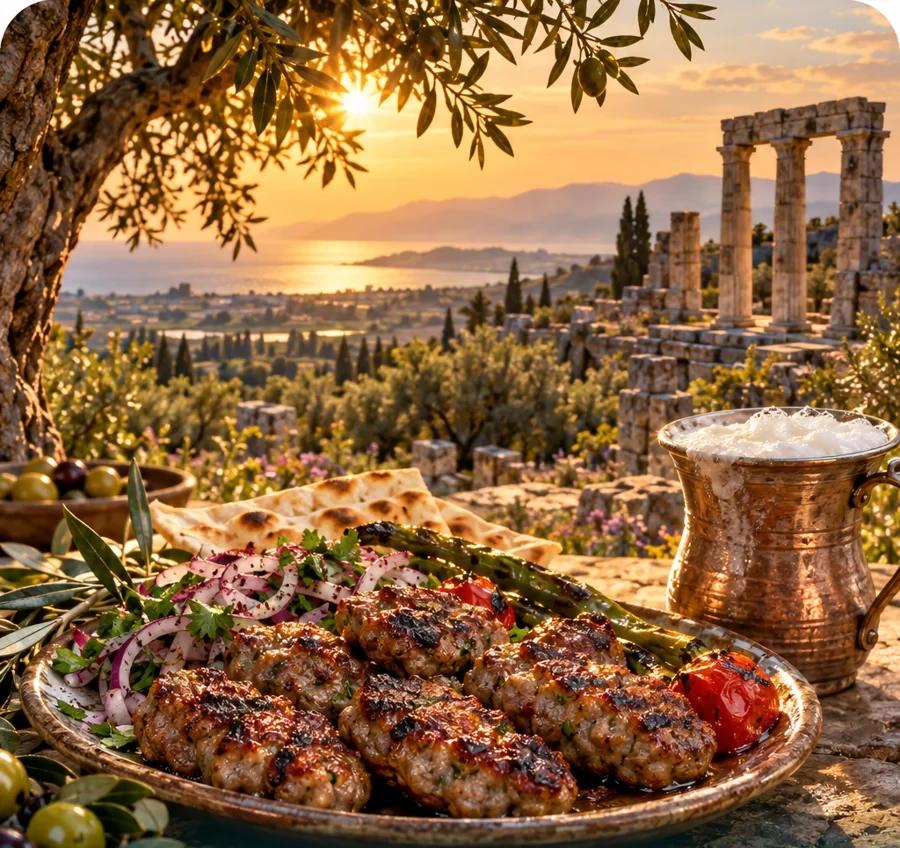
Fig orchards, olive groves and a table of greens in olive oil.
Begin with dried figs, then explore how orchard produce, greens, bread ovens and shared meals shape a varied local table.
Grilled beef köfte
Finely minced beef kneaded with suet, onion, salt and cumin, rested overnight and grilled over charcoal.
Meat börek with yogurt
Yufka moistened with meat stock and layered with minced beef, pine nuts, parsley and spices, served with butter and strained yogurt.
Pounded wheat and goat meat
Wheat and young billy-goat meat cooked in copper cauldrons and pounded with wooden mallets until stretchy, made each August on the Dedebağ plateau.
Meatballs with yogurt
Small balls of minced meat, onion, egg and flour, fried, simmered in butter and red pepper broth and topped with yogurt.
Chicken with verjuice
Village chicken boiled, browned in olive oil, then cooked in a tomato sauce soured with unripe grape juice.
Wood-fired pide
Hand-stretched pide in long, round or closed shapes, filled with minced beef, egg, cheese or tahini and baked in a wood-fired oven.
Pumpkin in syrup
Pumpkin left overnight in sugar, cooked slowly until syrupy and topped with crushed walnuts or hazelnuts.
Kedirgen greens with eggs
Kedirgen greens sautéed with leek in olive oil and finished with eggs.
Recipes from this city are coming soon.
Figs eaten fresh in season and dried for the rest of the year.
Guide not written yetOlive oil pressed from the Memecik olive.
Guide not written yetTable olives of the Memecik variety.
Guide not written yetChestnuts grown on the province’s plateaus and mountain slopes.
Guide not written yetPine nuts from the province’s stone pines.
Guide not written yetStrawberries grown around Sultanhisar.
Guide not written yetPine honey from the province’s pine forests.
Guide not written yetCollectively prepared keşkek accompanies weddings and community gatherings in the official account of Aydın’s food traditions. District names also matter: Yenipazar, Karacasu and Bozdoğan appear in its account of local pide. These names offer useful starting points for exploring food beyond the provincial capital. They keep local variation visible, rather than presenting every town as an interchangeable version of one city.
Figs are eaten fresh in summer and dried for the rest of the year, beside olives and their oil.
Local greens such as kedirgen and nettle are sautéed in olive oil, often with eggs or yogurt.
In Aydın, the ancient past begins inside the city itself. Tralleis, located in the center of Aydın, holds the building popularly known as “Üçgözler”, part of a gymnasium-and-bath complex that is now regarded as the symbol of Aydın. A Roman bath, a theatre, an agora and a stadium are among the city’s other buildings. Tralleis is also remembered as the city where Anthemios, the architect who designed Ayasofya, was born and raised.
Aphrodisias, in the province’s Karacasu district, is a separate ancient city with a valley of its own. It lies in the upper valley of the Morsynus River, with its marble quarries northeast of the city. The wealth of Aphrodisias came from those quarries and from the art produced by its sculptors, who became famous throughout the Roman Empire. Named after Aphrodite, the city had the Tetrapylon as the entrance to the goddess’s outer sanctuary. The conversion of the Temple of Aphrodite into a cathedral around AD 500 shows how the city changed over time.


