


Ahmetbey köftesi
Charcoal-grilled beef köfte
Beef köfte seasoned with salt, cumin and black pepper, grilled over charcoal and served with bread fried in the drippings.
Marmara Region
A glass of hardaliye is a fitting way into Kırklareli’s table. This non-alcoholic drink, made from dark grapes fermented with mustard seed and cherry leaves, is your first step into the city’s kitchen. Next comes the köfte of Ahmetbey: beef seasoned with cumin and black pepper, grilled over charcoal, sold by weight and served with bread fried in its own drippings. Papaz yahnisi, also known as onion stew, brings beef together with shallots and butter. On the meze side, manca offers roasted aubergine and red pepper, finely chopped. For dessert, thank Büyükmandıra in Babaeski for brakana, a hand-shaped sweet soaked in hot syrup. Among the local products, two names stand out: a white cheese made from the milk of animals grazing the Istranca mountains, kept in brine and matured in the cold, and the meat of pure Kıvırcık lambs raised on the pastures and suckled by their mothers. Let the table that opens with hardaliye lead you on to the Istranca mountains, where the cheese’s milk comes from, and to Büyükmandıra for its brakana.
Last updated:
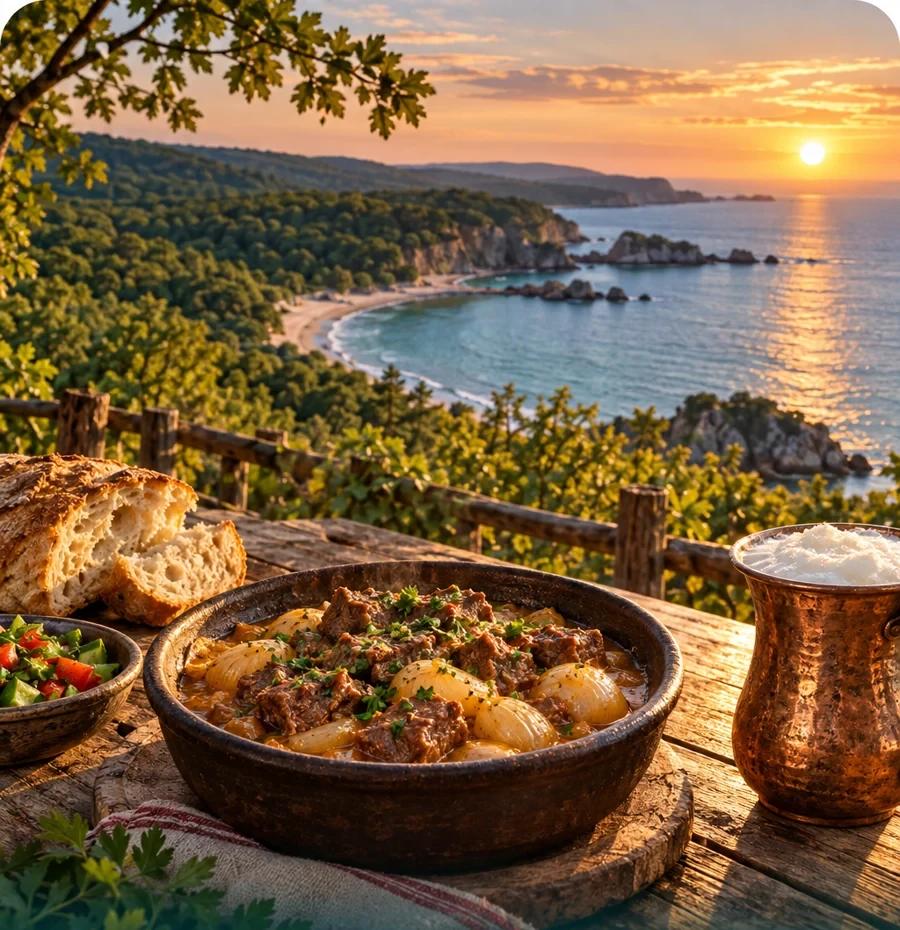
Thracian vineyards, the Istranca foothills and a plate of grilled köfte.
Follow grapes into hardaliye, then explore bread, vegetables and grilled meat.
Charcoal-grilled beef köfte
Beef köfte seasoned with salt, cumin and black pepper, grilled over charcoal and served with bread fried in the drippings.
Grape drink with mustard seed
A non-alcoholic drink of crushed dark grapes fermented with mustard seed and cherry leaves, then drawn off clear.
Syrup-soaked dough sweet
Hand-shaped rounds of dough made with milk, eggs and fat, baked and soaked in hot syrup, from Büyükmandıra in Babaeski.
Beef and shallot stew
Beef stewed with shallots, plenty of broth and butter, also known as onion stew.
Chicken and sauerkraut stew
Sauerkraut and its brine cooked with chicken and bulgur or rice.
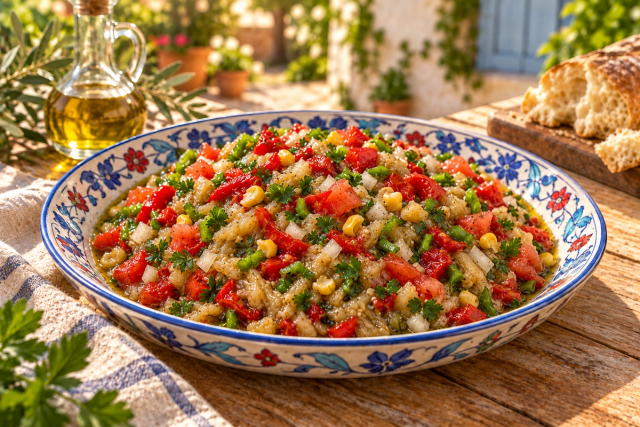
Roasted eggplant and red peppers mixed with fresh vegetables, vinegar and olive oil, with sweet corn on top.
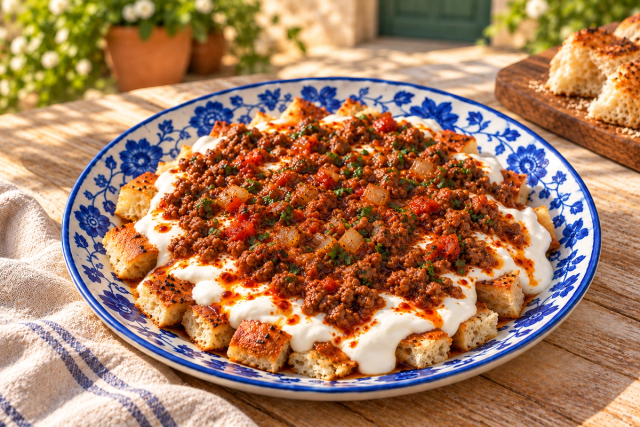
Warm pide topped with garlic-mint yogurt, ground beef in tomato sauce and red-pepper butter.
Meat of pure Kıvırcık lambs raised on Kırklareli pastures and suckled by their mothers.
Guide not written yetA white cheese from the milk of animals grazing the Istranca mountains, kept in brine and matured cold.
Guide not written yetA soft, fresh local cheese that also goes into papara.
Guide not written yetMarkets, dairy foods and migrant cooking traditions help explain the variety of the provincial table. The regional food guide identifies several preparations with Rumelian or immigrant kitchens; these associations are more useful than claiming that every household shares one fixed menu. The provincial culture directorate names hardaliye and cheese among local products, and distinguishes the fish cookery of Kıyıköy and İğneada from grilled köfte in the central district.
Dark grapes are fermented with mustard seed and cherry leaves to make hardaliye, a non-alcoholic drink.
In Ahmetbey, köfte is grilled over charcoal and sold by weight with bread fried in the drippings.
In the center of Kırklareli, the Hızırbey Complex, made up of a mosque, a hamam and an arasta bazaar, opens a window onto the city’s Ottoman past. The buildings were commissioned in the 14th century by Köse Mihalzade Hızırbey, with the hamam and the arasta built side by side. A later chapter appears in the Yayla neighbourhood, home to mansions from the 19th and 20th centuries. One of them, the Ali Rıza Efendi Culture House, was home over time to Greek, Bulgarian and Turkish families and now displays their shared heritage. The Kırklareli Museum carries the story much further back, with finds from excavations in the region, especially Kanlıgeçit and Aşağı Pınar Mound.
The districts each tell their own part of the story. In Lüleburgaz, the Sokullu Mehmet Paşa Complex was built by the great architect Sinan and his team for worship, trade and education. The bridge of the same name was built to carry travellers across the waters along the caravan and postal roads. Excavations in Vize have uncovered a theatre from the Roman period, while the Aya Nikola Monastery in Kıyıköy is a Byzantine rock-cut monastery.


