


Edirne tava ciğeri
Thin-fried liver
Finely sliced liver fried in sunflower oil and served with fried dried red peppers.
Marmara Region
In Edirne, liver reaches the table in two quite different ways. The first is Edirne tava ciğeri, thin slices fried in sunflower oil and served with fried dried red peppers. The second is Edirne ciğer sarma, in which lamb’s liver is wrapped in lamb caul with İpsala rice, grown on the İpsala plain, along with currants, pine nuts, dill and mint, and then baked. The same curiosity leads on to Uzunköprü köftesi, made only with beef plus stale bread, onion, cumin and black pepper, and cooked over charcoal. When dessert arrives, almonds come forward. Badem ezmesi comes as small rolls in which ground almonds meet sugar syrup. Crumbly Kavala kurabiyesi, made with toasted flour and almonds, is also known as Edirne kurabiyesi. After tasting liver in both its forms and a plate of Uzunköprü köftesi, carry on exploring Edirne with a visit to the Selimiye Arasta and the Bedesten, where this almond biscuit is sold.
Last updated:
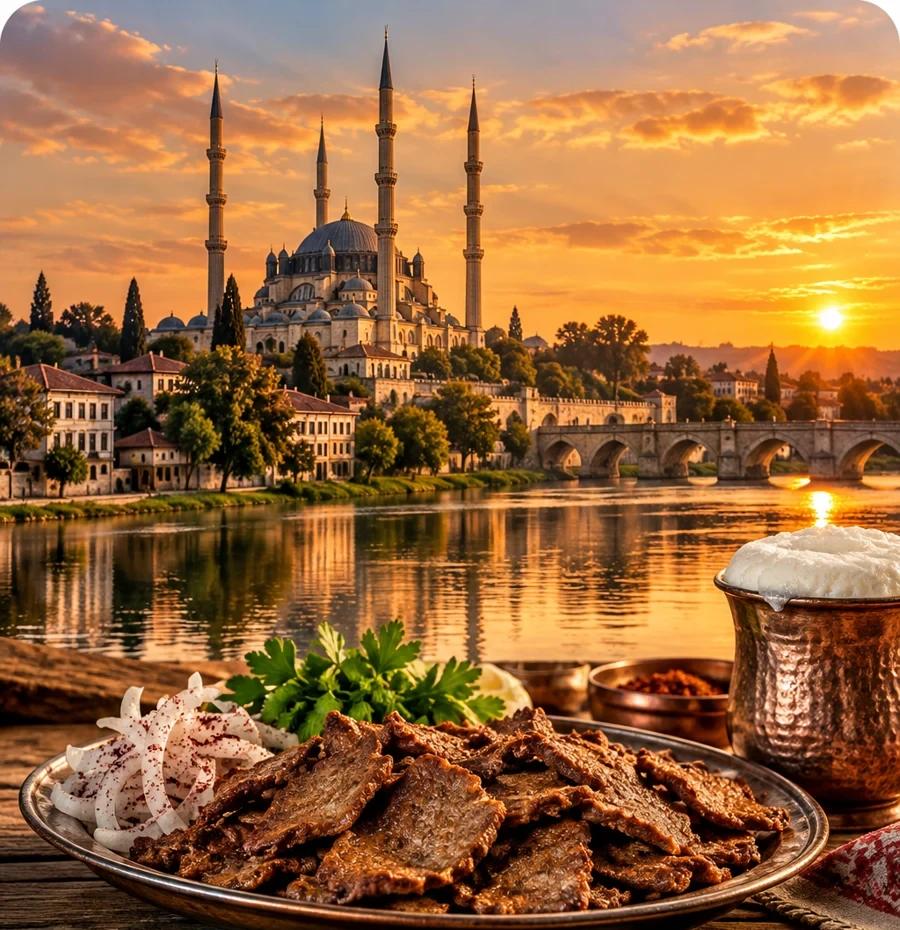
Thracian plains, rice fields and a table set with fried liver.
Explore a crisp savory preparation and a finely ground almond sweet with very different textures.
Thin-fried liver
Finely sliced liver fried in sunflower oil and served with fried dried red peppers.
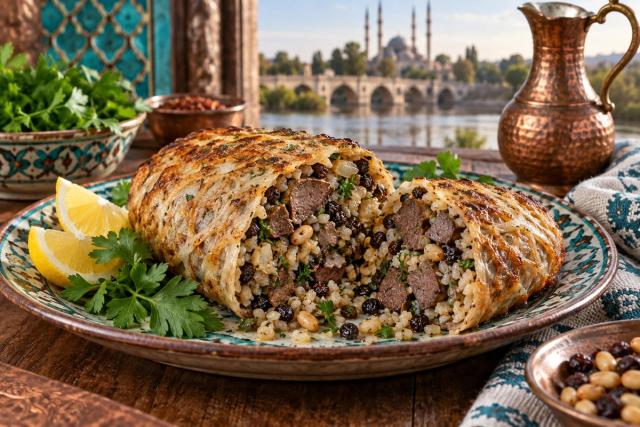
Lamb liver and rice with currants, pine nuts and herbs, wrapped in caul fat and baked. Ciğer sarma is associated with Edirne and the wider Thracian/Rumelian repertoire. This herb-and-spice adaptation keeps its lamb liver, rice and caul structure. Buy cleaned food-grade caul from a butcher.
Grilled beef meatballs
Beef-only meatballs with stale bread, onion, cumin and black pepper, rested and grilled over charcoal.
Almond paste
Blanched, dried and ground almonds mixed into a boiled sugar syrup, then kneaded and cut into small rolls.
Spiced sugar halva
Sugar syrup boiled and beaten with egg white, then flavored with a long list of spices and herbs.
Almond shortbread cookies
Crumbly flour cookies made with toasted flour and almonds, also known as Edirne kurabiyesi.
Grape drink with mustard seed
A grape drink mixed with black mustard seeds.
Full-fat white cheese from the province’s milk.
Guide not written yetRice grown on the İpsala plain.
Guide not written yetPeanuts grown around Meriç.
Guide not written yetOkra grown around Keşan.
Guide not written yetFlower honey from Korudağ near Keşan.
Guide not written yetEdirne’s museum collections include embroidered clothing, kilims and examples of Edirnekari work. These objects bring domestic skill into the story alongside monumental architecture. The covered markets and the craft of confectionery offer another connection between making and exchange. A city’s cultural identity can be explored through the scale of a decorated object or an almond sweet as well as through a skyline.
Liver is fried thin with dried red peppers, or wrapped in caul with rice and herbs.
Almonds go into badem ezmesi and the crumbly Kavala cookies sold around the bazaars.
Edirne is Anatolia’s gateway to the Balkans and Europe. The city once served as capital of the Ottoman Empire, and its inns, mosques, bridges and bazaars still carry traces of that past. Surrounded by the Arda, Tunca, Meriç and Ergene rivers, Edirne counts its bridges among the key witnesses to its history. Walking among spans such as Gazimihal and Uzunköprü is a pleasant way to get to know the city through its rivers. The Eski Mosque, a classical example of the multi-domed mosque, is among its early Ottoman landmarks.
The Selimiye Mosque and its complex crown this heritage. The complex was commissioned by Selim II and built by the architect Sinan. With its single great dome and four slender minarets, the mosque dominates the skyline. Sinan considered the complex, with its madrasas, covered market and library, to be his best work. Inside, the Iznik tiles come from the peak period of their production.


