


Mersin tantunisi
Spiced beef in flatbread
Boiled beef fried on a wide tray with cottonseed oil, chilli, sumac and salt, served in lavaş or bread with salad.
Mediterranean Region
Tantuni is the natural place to begin in Mersin: beef fried on a wide tray with cottonseed oil, chilli and sumac, then tucked into lavaş or bread with salad. In Tarsus, the table carries signatures of its own. Chief among them is Tarsus kebabı, made from lamb and tail fat minced by hand with a zırh, grilled on flat skewers over oak charcoal and served on flatbread. From the wood-fired stone oven comes fındık lahmacunu, made from very small rounds of dough and arriving by the plateful with parsley and lemon. Humus, too, plays a different role here: not a meze but a main dish, served hot. When it is time for something sweet, kerebiç brings semolina dough filled with walnuts or pistachios under a white foam whipped from çöven root and sugar. From here, your curiosity can travel out into the districts, where Silifke’s yogurt, made from goat milk or a mix of goat and cow milk, the olive oil of Mut, and Gülnar’s kuş üzümü, a grape grown around Üçoluk and also known as kişniş üzümü, can become the next stops on your route.
Last updated:
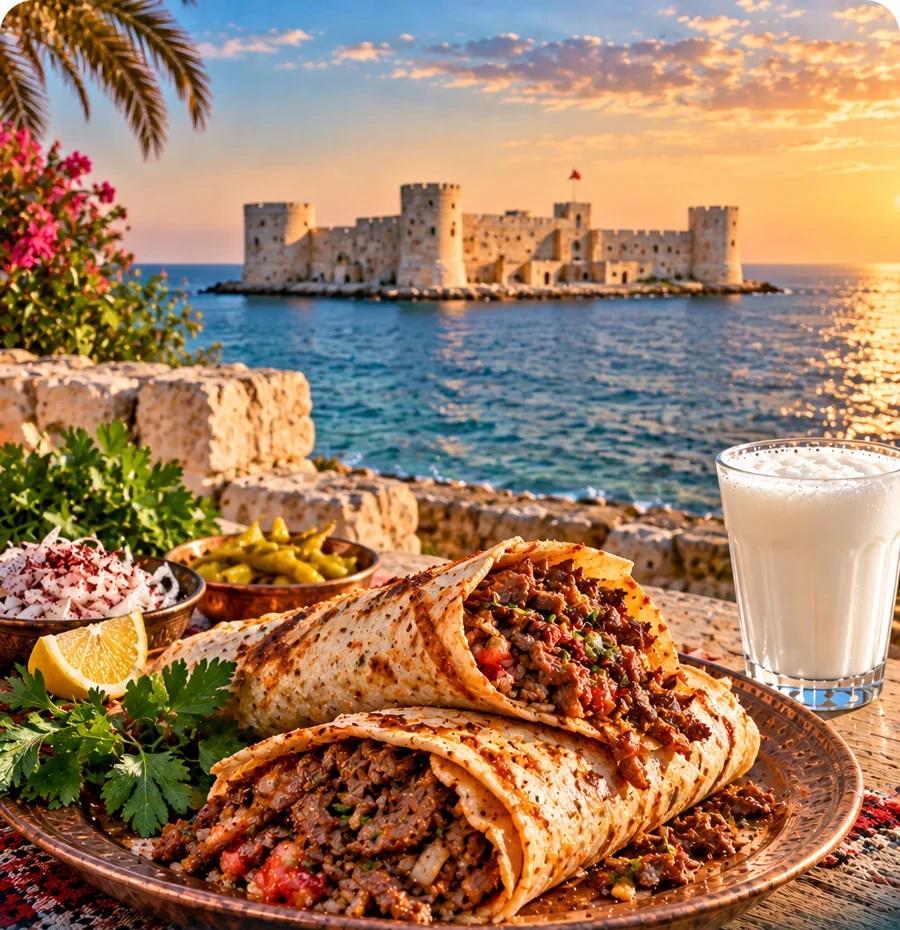
Citrus groves and a tantuni wrap by the sea.
Start with street food, then follow fruit, nuts and dough across the province.
Spiced beef in flatbread
Boiled beef fried on a wide tray with cottonseed oil, chilli, sumac and salt, served in lavaş or bread with salad.
Lamb skewers with onion
Hand-minced lamb and tail fat mixed with finely chopped onion, parsley and red pepper, grilled on flat skewers over oak charcoal and served on flatbread.
Bite-sized lahmacun
Very small rounds of dough topped with minced lamb, onion, tomato and red pepper, baked in a wood-fired stone oven and served by the plateful with parsley and lemon.
Hummus served hot
Hummus that in Tarsus is served hot and eaten as a main dish rather than a meze.
Filled semolina pastry with foam
Semolina dough filled with walnuts or pistachios and baked, then covered just before serving with a white foam whipped from çöven root and sugar.
Carrot and nut confection
A confection of boiled, ground carrots cooked with sugar and finished with walnuts, hazelnuts or pistachios.
Recipes from this city are coming soon.
Yogurt from the Silifke area, made from goat milk or a mix of goat and cow milk.
Guide not written yetOlive oil from the Mut district.
Guide not written yetA grape grown around Üçoluk in Gülnar, also called kişniş üzümü.
Guide not written yetThe province’s food geography moves between port streets, agricultural districts and upland kitchens. Tarsus, Anamur, Silifke and Mut each contribute named produce and dishes, so a city-center menu is only one part of the story. Confectionery offers a particularly clear example of skilled transformation. The Ministry of Culture’s cezerye record describes carrots cooked into a sweet containing nuts; walnut, hazelnut and pistachio versions make variety part of its identity.
Boiled beef is fried on a wide tray with cottonseed oil, chilli and sumac, then wrapped in lavaş with salad.
Tarsus has its own kebab, bite-sized fındık lahmacun and humus that is served hot as a main dish.
Yumuktepe, in Mersin’s city center, is a good place to begin looking into the past. The lowest layer identified at this mound belongs to the Neolithic Age. Finds from excavations at Yumuktepe and Gözlükule also show that Mersin has been an important settlement center since prehistoric times. In Tarsus, one of the province’s districts, the city walls built in the Byzantine period had three gates: the Mountain Gate, the Adana Gate and the Sea Gate. When İbrahim Pasha of Egypt had the walls demolished, only the Sea Gate remained. According to legend, Cleopatra entered the city through this gate when she came to meet Antony. For this reason, it is also known as the Cleopatra Gate.
On the coast at Erdemli, Kızkalesi rises from an islet in the middle of the sea and stands out as the symbolic structure of Mersin’s coastline. In Silifke, the Göksu River meets the Mediterranean, and the Göksu Delta lies where the river flows into the sea. Further inland, Alahan Monastery in Mut was established on a slope of the Taurus Mountains. After Christianity was officially accepted, it became a pilgrimage center heavily visited by Christians. Spread across separate districts, these places invite you to follow the province’s past from the shoreline to the mountain slopes.


