


Harput köftesi
Bulgur and meat köfte
Minced meat kneaded with bulgur, onion, tomato paste and spices.
Eastern Anatolia
At Elazığ’s table, dough, bulgur and butter complete one another, and the three spread through the city’s dishes layer by layer. Sırın is made of thin griddle-cooked flatbreads, rolled, sliced and set upright in a tray, then topped with garlic yogurt and browned butter. Gömme is known for the minced meat, onion and walnut spread between its layers of dough, and it arrives with hot butter. Kofik dolması brings together eggplants and peppers, hollowed and dried in summer, with a filling of bulgur and minced meat. For dessert, Elazığ taş ekmeği tatlısı comes from griddle breads layered with syrup, butter and crushed walnuts. Walnuts don’t stay with dessert alone. In Elazığ orciği, nuts such as walnuts and almonds are threaded onto string, dipped in dark grape juice and dried. In Ağın, chickpeas roasted in sand by hand become Ağın leblebisi. In Elazığ, trace a route of flavors that begins with upright slices of sırın and carries on to walnut orcik and Ağın leblebisi.
Last updated:
Vineyards, Lake Hazar and a tray of butter-rich dishes.
Explore small bulgur-and-meat köfte alongside fruit preserving and dairy-rich baking.
Bulgur and meat köfte
Minced meat kneaded with bulgur, onion, tomato paste and spices.
Layered meat and walnut pie
Layers of dough and minced meat, onion and walnut baked in a tray, then broken up and finished with hot butter.
Rolled flatbread with garlic yogurt
Thin flatbreads cooked on a griddle, rolled and sliced, set upright and covered with garlic yogurt and browned butter.
Stuffed dried vegetables
Eggplants and peppers hollowed and sun-dried in summer, then boiled and filled with bulgur, minced meat, onion, butter and tomato paste.
Bread with kurut and meat
Pieces of tandır bread under warmed kurut ayranı and meat fried with onion and pepper paste.
Layered griddle-bread dessert
Yeasted batter breads cooked on a griddle, dipped in syrup, brushed with butter and layered with crushed walnuts.
Walnut pastry in syrup
Thin pastry sheets scattered with walnuts, rolled and gathered, baked with butter and soaked in syrup.
Walnut and grape sweet
Strings of nuts such as walnuts and almonds dipped in dark grape juice and dried.
Wild pistachio coffee
A coffee made from çedene, the fruit of the wild pistachio known elsewhere as menengiç.
Recipes from this city are coming soon.
A dark, fleshy grape with large round berries, also made into wine.
Guide not written yetA dark, aromatic grape, also made into wine.
Guide not written yetChickpeas from Ağın, boiled and roasted in sand by hand.
Guide not written yetHoney from Elazığ’s geven (milkvetch) pastures.
Guide not written yetKürsübaşı gatherings center on conversation and music around a source of warmth. The Ministry’s account places them within the wider sohbet tradition and describes the transmission of musical knowledge between experienced performers and learners. Dried fruit, walnuts and fruit-leather preparations can accompany these gatherings. This connects the preserved pantry with social life without turning one documented occasion into a universal household rule.
Öküzgözü and boğazkere grapes are eaten fresh and turned into pestil and orcik.
Grains, meat and plenty of butter shape Harput köftesi, gömme and sırın.
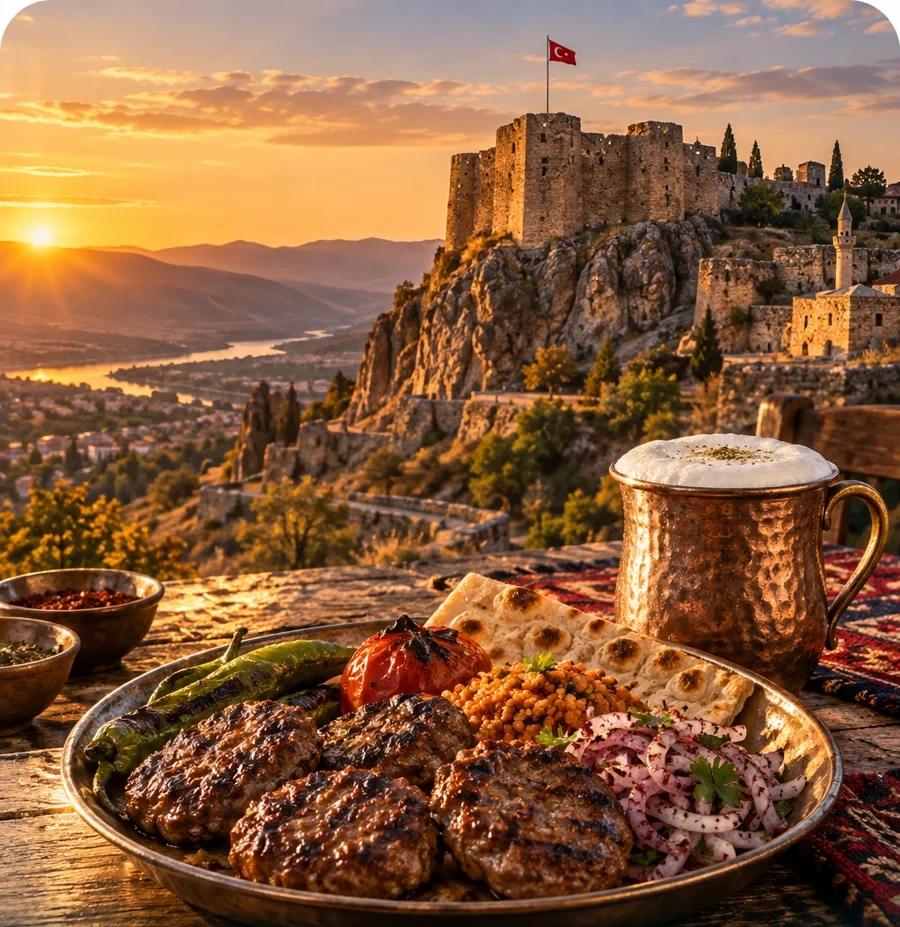
Elazığ’s story follows a move: from the old settlement of Harput to the present city center. Harput Castle, rising on a steep slope, was built by the Urartians. At its southeast corner, the Virgin Mary Church sits on a high rock, and the rock itself forms the church’s western wall. Also in Harput, the Ulu Mosque was built by the Artukid ruler Fahreddin Karaarslan and is known as well as the Curve Minaret Mosque.
After the migration from Harput to the city center, houses distinguished by their wood and stone workmanship were built in the late 19th century along what is now Kazım Efendi Street. A historic building constructed in the early years after the old city was relocated to the new one served for a long time as the Government House and was later arranged as the City Museum. In Palu district, Palu Castle stands on steep rock, its southern and southeastern sides surrounded by the Murat River. An Urartian inscription at the castle records King Menua’s conquests in the region.


