


Adıyaman etsiz çiğ köfte
Meatless spiced bulgur köfte
Fine bulgur kneaded with isot pepper, tomato and pepper paste, walnuts, pomegranate molasses, onion, garlic and parsley, without meat.
Southeastern Anatolia
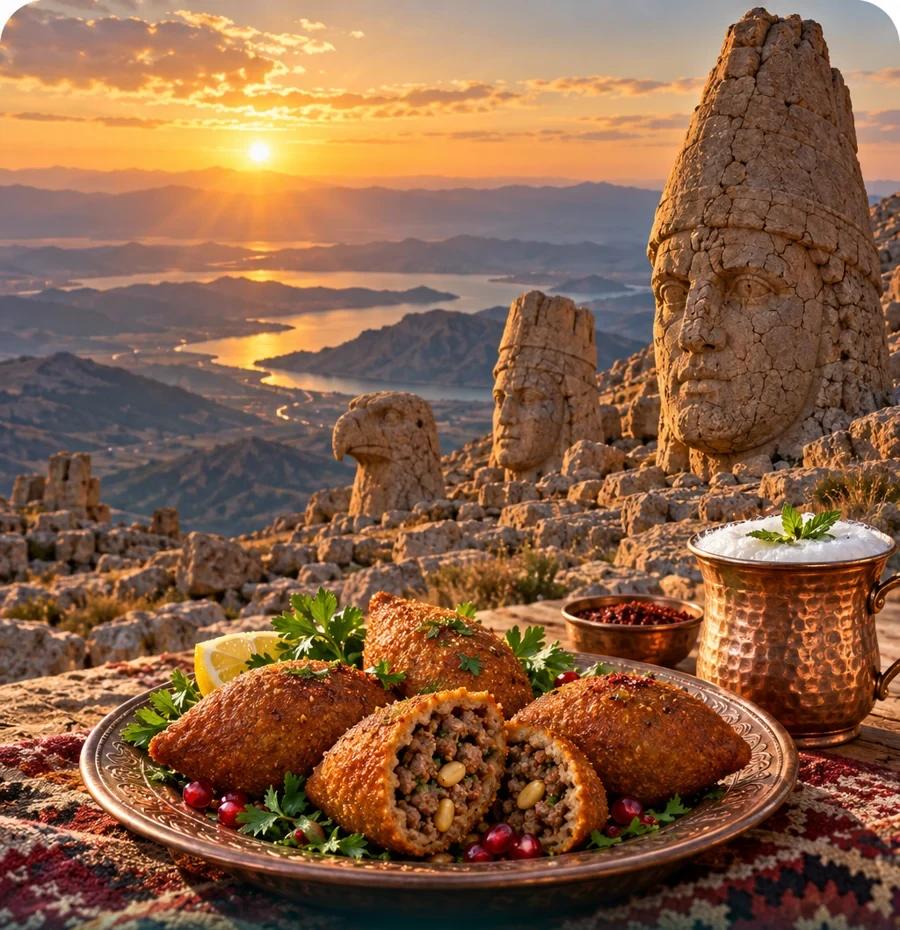
In Adıyaman, çiğ köfte is a reason for people to come together: it is kneaded in front of guests and shared at evening gatherings. In this meatless version, fine bulgur meets isot pepper, tomato and pepper paste, walnuts, pomegranate molasses, onion, garlic and parsley. The stone ovens, meanwhile, belong to hıtap, and kavurmalı hıtap, a pide made with roasted meat, onion, parsley and pepper flakes, is what comes out of them. In summer, meat, tomatoes, peppers and eggplant turn into Adıyaman tava in a copper pan; in Besni the same dish goes by the name Besni tava. On hot days there is meyir, a cold soup of buttermilk, bulgur, eggplant and pepper, which in Kahta is called balcanı dev. Molasses made from the province’s grapes shows up in its sweets: both tene helvası, served warm with walnuts, and şilke tatlısı are prepared with it. As you follow the trail of these sweets, stop by the şire market, where Besni’s grapes are sold.
Last updated:
Vineyards, bulgur and copper tava pans.
Begin with the oven tray, then explore how bulgur, vegetables and molasses appear in very different preparations.
Meatless spiced bulgur köfte
Fine bulgur kneaded with isot pepper, tomato and pepper paste, walnuts, pomegranate molasses, onion, garlic and parsley, without meat.
Pide layered with roasted meat
A pide layered with roasted meat, onion, parsley and pepper flakes and baked in a stone oven.
Oven-baked meat and vegetables
Meat, tomatoes, peppers and eggplant baked in a copper pan in summer; in Besni it is called Besni tava.
Cold buttermilk and bulgur soup
A cold summer soup of buttermilk, bulgur, eggplant and pepper; in Kahta it is called balcanı dev.
Semolina halva with cheese
Semolina halva made with cheese and sugar, plain or with pistachios or almonds.
Grape molasses and starch halva
Grape molasses, starch and water cooked with butter until grainy, served warm with walnuts.
Grape molasses dessert
A traditional dessert made with molasses from the province’s grapes, also made with sugar.
Pistachio baklava with olive oil
Pistachio baklava made with olive oil rather than butter, found in the city’s baklava shops.
Recipes from this city are coming soon.
Grapes from the Besni district, sold in the city’s şire market.
Guide not written yetMulberries grown in the Tut district.
Guide not written yetAlmonds grown around Kahta.
Guide not written yet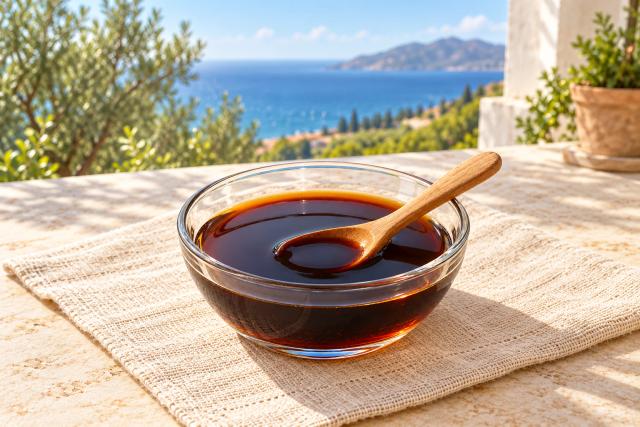
Concentrated grape molasses, mixed with tahini or used to coat sesame bread.
The official food guide describes çiğ köfte preparation as a social occasion accompanied by conversation. Its raw-meat history and contemporary meatless forms should remain distinct. A dish name alone does not tell you which preparation is being served. Adıyaman’s museum collections also document clothing, weaving and metalwork. Looking at these everyday objects alongside food gives a broader picture of domestic skill than a list of famous dishes can provide.
Çiğ köfte is kneaded in front of guests and shared at evening gatherings.
Grapes from the province’s vineyards become the molasses in tene helvası and şilke.
Adıyaman’s past is read largely through the traces of the Kingdom of Commagene. On the summit of Mount Nemrut, within Kahta district, King Antiochus I of Commagene built a tomb and monumental statues to show his gratitude to the deities and his ancestors. Greek, Persian and Anatolian aesthetics intermingle in the statues and reliefs. One row of stelae shows the king’s paternal Persian ancestors, the other his maternal Macedonian ones; this semi-legendary lineage reflects the ambition of a dynasty that sought to remain independent of the powers of both East and West.
North of the city center, Perrhe stood on the route between Malatya and the Commagene capital Samsat and was one of the kingdom’s major cities. Workshops beside its necropolis point to olive oil, wine and textile production. The Karakuş Tumulus, covered with stones brought from the Kâhta Stream, is the tomb that Mithridates II, son of Antiochus I, built for his mother Isias.


