


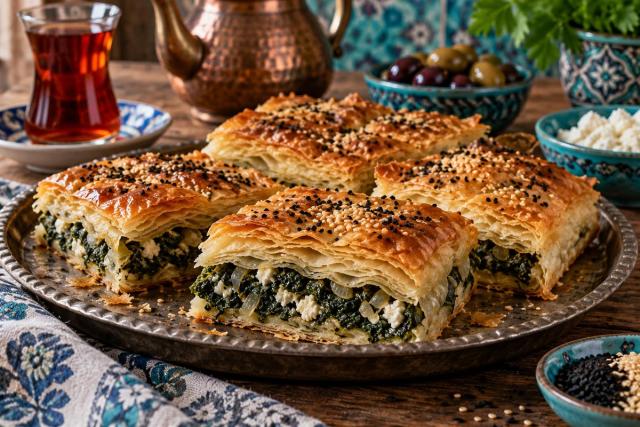
Cooking off excess liquid
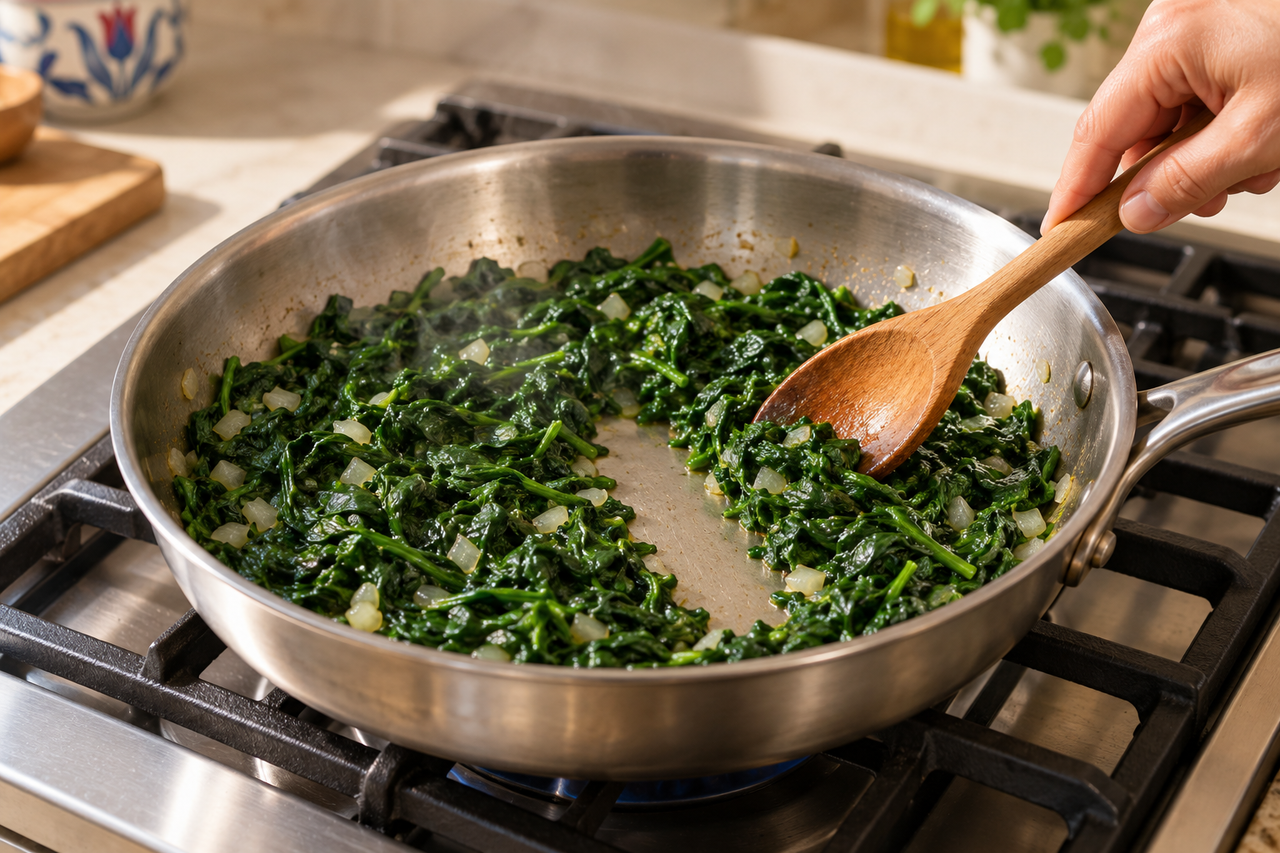
Let released water evaporate until the filling reaches the texture your recipe needs.
What this skill is for
Cooking off liquid removes unwanted free water through evaporation. It is useful for cooked vegetable fillings and sauces when the recipe wants them moist but not watery. It is not the same as draining liquid into a bowl or squeezing cooked food.
Spinach filling is the example here. Wilted leaves can still sit in plenty of liquid; their smaller volume does not mean that the water has already gone.
How to do it
- Follow the recipe to the stage that releases liquid. For our spinach pastry, soften the onion first and add spinach in batches as directed.
- Keep the pan uncovered during the evaporation stage unless the recipe says otherwise. Use its heat setting, watching how the food and liquid behave rather than turning the stove to maximum automatically.
- For a stovetop filling, stir and turn the food so wet portions reach the exposed surface. Scrape gently along the bottom as appropriate for the pan; do not leave dry edges catching while liquid stays in the middle.
- In the pan, draw the spoon through the filling and look for a pool flowing back into the gap. For spinach filling, continue until the free liquid has evaporated while the leaves remain moist. A light sheen is different from a pool.
- For an oven-baked dish such as our musakka, uncover at the stage and for the time the recipe states. Do not stir its layers. Check that the sauce has reduced as directed, then complete the recipe’s separate tenderness and doneness checks.
- Stop at the recipe’s cue. For pastry, follow its cooling stage before filling; heat alone can also soften the pastry. Do not keep cooking just to make the spinach as dry or brown as possible.
Recognize success
- A spoon reveals the pan bottom without a pool of liquid immediately filling the gap.
- Spinach stays moist and pliable, with no scorched smell or stuck black patches.
- The cooled filling has the recipe’s intended texture rather than liquid draining into the pastry.
Common mistakes and what to do
- Stopping when leaves wilt can leave a watery filling. Check the liquid separately from the leaf volume.
- Leaving the pan covered traps steam during this stage. Uncover when the recipe asks for evaporation.
- Adding flour or breadcrumbs to hide excess liquid changes the recipe. If you are still at the cooking stage, finish its evaporation step instead.
- Continuing after the liquid is gone can scorch the filling. Stop at the texture cue; burned flavor cannot reliably be repaired.
Last updated:
Practice with a real recipe
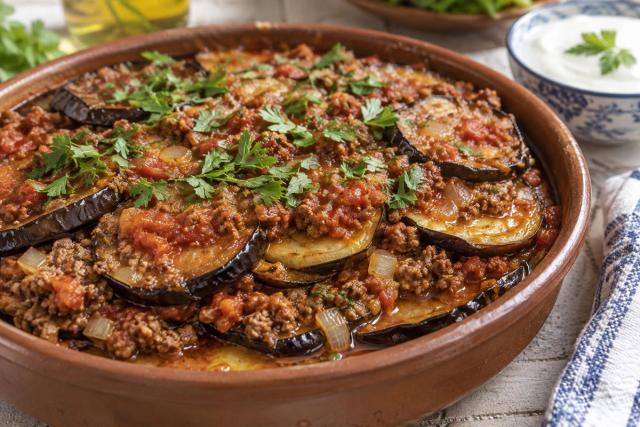
Where to practice this skill
Related skills
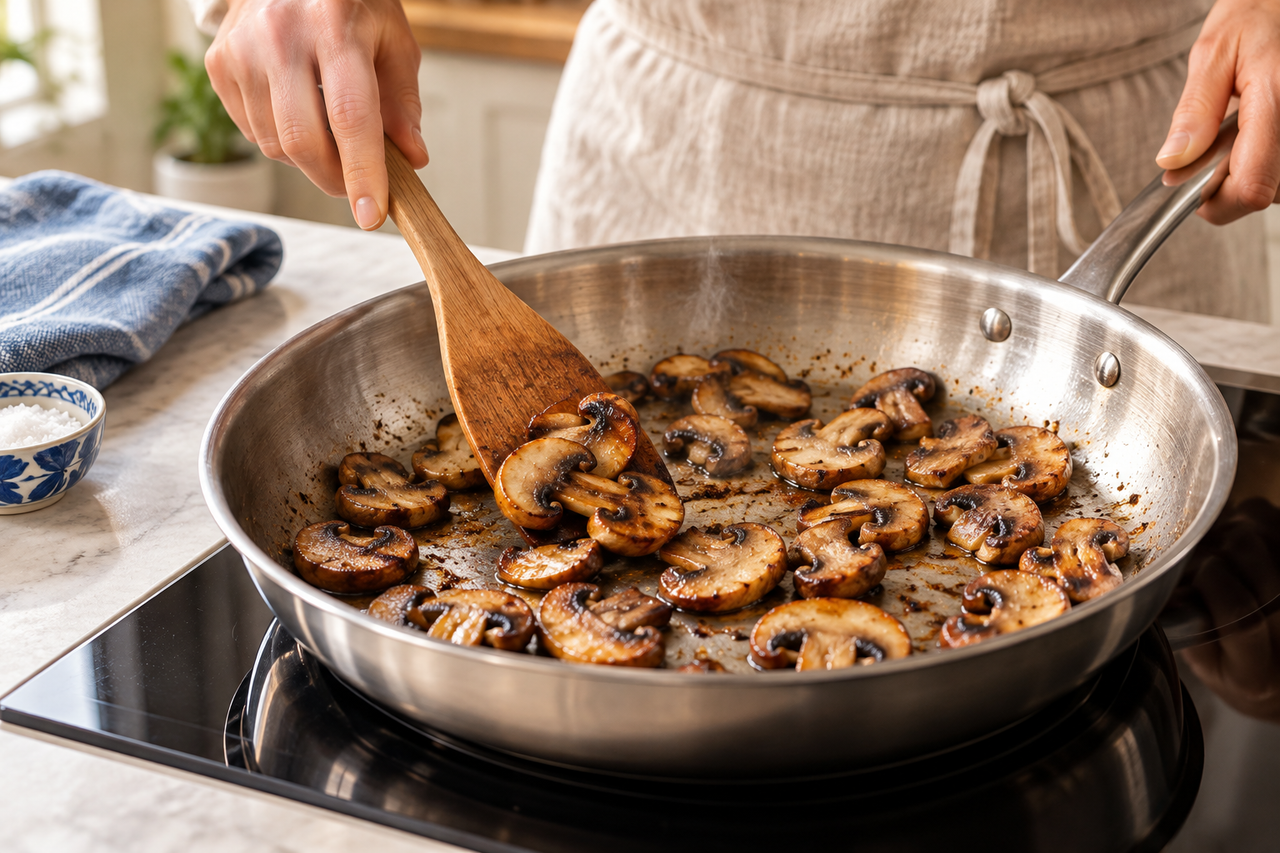
Dry-Heat Cooking
Brown food in a pan
Recognize the difference between food releasing liquid and food beginning to brown.
Moisture Control
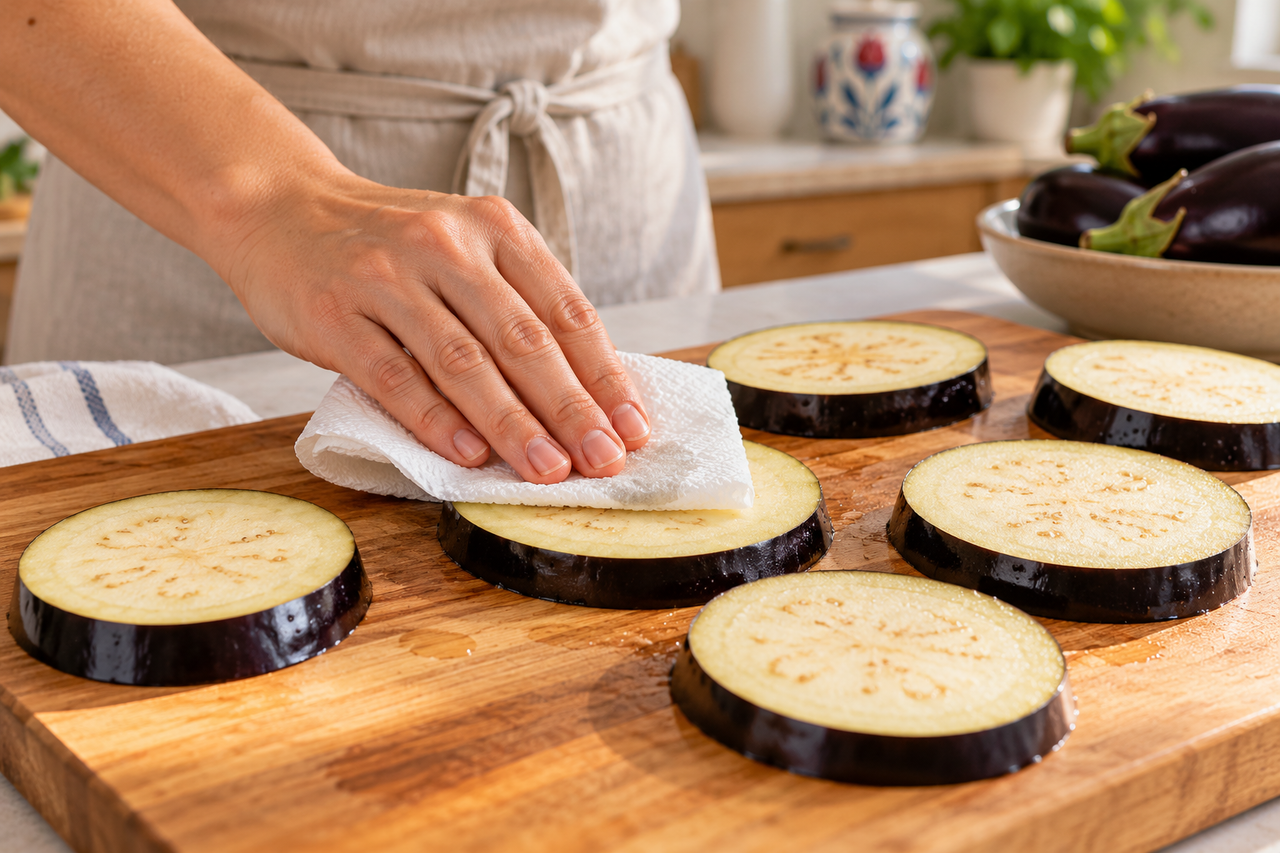
Drying surfaces before cooking
Blot away surface moisture before the recipe’s oiling and cooking stage.