


İskorpit çorbası
Scorpion fish soup
Scorpion fish poached with bay and parsley, then cooked into a soup with carrot, tomato, flour and spices.
Marmara Region
In Çanakkale, the strait can be tasted by the spoonful. Scorpion fish from the strait goes into iskorpit çorbası, a soup that starts with bay and parsley and is rounded out with carrot and tomato. Among the dough dishes, metez stands out: half-moon dumplings filled with minced meat and onion, served with a tomato paste sauce and yogurt. Tumbi brings fine bulgur together with eggplant and tomato in palm-sized pieces baked with olive oil. Dessert takes two separate paths: Gelibolu peynir helvası, made with fresh unsalted cheese and served warm or cold, and samsa, thin dough wrapped around walnuts, almonds and cloves and soaked in syrup. The local products widen the table further: Ezine peyniri, made from the sheep’s, goat’s and cow’s milk of the Kaz Mountains; the Çavuş grapes of Bozcaada; and Bayramiç beyazı, a nectarine grown in Bayramiç. After a bowl of fish soup, it is hard to think of a better reason to turn towards Gelibolu for its helva, the Kaz Mountains for their cheese and Bozcaada for its grapes.
Last updated:
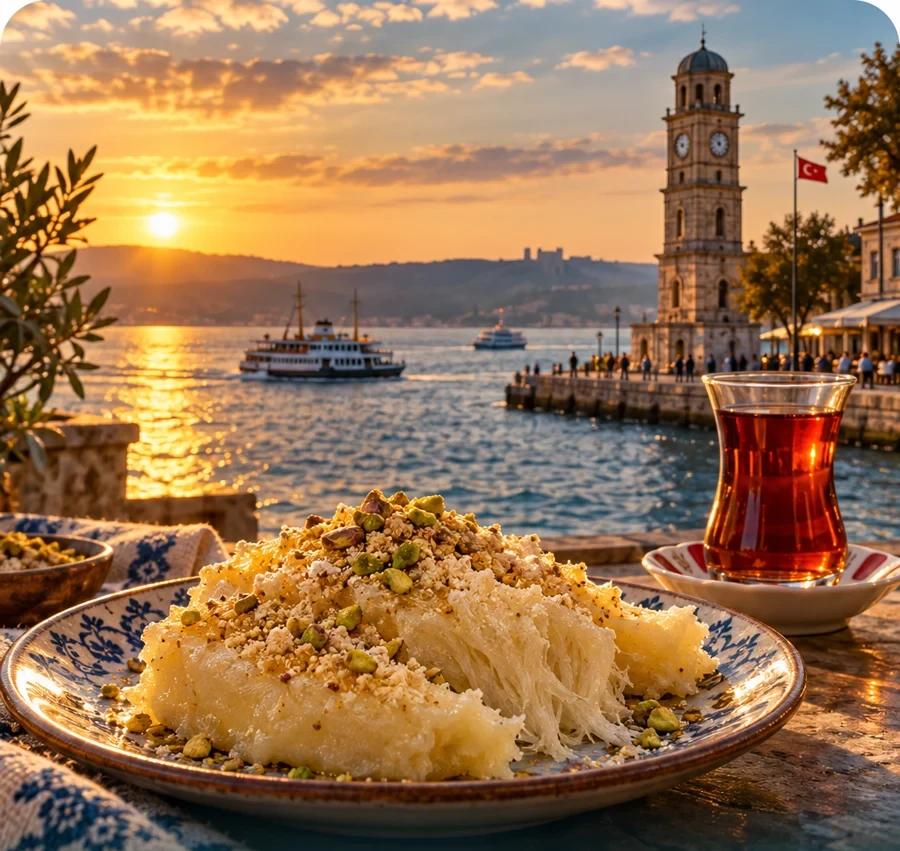
The strait, olive groves and a plate of white cheese.
Follow dairy and seafood connections across a province with both strait and Aegean settings.
Scorpion fish soup
Scorpion fish poached with bay and parsley, then cooked into a soup with carrot, tomato, flour and spices.
Rubbed flour soup
Flour and water rubbed into small lumps and cooked in a broth of onion and tomato paste.
Meat-filled dumplings
Half-moon dumplings filled with minced meat and onion, boiled and topped with tomato paste sauce and yogurt.
Baked bulgur and eggplant patties
Fine bulgur cooked with onion, tomato and eggplant, shaped into palm-sized ovals and baked with olive oil.
Pine mushroom stew
Melki, the local pine mushroom, cooked with onion, olive oil and tomato paste.
Cheese halva
Fresh unsalted cheese melted and cooked with flour, then sweetened with powdered sugar and served warm or cold.
Walnut and almond pastry
Thin dough rolled around crushed walnuts, almonds and cloves, baked with olive oil and soaked in syrup.
Recipes from this city are coming soon.
White cheese made from sheep’s, goat’s and cow’s milk from the Kaz Mountains.
Guide not written yetA nectarine grown in Bayramiç on the slopes of the Kaz Mountains.
Guide not written yetGrapes of the Çavuş variety grown on the island of Bozcaada.
Guide not written yetRed kapya peppers grown around Yenice.
Guide not written yetOlive oil from the Geyikli area near Ezine.
Guide not written yetSardines from the Dardanelles and the Gulf of Saros, grilled in vine leaves or salted.
Guide not written yetThe Troy Museum and the archaeological site provide complementary ways to encounter the past: objects and interpretation on one hand, settlement remains on the other. Çanakkale’s urban trading spaces offer a different scale of cultural history. A culinary journey can move between these settings while keeping their time periods separate. Neither an ancient settlement nor a famous literary narrative establishes the age of a present-day cheese or dessert.
Fresh unsalted cheese becomes peynir helvası, and Ezine cheese is made from Kaz Mountains milk.
Sardines and scorpion fish come from the strait, and olive oil runs through the home cooking.
Çanakkale’s story is bound up with the narrows of the strait. Çimenlik Castle was built in the 15th century at a narrow point of the Hellespont to defend İstanbul, and today it houses the Çanakkale Naval Museum. On Çarşı Street in the city center, Aynalı Bazaar has found its way into folk songs and was mentioned by the 17th-century traveller Evliya Çelebi in his travelogue. Thought to have been built or repaired by Ilya Halyo, of one of Çanakkale’s prominent Jewish families, the bazaar was damaged during the Çanakkale Campaign.
Troy lies outside the city center, west of Tevfikiye Village, on the mound of Hisarlık overlooking the plain. The settlement sat at the edge of a bay where the Karamenderes and Dümrek streams reach the Aegean, and it is thought to have been very close to the sea in its early years before silting from the Karamenderes gradually pushed the shoreline away. Its remains are regarded as evidence of interaction between the civilizations of Anatolia and the Mediterranean world. The siege of Troy, meanwhile, was immortalized by Homer in the Iliad.


