


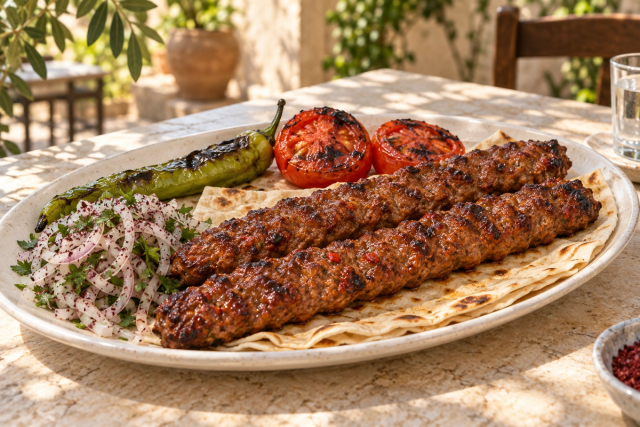
Adana-Style Lamb Skewers
Hand-chopped lamb and tail fat grilled on flat skewers, with warm flatbread, charred vegetables and sumac onions.
The Turkish pantry
Red pepper powder comes in sweet, hot and smoked forms, each distinct from pepper flakes.
Last updated:
Dried red pepper ground to powder. Sweet, hot and smoked products are different choices; powder is not pul biber flakes.
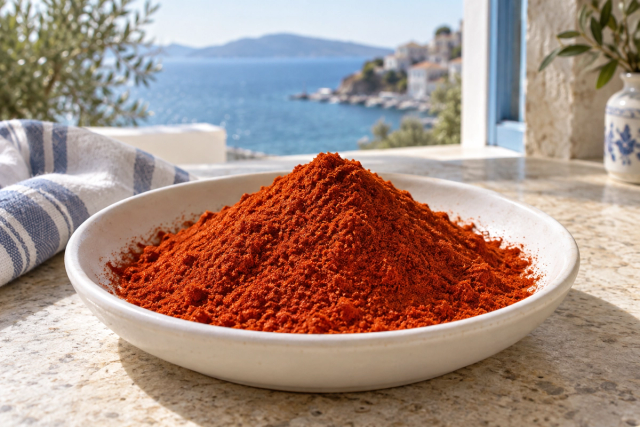
Pepper flavor and color with less heat; confirm the label.
Choose the heat level the recipe needs.
Adds a distinct flavor.
A plain unsmoked product can supply mild red-pepper flavor; brands still differ.
Change texture and distribution rather than reproducing powder.
Paprika, dried ground spice [1]
| Nutrient | Amount |
|---|---|
| Energy | 282 kcal |
| Protein | 14.1 g |
| Total fat | 12.9 g |
| Saturated fat | 2.14 g |
| Carbohydrate | 54 g |
| Dietary fiber | 34.9 g |
| Total sugars | 10.3 g |
| Sodium | 68 mg |
| Cholesterol | 0 mg |
| Calcium | 229 mg |
| Iron | 21.1 mg |
| Potassium | 2,280 mg |
| Vitamin D | 0 µg |
Plain paprika reference, not a separate analysis of every hot, sweet or smoked pepper powder. Values are rounded for readability; “not reported” does not mean zero. A “<” value is below the source’s measurement limit.
Nutrition values come from the reference source named above. They are published reference values, not our own measurements. Actual products and cooking methods may change the values.
Our Adana-style home skewers use red pepper powder in the meat mixture.
Hand-chopped lamb and tail fat grilled on flat skewers, with warm flatbread, charred vegetables and sumac onions.
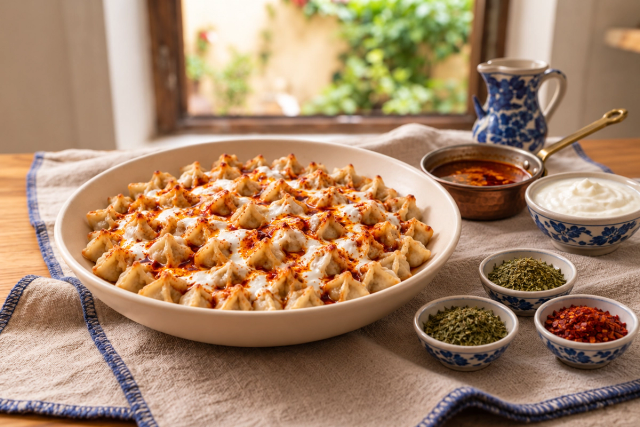
Small, closed lentil dumplings baked first until golden, then finished in hot water. Serve with garlic yogurt and red-pepper butter, with extra yogurt and herbs on the side.
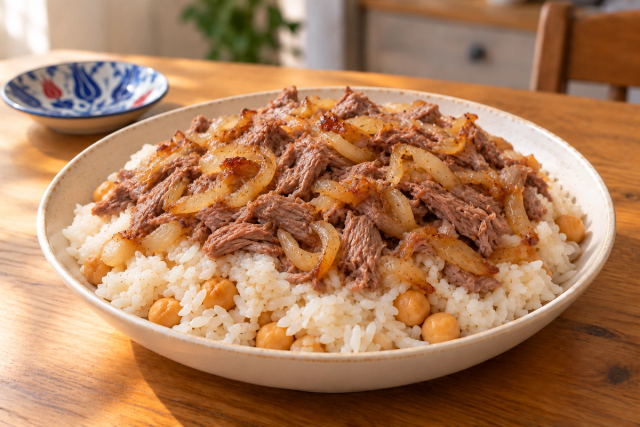
Layers of shredded beef, caramelized onion, rice and chickpeas, cooked in broth and turned onto a platter.
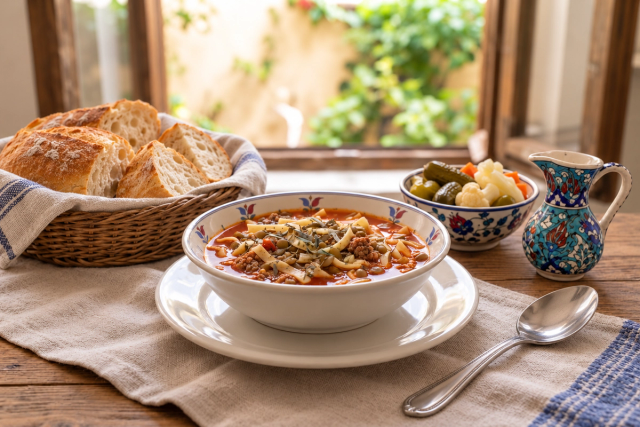
An Erzurum household soup of whole green lentils, hand-cut egg noodles and small beef meatballs, finished with onion and tarragon butter.
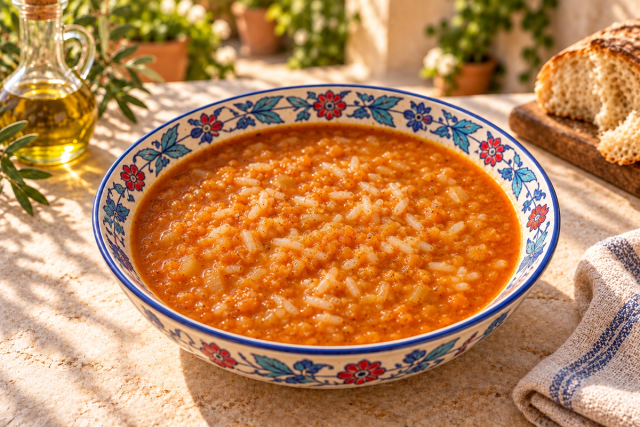
Red lentils and rice simmer together, finished with onion, tomato paste and cumin.
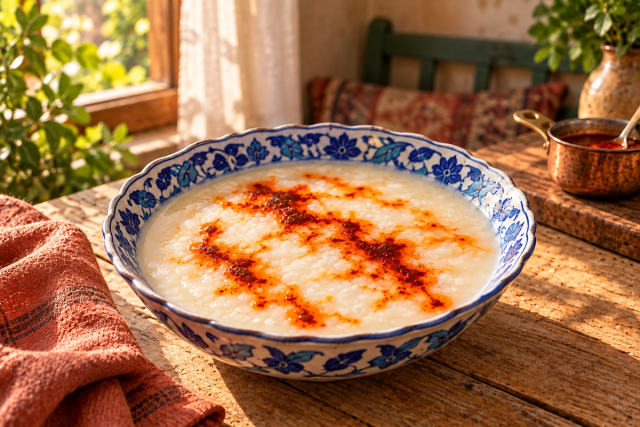
Rice simmered in milk, thickened with an egg-yolk mixture and finished with red-pepper butter.
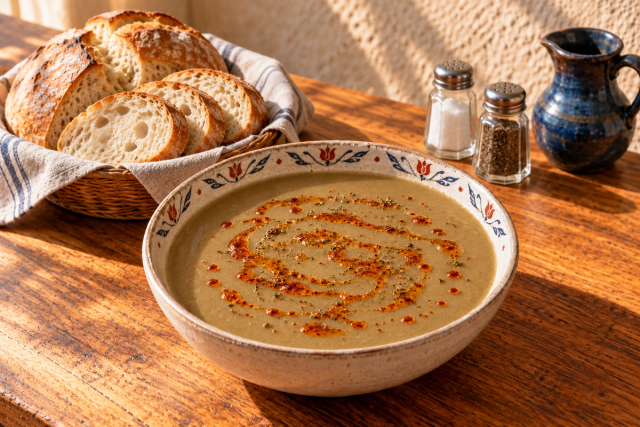
A smooth green lentil soup. Dried green lentils are simmered with onion and carrot, then puréed and strained. The soup is thickened with butter, oil and toasted flour, then loosened with chicken stock. It is finished with butter warmed with paprika, mint and red pepper flakes.