


Hand-mincing meat with a zırh
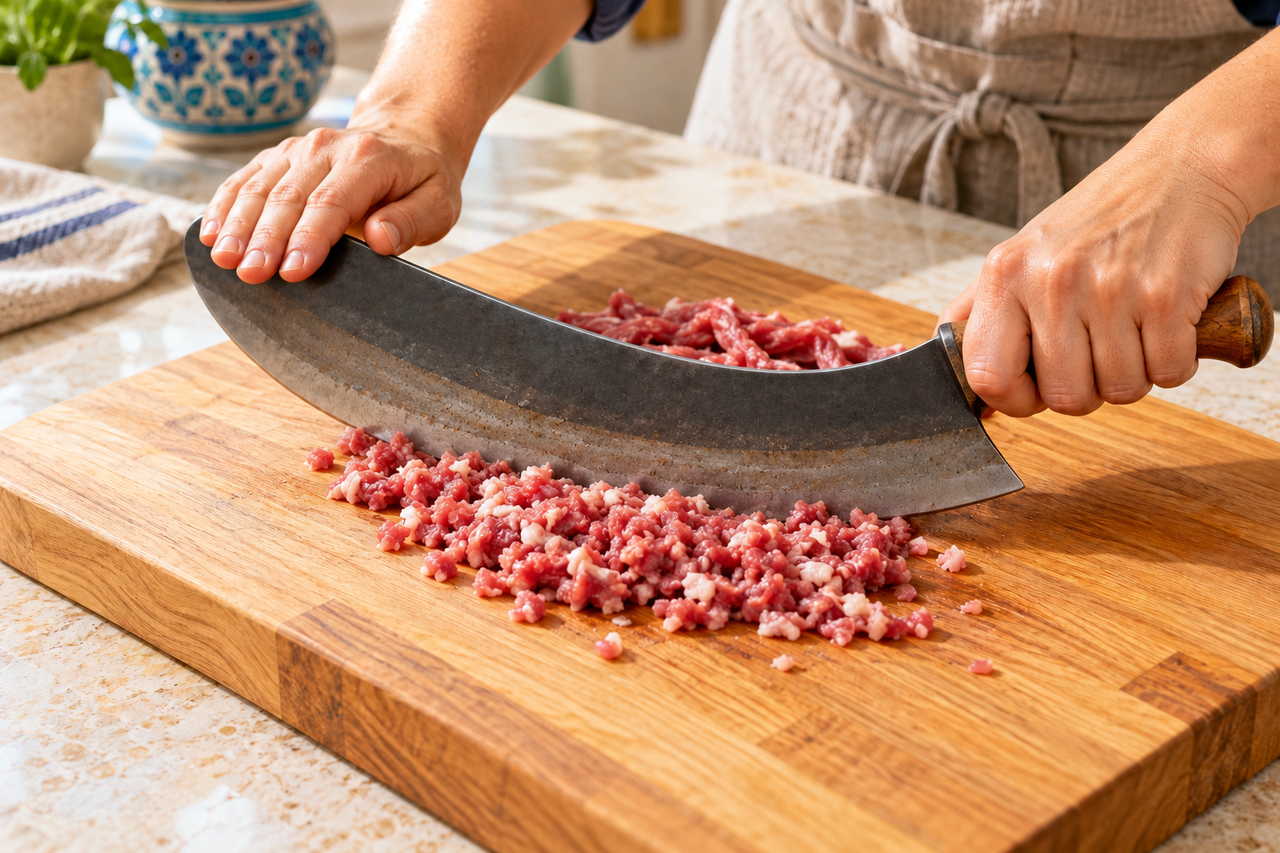
Use the curved blade of a zırh to cut cold meat into an even mince while keeping distinct pieces.
What this skill is for
A zırh is a large, curved meat-mincing blade controlled with both hands. Rocking its cutting edge across cold meat makes the hand-chopped mince known as zırh kıyması. Use this skill when preparing a kebab mixture or a meat topping that calls for meat minced with a zırh.
The aim is to cut the meat into small, distinct pieces, with the fineness your recipe needs. A coarse kebab mince and a spreadable lahmacun topping need different amounts of chopping. The zırh and its two-handed rocking action are the focus of this lesson.
How to do it
- Choose a zırh whose size and weight you can control comfortably, and set up a clean, stable cutting board with room for the full curved blade. Keep raw meat and its juices away from ready-to-eat foods. Use the cut and amount of fat specified by your recipe.
- Start with cold, boneless meat with tough sinew and membranes already removed. Work with a small portion at a time and refrigerate the rest. Keep the fat the recipe needs, and spread the meat in a small, shallow pile rather than a thick mound. Do not wash raw meat.
- Grip the wooden handle firmly with one hand and use the other hand to control the blunt back of the blade near its far end. Keep both hands above and clear of the sharp lower edge. Adjust the tool before you start; do not use a zırh that feels too large or heavy to control.
- Rock the curved cutting edge back and forth through the meat with controlled movements. Let the curve move the cutting contact along the board. Keep the action steady and manageable rather than lifting the blade high or trying to copy a professional’s speed.
- Bring the blade to a complete stop before gathering or turning the meat. Set the zırh down, gather the pieces with a scraper, then chop across the pile in another direction. Repeat only until the pieces are even enough for the recipe; stop before the mince becomes a paste.
- If the fat turns soft or starts smearing, stop and return the meat to the refrigerator until firm again. Do not try to correct warmth by chopping faster. Follow the recipe for whether meat, fat or vegetables are chopped separately or together.
- Cover and refrigerate the mince promptly at 40°F/4°C or below until the recipe needs it. Wash hands with soap and water for at least 20 seconds, and wash the knife, board and work surface with hot, soapy water before preparing ready-to-eat foods. Cook beef or lamb mince to at least 160°F/71°C, checked with a food thermometer; color is not a safety check. Do not taste the raw mixture.
Recognize success
- The mince contains recognizable small pieces rather than long strips or a smooth paste.
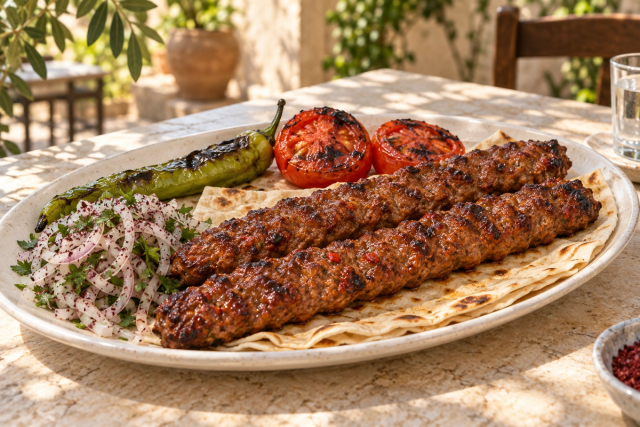
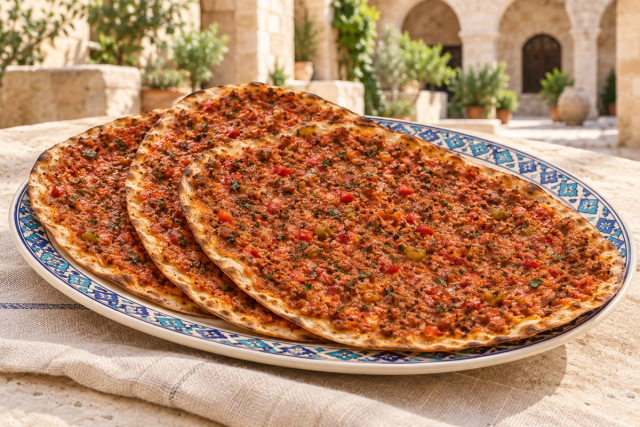
- Pieces are reasonably even for the recipe: the Adana practice step asks for a coarse, even mince, while the lahmacun topping needs finer chopping so it spreads.
- The meat remains firm, with distinct fat pieces rather than a greasy coating on the board. These are texture cues, not proof that the meat is safe to eat raw.
Common mistakes and what to do
- Starting with a large pile: the outside is overchopped while strips remain underneath. Work in small portions and change direction between passes.
- Leaving sinew in the meat: tough strands remain in the mince. Trim them before chopping rather than trying to chop them away.
- Chopping warm meat or continuing past the needed texture: softened fat smears and the mince loses definition. Chill before continuing; a paste cannot be turned back into separate pieces.
- Gathering meat while the blade is moving: fingers enter the cutting area. Put the knife down before using a scraper to regroup the pieces.
- Treating hand-mincing as a safety step: chopping does not remove harmful bacteria. Keep raw meat separate, clean equipment and cook it thoroughly. Never taste a raw kebab or topping mixture.
Last updated:
Practice with a real recipe
Related skills
Preparation & Knife Skills
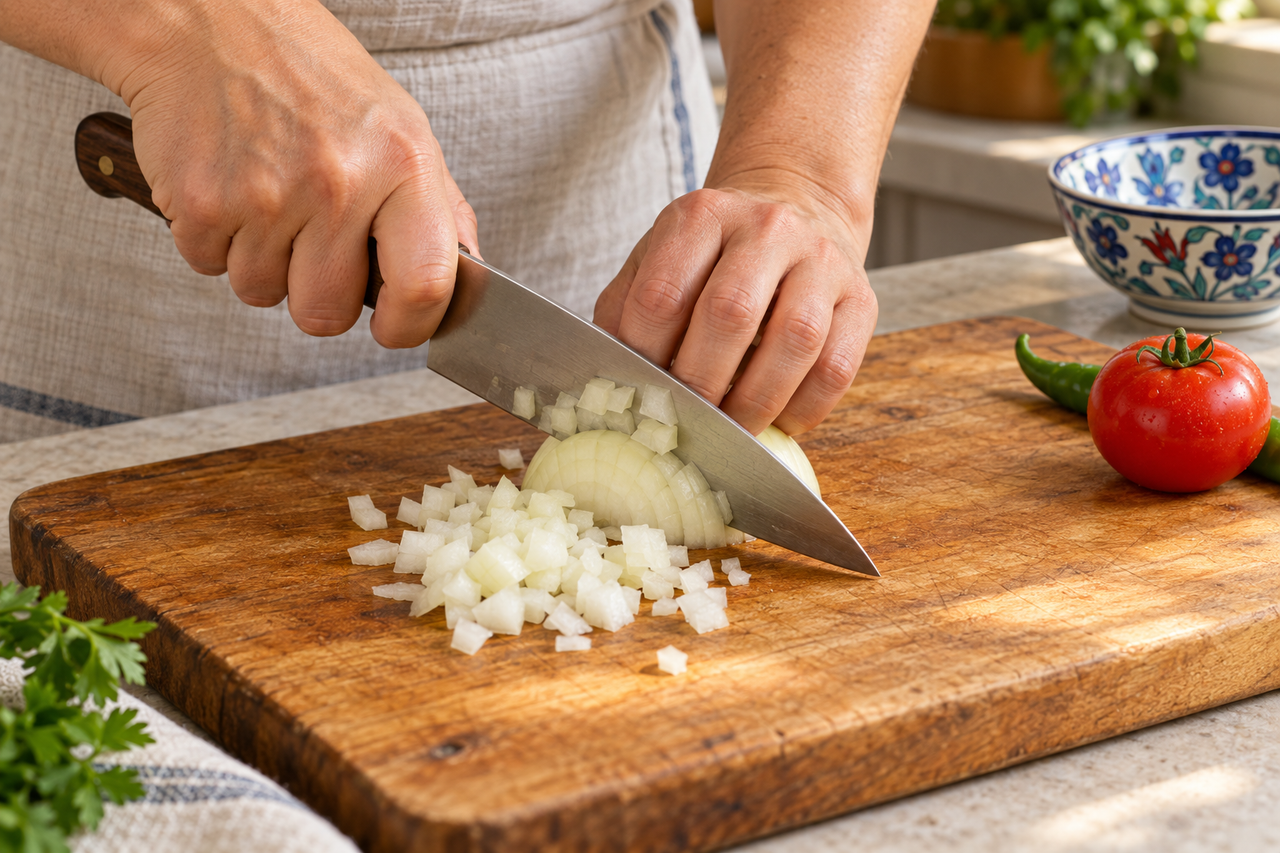
Fine chopping by hand
Keep small vegetable pieces distinct instead of turning them into a watery paste.