Edible kernels only, not shells, roasted nuts or salted products. Values are rounded for readability; “not reported” does not mean zero. A “<” value is below the source’s measurement limit.
Nutrition values come from the reference source named above. They are published reference values, not our own measurements. Actual products and cooking methods may change the values.
At the Turkish table
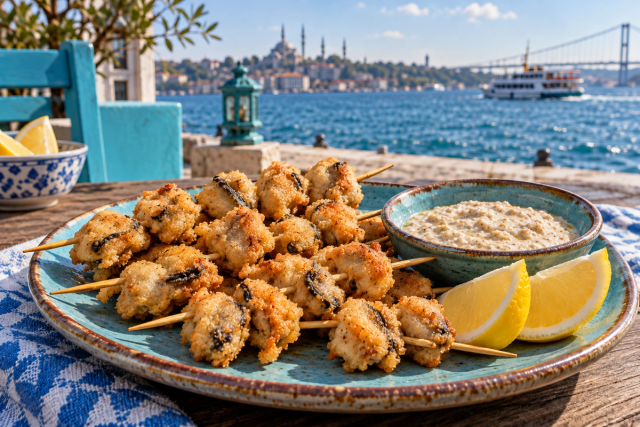
Walnuts give our tarator body alongside soft bread, garlic and lemon.
Crisp battered mussels on skewers, served with garlicky walnut-bread tarator and lemon. Mussel meats in a light sparkling-water batter, served with a bread-and-walnut tarator. Midye tava is associated with İstanbul’s coastal food culture; it is distinct from rice-stuffed midye dolma.
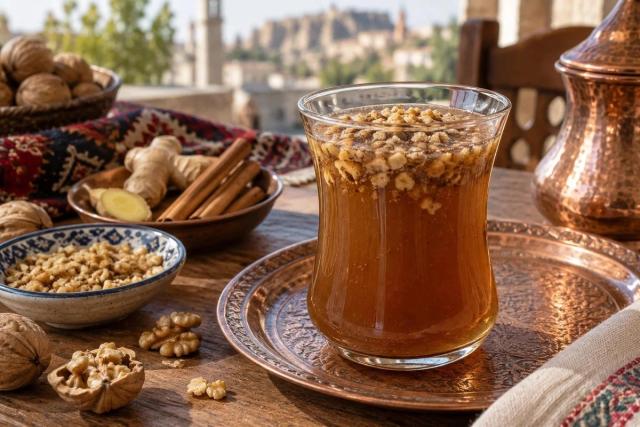
A warm spice infusion with galangal, ginger, cinnamon and cloves, topped with walnuts. In Adana, kaynar is associated with visits celebrating a new baby. That cultural association does not establish a medical or lactation benefit; this is a culinary serving recipe.
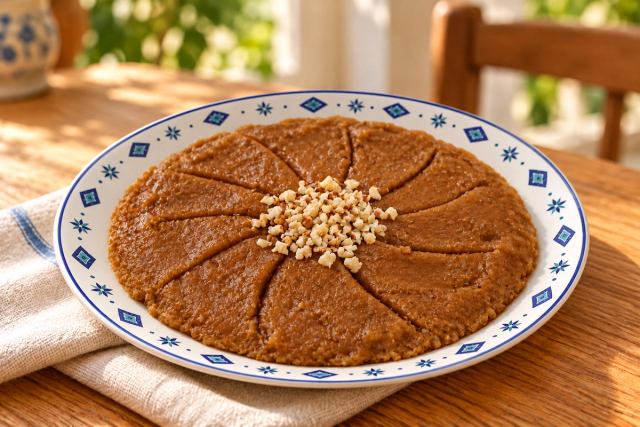
Kayseri’s finely textured flour-and-molasses dessert, cooked with butter and spread on a shallow dish. Served warm with walnuts, it is a simple sweet for winter evenings.