


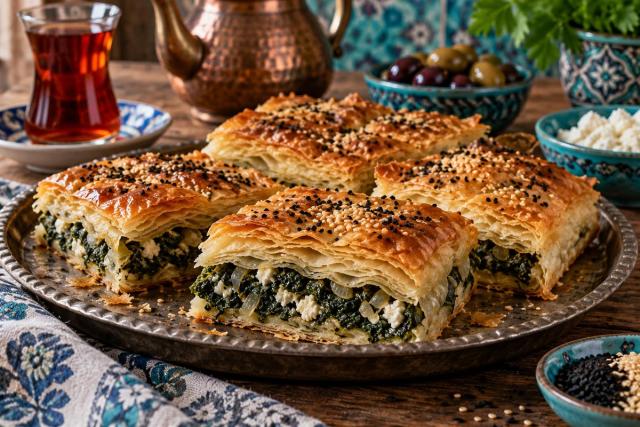
Spinach and White Cheese Pastry
Crisp yufka layers with spinach, onion and an optional white-cheese filling.
The Turkish pantry
Sesame seeds make a textured coating for simit and a scattered topping for börek. Check whether the seeds are hulled or unhulled and raw or toasted before comparing products.
Last updated:
Edible sesame seeds, with hull and roasting state not specified by the ingredient record. Hulled, unhulled and toasted seeds are not nutritionally identical.
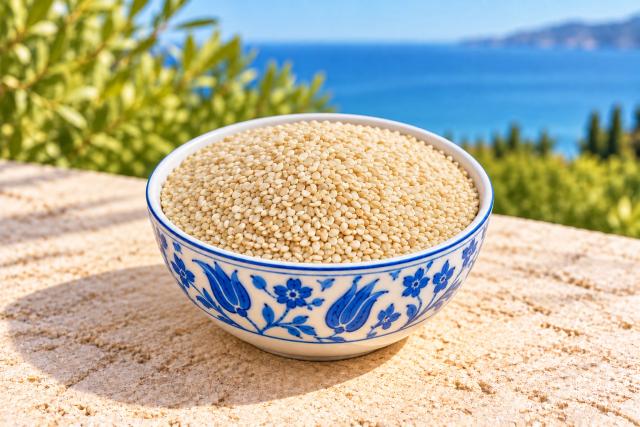
The outer hull affects color and composition. Use the actual package description rather than guessing from a photograph.
Already toasted seeds can darken faster in the oven; match the recipe’s starting form.
A sesame paste, not a seed coating; it changes both texture and how the surface browns.
Give a different flavor and appearance and may introduce other allergens; use only if the recipe permits the change.
Government reference example: Whole dried sesame seeds, with hulls [1]
| Nutrient | Amount |
|---|---|
| Energy | 573 kcal |
| Protein | 17.7 g |
| Total fat | 49.7 g |
| Saturated fat | 6.96 g |
| Carbohydrate | 23.4 g |
| Dietary fiber | 11.8 g |
| Total sugars | 0.3 g |
| Sodium | 11 mg |
| Cholesterol | 0 mg |
| Calcium | 975 mg |
| Iron | 14.6 mg |
| Potassium | 468 mg |
| Vitamin D | 0 µg |
Per 100 g of the stated reference food. The recipe does not specify the hull or roasting state. This example is whole dried sesame with hulls, not hulled kernels, toasted seeds or tahini; hull removal changes mineral composition. Values are rounded for readability; “not reported” does not mean zero. A “<” value is below the source’s measurement limit.
Nutrition values come from the reference source named above. They are published reference values, not our own measurements. Actual products and cooking methods may change the values.
Simit uses a generous sesame coating, while the börek recipes use seeds as a topping. Those different roles do not establish a single hull or roasting specification for every sesame product.
Crisp yufka layers with spinach, onion and an optional white-cheese filling.
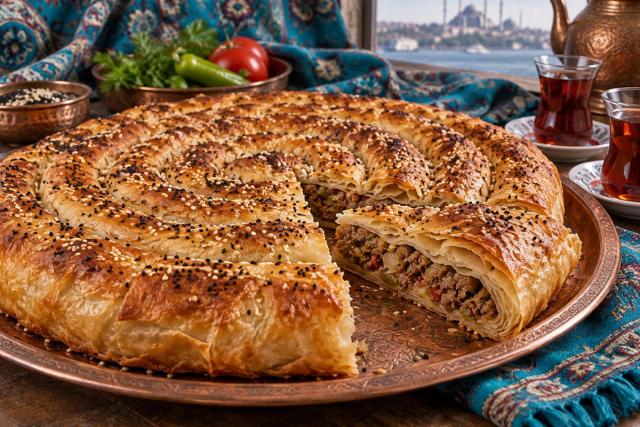
Golden coils of thin yufka filled with seasoned minced beef, onion and green pepper.

Twisted bread rings dipped in grape molasses and generously coated with sesame.