



Yogurt Drink
Cold yogurt, water and a little salt whisked into a creamy, frothy drink.
The Turkish pantry
A soft, tangy yogurt for sauces, soups and everyday cooking. Choose plain full-fat yogurt and check which milk it contains.
Last updated:
This is a form overview for plain full-fat unstrained dairy yogurt. The recipe ingredient does not specify the milk animal. Cow, sheep and goat milk remain distinct choices; the photograph-like illustration cannot identify the milk source. Strained yogurt is a separate form.
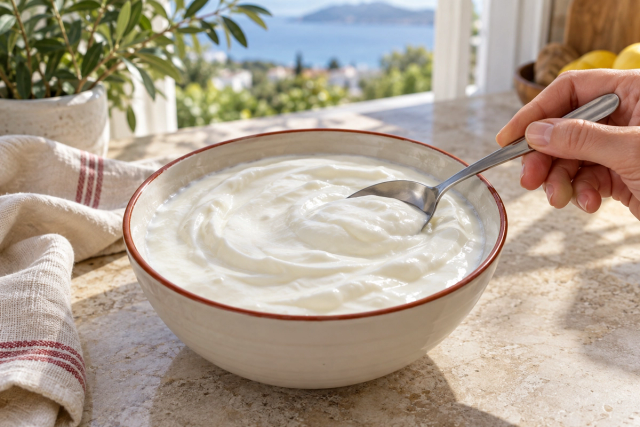
Unsweetened yogurt with a softer consistency than strained yogurt. Read both the milk source and fat information.
A set yogurt holds a delicate gel; stirring breaks it into a softer texture. Neither label by itself identifies the milk animal.
Strained yogurt is thicker; sweetened and flavored products bring extra ingredients. They are not the plain unstrained form specified here.
Cow milk is one possible source. Match the milk source named by the recipe; fat content and thickness are separate label details.
Match the milk source if specified. Tanginess and thickness vary; make texture adjustments only as the recipe directs.
It changes the thickness. Use a recipe that allows it rather than assuming the same amount gives the same soup or sauce.
Example: plain whole cow’s-milk yogurt, unstrained [1]
| Nutrient | Amount |
|---|---|
| Energy | 61 kcal |
| Protein | 3.47 g |
| Total fat | 3.25 g |
| Saturated fat | 2.1 g |
| Carbohydrate | 4.66 g |
| Dietary fiber | 0 g |
| Total sugars | 4.66 g |
| Sodium | 46 mg |
| Cholesterol | 13 mg |
| Calcium | 121 mg |
| Iron | 0.05 mg |
| Potassium | 155 mg |
| Vitamin D | 0.1 µg |
This USDA record is one named cow’s-milk example, not a universal value for every milk source or product. It does not specify the milk used in a recipe. Check your own product label. Values are rounded for readability; “not reported” does not mean zero. A “<” value is below the source’s measurement limit.
Nutrition values come from the reference source named above. They are published reference values, not our own measurements. Actual products and cooking methods may change the values.
The linked recipes use this broad plain-yogurt identity. They do not establish a single milk source for Turkish yogurt cooking. Check each recipe’s preparation before choosing the product.
Cold yogurt, water and a little salt whisked into a creamy, frothy drink.
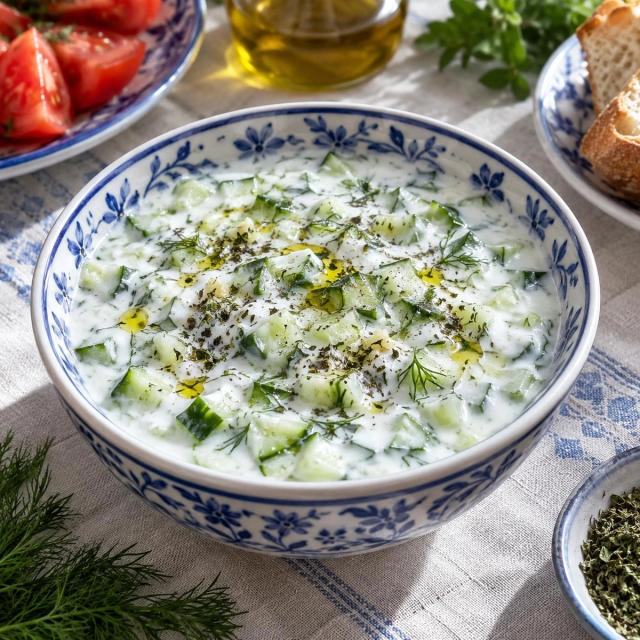
A cool, spoonable mixture of yogurt, diced cucumber, garlic, dill and dried mint.
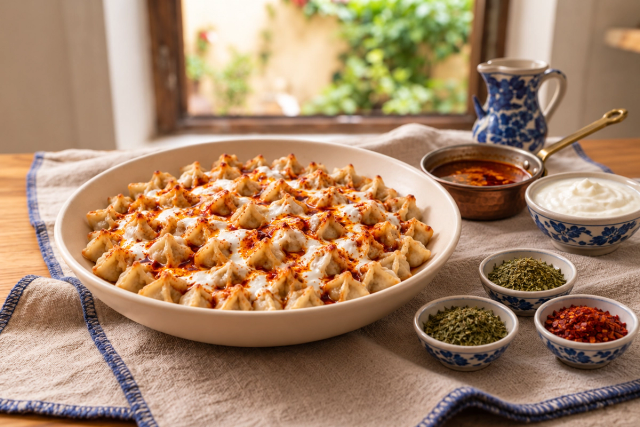
Small, closed lentil dumplings baked first until golden, then finished in hot water. Serve with garlic yogurt and red-pepper butter, with extra yogurt and herbs on the side.
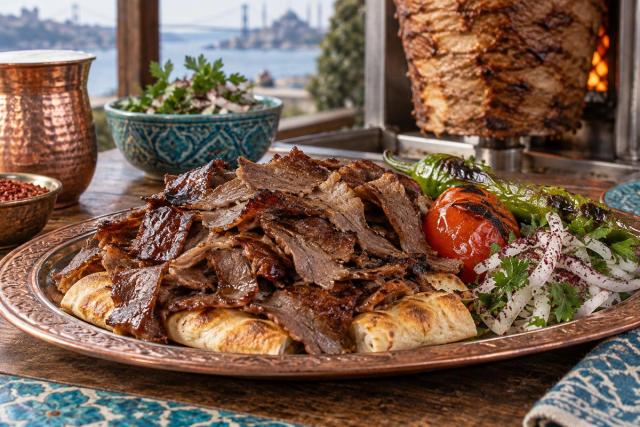
Thin layers of seasoned beef and mince, chilled into a roll, sliced and quickly browned in a skillet. This is a skillet adaptation of layered döner. A restaurant spit uses a different cooking process. Slice only when the roll is firm but safely cuttable; never force a knife through a solid frozen block.
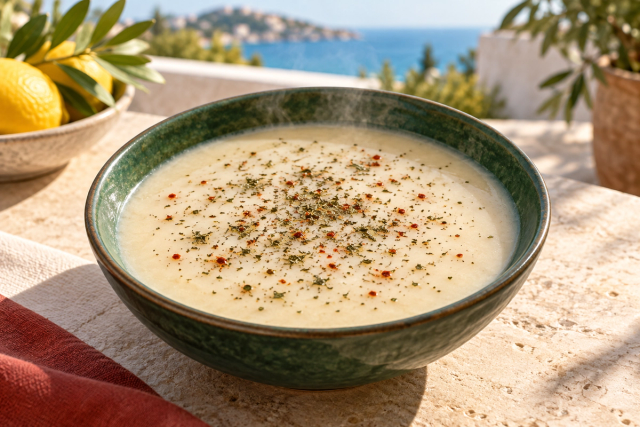
Slow-simmered beef-bone broth made silky with yogurt, egg yolk and lemon, with garlic and a light dried-mint finish. This terbiyeli version turns homemade beef-bone broth into a smooth, lightly tangy soup. A terbiye is the whisked yogurt, egg-yolk and lemon mixture added gradually to the hot broth; a little flour helps it hold together.
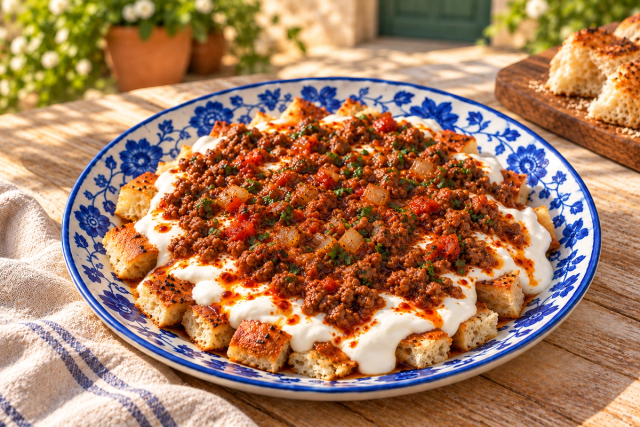
Warm pide topped with garlic-mint yogurt, ground beef in tomato sauce and red-pepper butter.

Yogurt-marinated chicken thighs grilled with peppers and served on warm lavash.
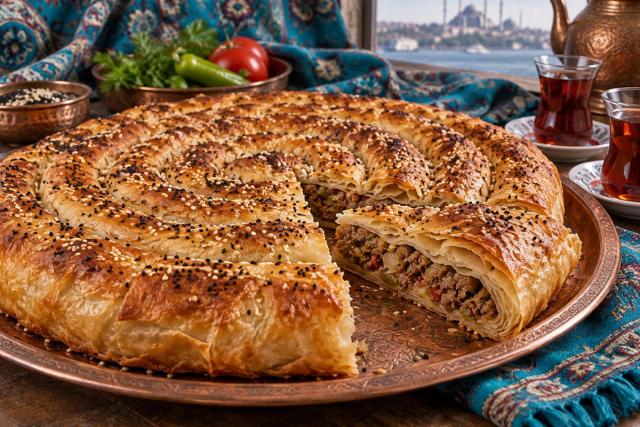
Golden coils of thin yufka filled with seasoned minced beef, onion and green pepper.
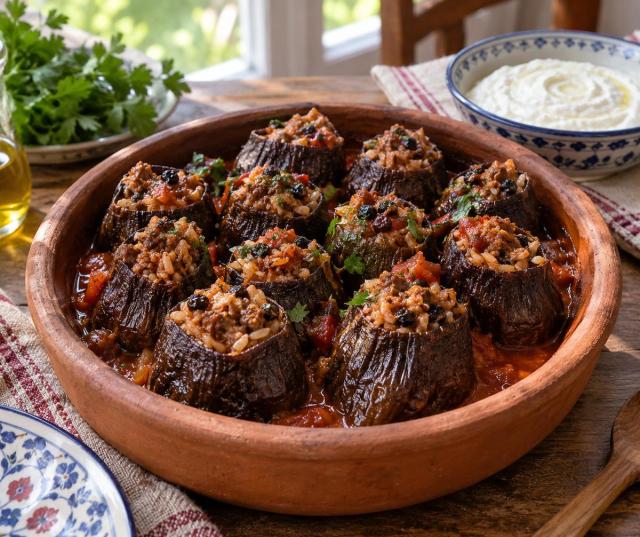
Dried eggplant shells filled with beef, rice and currants, gently cooked in a tomato-and-pepper sauce. Currant-filled dried eggplant is associated with Denizli. This home version uses onion, herbs and mixed tomato and pepper pastes; local variations exist.

Puffy golden yeast dough with a crisp outside and a soft, airy center.
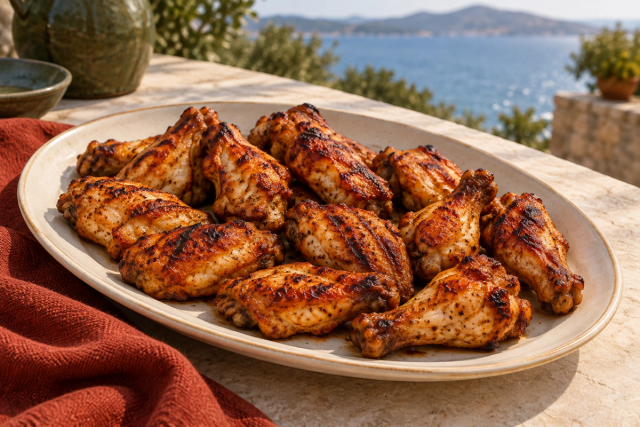
Juicy grilled chicken wings with a yogurt, tomato, garlic and spice marinade, browned gently over a two-zone grill.
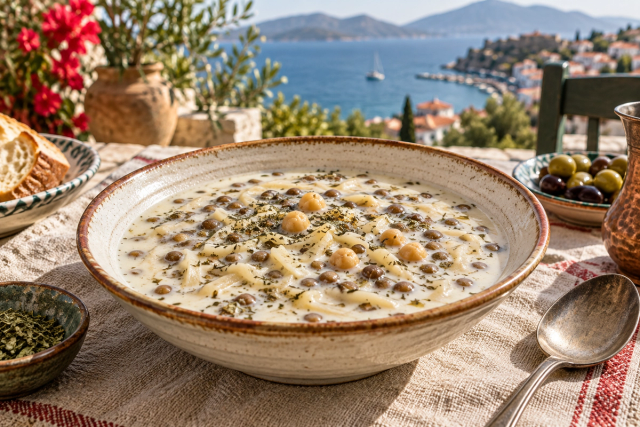
Short wheat noodles, green lentils and chickpeas in a smooth yogurt broth.