



Turkish Homemade Lemonade
Lemon-and-orange lemonade scented with citrus zest and fresh mint.
The Turkish pantry
Fresh citrus for flesh, juice or zest; use the part the recipe asks for.
Last updated:
This guide concerns a fresh sweet orange. Whole fruit, peeled flesh, juice and finely grated zest play different roles in cooking. A general orange image does not establish a cultivar, growing region or organic certification.
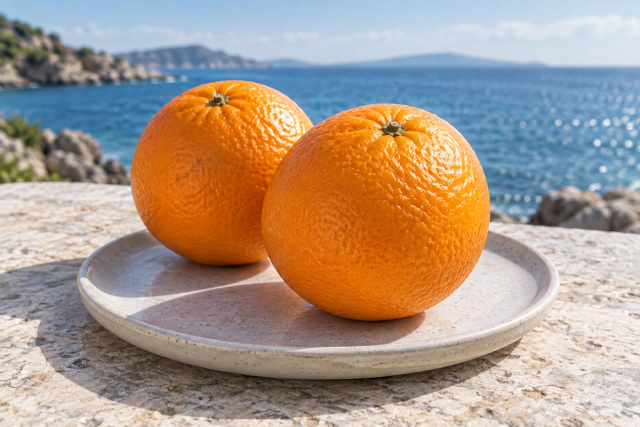
A fruit containing peel, pith, segments and sometimes seeds.
Edible flesh with peel and seeds removed. This is the nutrition reference portion.
Juice supplies liquid and acidity; zest supplies aromatic peel. Neither is nutritionally identical to whole peeled flesh.
These change sweetness, acidity, bitterness and segment size. Use them as a deliberate recipe variation.
It cannot supply whole segments or zest. Choose a recipe that calls for juice and check added ingredients.
Oranges, raw, all commercial varieties [1]
| Nutrient | Amount |
|---|---|
| Energy | 47 kcal |
| Protein | 0.94 g |
| Total fat | 0.12 g |
| Saturated fat | 0.02 g |
| Carbohydrate | 11.8 g |
| Dietary fiber | 2.4 g |
| Total sugars | 9.35 g |
| Sodium | 0 mg |
| Cholesterol | 0 mg |
| Calcium | 40 mg |
| Iron | 0.1 mg |
| Potassium | 181 mg |
| Vitamin D | 0 µg |
Raw orange edible flesh, without peel; not juice, zest or whole-fruit weight. Values are rounded for readability; “not reported” does not mean zero. A “<” value is below the source’s measurement limit.
Nutrition values come from the reference source named above. They are published reference values, not our own measurements. Actual products and cooking methods may change the values.
This collection’s limonata includes fresh orange alongside lemon. Orange brings its own citrus flavor; it does not replace the lemon ingredient identity or establish a single traditional lemonade formula. Use the fruit part and amount specified in the linked recipe.
Lemon-and-orange lemonade scented with citrus zest and fresh mint.