


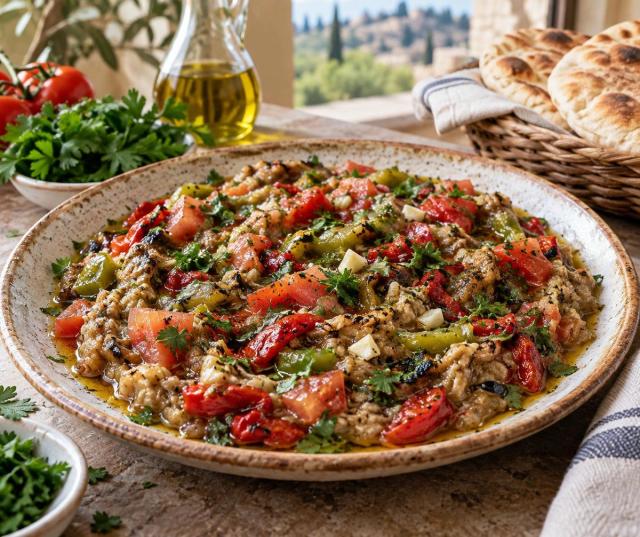
Baba Ganoush
Coarsely chopped charred eggplant, peppers and tomato with garlic, olive oil and lemon.
The Turkish pantry
Choose fresh eggplant, understand its different forms and cook it for tenderness, richness or a smoky finish.
Last updated:
This guide covers eggplant. Shape and color help you choose a cooking use; they do not establish a cultivar or growing location.
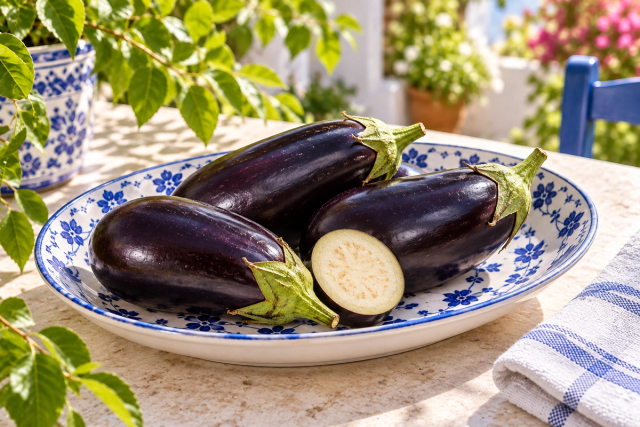
These are practical shape and appearance comparisons, not proof of a cultivar or origin. The main image illustrates generic dark-purple eggplant.
A narrower body gives smaller rounds and a different stuffing shape from a broad globe. Match the diameter and length to your recipe; work by weight rather than assuming all eggplants are the same size.
A substantial body gives wide slices or plenty of flesh for roasting. Choose for the dish rather than assuming bigger means bitter. Black Beauty is one named cultivar, not a name for every broad eggplant.
Purple-and-cream skin is an appearance, not a complete cultivar identification. The pattern may change in cooking. Check the seller’s cultivar label. Listada de Gandia is a named example; “striped” alone does not establish that identity.
Kemer commonly describes long, dark-purple forms; bostan commonly describes broader, rounder ones. Birecik patlıcanı is a place-associated product. A local market name is a starting point: ask the seller about the variety and where it was grown.
Work by weight and piece size. Four small eggplants are not interchangeable with four large globes. Choose the shape for your dish using the comparison above.
Raw eggplant, edible portion [1]
| Nutrient | Amount |
|---|---|
| Energy | 22 kcal |
| Protein | 0.85 g |
| Total fat | 0.12 g |
| Saturated fat | Not reported |
| Carbohydrate | 5.4 g |
| Dietary fiber | 2.45 g |
| Total sugars | 2.35 g |
| Sodium | 0.44 mg |
| Cholesterol | Not reported |
| Calcium | 11.06 mg |
| Iron | < 0.25 mg |
| Potassium | 222.1 mg |
| Vitamin D | Not reported |
A generic raw-eggplant reference, not a separate analysis of each variety or a cooked dish. Values are rounded for readability; “not reported” does not mean zero. A “<” value is below the source’s measurement limit.
Nutrition values come from the reference source named above. They are published reference values, not our own measurements. Actual products and cooking methods may change the values.
A place can shape a dish without owning every version of it. A salad changes from table to table Yogurt brings tang and creaminess; tahini adds sesame richness; olive oil and lemon leave the vegetable more distinct. These are families of preparations, not rigid city boundaries. The Antalya preparation documented in the original guide combines roasted eggplant with tahini, walnuts, lemon, garlic and olive oil, with yogurt optional. Hatay’s documented babagannuş and mutebbel are different preparations, even when international menus use their names differently. A long journey to the Turkish table Eggplant’s domestication history lies in Asia. Its later place in Ottoman and Turkish cooking is a different story: stuffed vegetables, meat dishes, fried preparations and soft purées. A colorful story about a dish’s name is not proof of its invention. The original guide distinguishes botanical research from culinary interpretation and links the underlying sources. Dishes to get to know İmam bayıldı and karnıyarık explore whole stuffed eggplant. Hünkar beğendi makes soft cooked flesh the foundation of a dish. Şakşuka takes you into fried vegetables; babagannuş into roasted ones. These are suggestions for exploration, not claims that every recipe is already in our collection.
Coarsely chopped charred eggplant, peppers and tomato with garlic, olive oil and lemon.
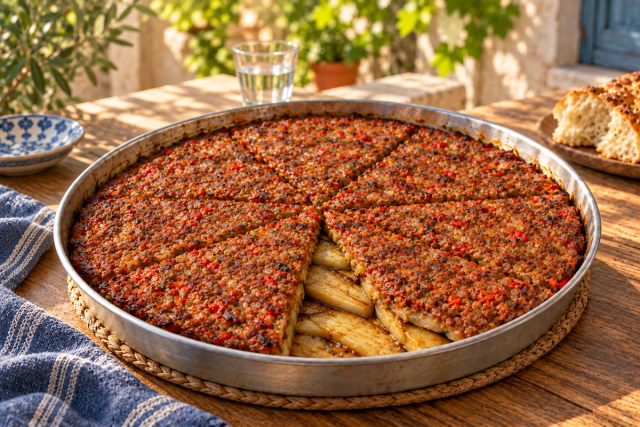
Finely chopped vegetables mixed with ground lamb and baked in a thin layer over sliced eggplant.
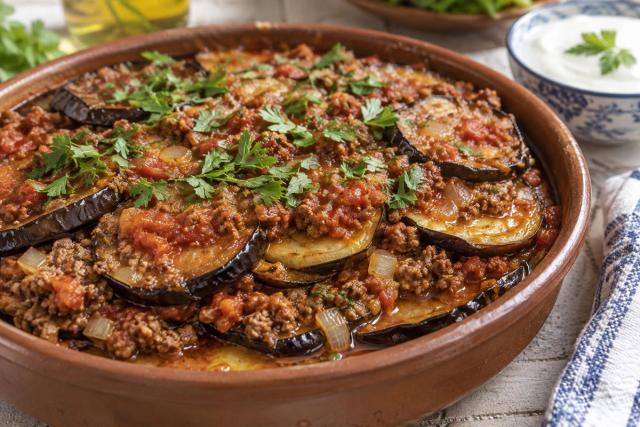
Roasted eggplant layered with minced beef and tomato, with an optional chickpea variation. The optional chickpeas reflect a documented Afyonkarahisar variation. This oven adaptation roasts the eggplant instead of frying it and has no béchamel topping.
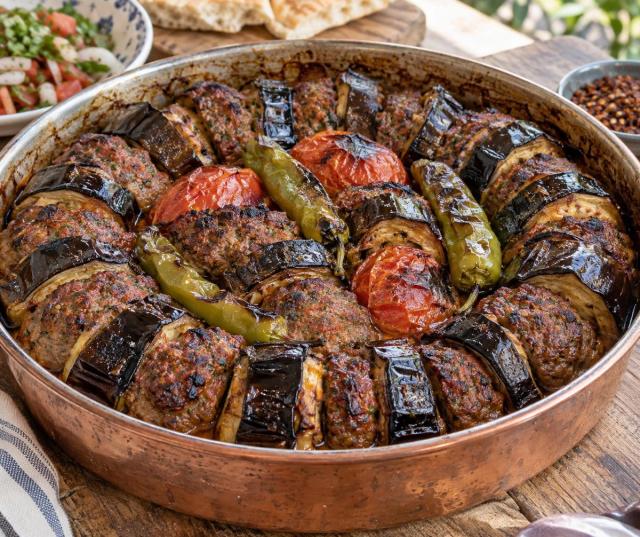
Alternating eggplant rounds and lamb patties roasted with tomatoes and green peppers. This oven adaptation follows the alternating meat-and-eggplant arrangement documented in Kilis. Use a shallow dish and avoid packing so tightly that the vegetables steam without softening.
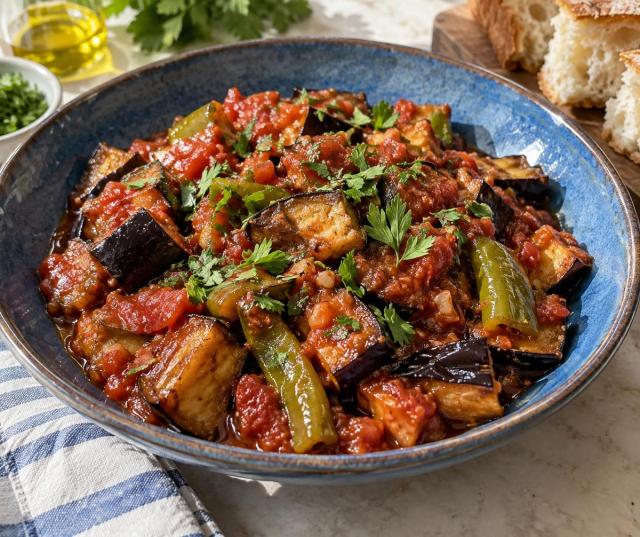
Tender browned eggplant and green peppers dressed with a chunky garlic-tomato sauce.
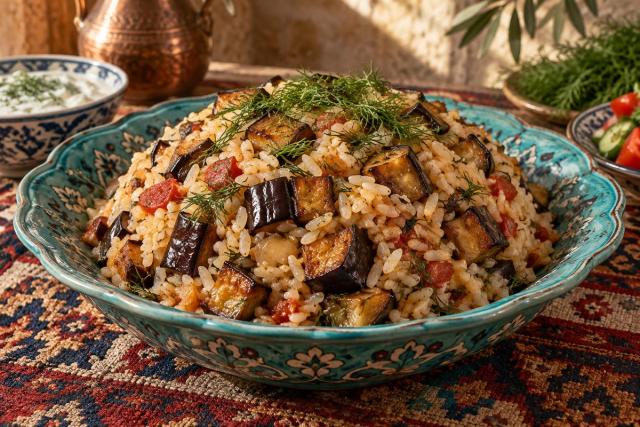
Tender Baldo rice with browned eggplant, tomato, onion, butter and fresh dill.
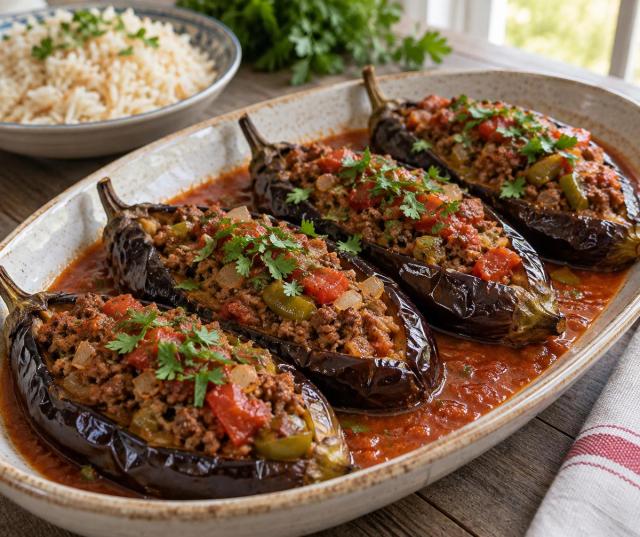
Soft eggplants filled with beef, onion, peppers and tomato, baked in a light tomato sauce.
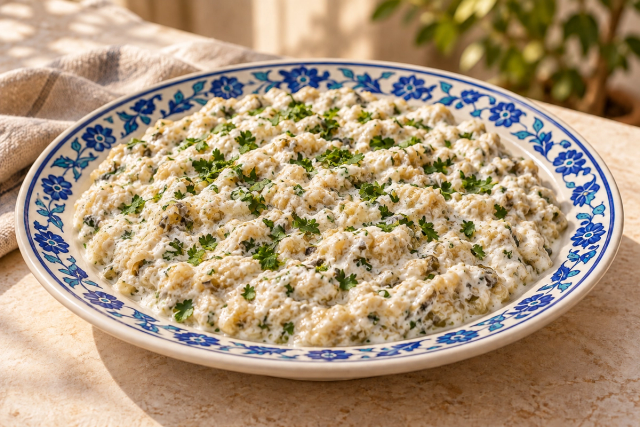
Flame-charred eggplant folded into garlic yogurt with lemon and olive oil, finished with parsley.
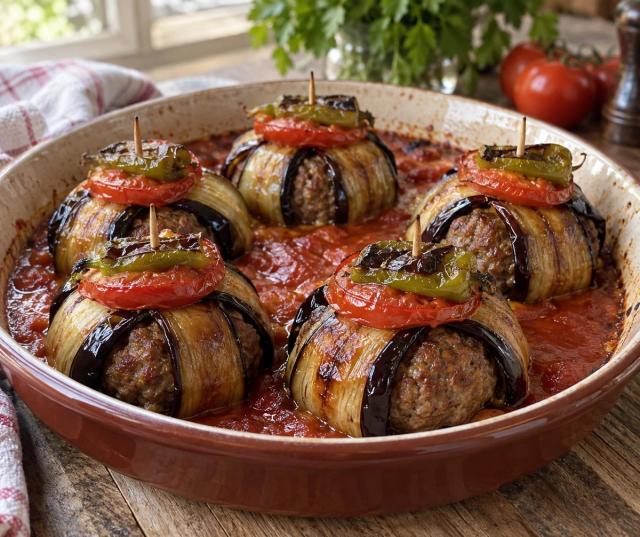
Individual meatballs wrapped in crossed eggplant strips and baked with tomato and pepper caps.
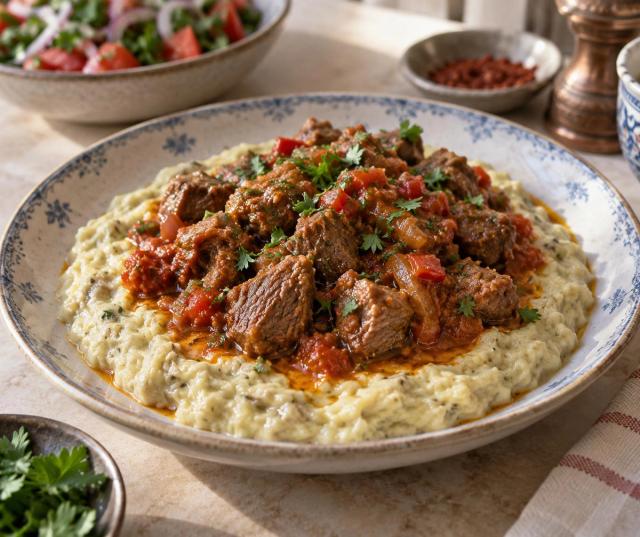
Tender lamb in tomato sauce over a smoky eggplant purée enriched with milk and kaşar.
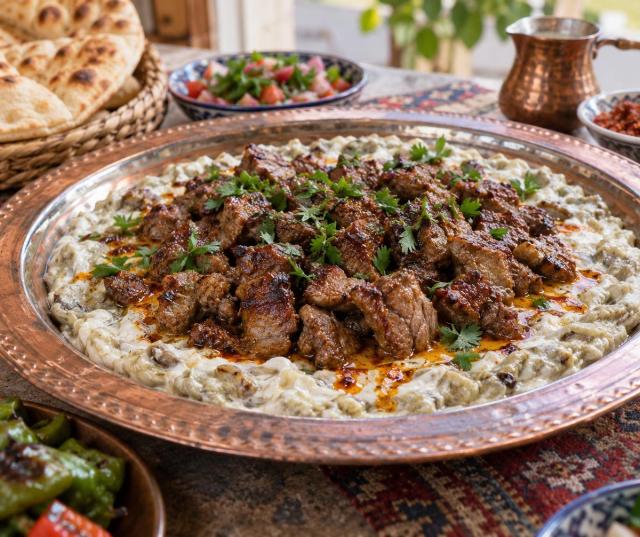
Hot lamb and pepper butter over smoky eggplant folded into garlic yogurt. This diced-lamb adaptation is related to Gaziantep’s alinazik, which is also made with coarsely minced meat. Let the eggplant cool to warm before folding it into the yogurt so the base stays creamy.
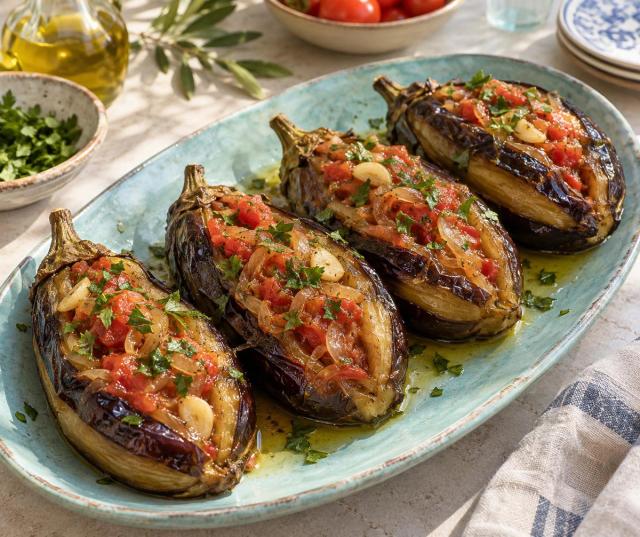
Tender eggplants filled with soft onion, garlic and tomato, baked in olive oil.