


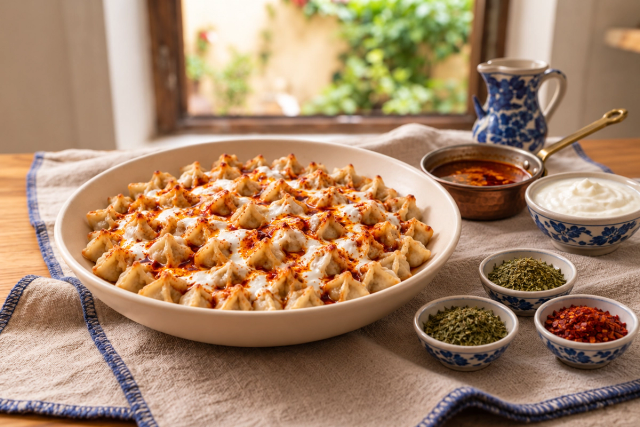
Baked Lentil Dumplings (Home Version)
Small, closed lentil dumplings baked first until golden, then finished in hot water. Serve with garlic yogurt and red-pepper butter, with extra yogurt and herbs on the side.
The Turkish pantry
Choose eggs with confidence: understand farming labels, check freshness and match the size to your recipe.
Last updated:
This guide is about chicken eggs. Compare farming labels when shopping, and follow the size specified when cooking.
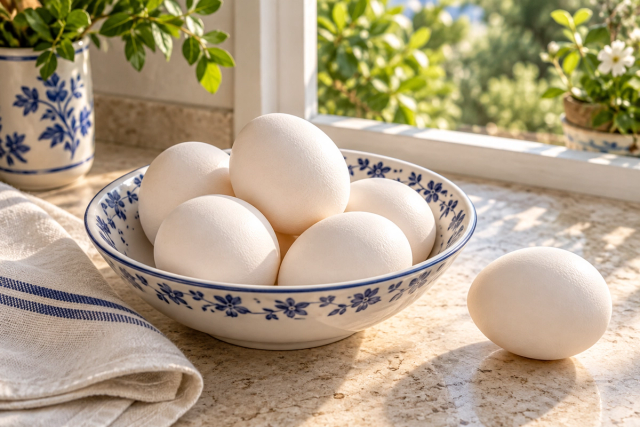
The cage-free and free-range descriptions below are for U.S. cartons carrying the USDA grade mark. Rules vary from country to country. These terms describe different things and can appear together on the same product.
Hens can move around indoors rather than being kept in cages. Outdoor access is not established by this label alone. Choose this when indoor freedom of movement is your priority; check separately for outdoor access.
Adds outdoor access. For USDA-grademarked eggs, hens have continuous outdoor access during their laying cycle; the area may be fenced or netted. Look for the production claim and any certification details, rather than relying on a farm picture.
A regulated production standard including organic agricultural feed and outdoor access, with documented temporary confinement permitted for health or environmental reasons. Check the USDA organic seal and certifier. Organic is not simply another word for cage-free.
For this claim, check the named certification or producer standard for the actual outdoor space and access requirements. Do not assume every carton uses the same standard or that pasture-raised automatically means certified organic.
A treatment to reduce pathogens; it describes food handling, not how the hen was housed. Choose explicitly pasteurized eggs or egg products for dishes served raw or undercooked.
On Turkish Class A shell eggs, the first digit identifies the production method: 0 organic, 1 outdoor access (free-range), 2 cage-free indoors, 3 caged. TR identifies Türkiye; subsequent information traces the province, business and flock. These are production and traceability codes, not egg-size grades.
When cooking, follow the size or egg weight specified by the recipe. U.S. carton sizes describe weight classes; they are separate from Grade AA, A or B, which concern quality characteristics.
White and brown shells do not establish egg quality or farming method. Cage-free and free-range describe housing; those words alone do not establish superior nutrition.
Free-range, cage-free and organic chicken eggs can serve the same recipe role. Keep the recipe’s specified size or weight; do not change the quantity solely because the farming label changes.
Choose a recipe developed for that replacement. A binder in a fritter and the main ingredient of an egg dish are different jobs; there is no single substitute that works in every use.
Raw whole chicken egg, without shell [1]
| Nutrient | Amount |
|---|---|
| Energy | 143 kcal |
| Protein | 12.56 g |
| Total fat | 9.51 g |
| Saturated fat | 3.13 g |
| Carbohydrate | 0.72 g |
| Dietary fiber | 0 g |
| Total sugars | 0.37 g |
| Sodium | 142 mg |
| Cholesterol | 372 mg |
| Calcium | 56 mg |
| Iron | 1.75 mg |
| Potassium | 138 mg |
| Vitamin D | 2 µg |
A generic whole-egg reference, not a comparison of organic, free-range or other farming labels. Values are rounded for readability; “not reported” does not mean zero. A “<” value is below the source’s measurement limit.
Nutrition values come from the reference source named above. They are published reference values, not our own measurements. Actual products and cooking methods may change the values.
Eggs appear in Turkish dishes such as menemen, cooked with tomatoes and peppers. In kabak mücveri, egg is combined with zucchini and other ingredients in a fritter mixture. These examples show different cooking roles for the same ingredient.
Small, closed lentil dumplings baked first until golden, then finished in hot water. Serve with garlic yogurt and red-pepper butter, with extra yogurt and herbs on the side.
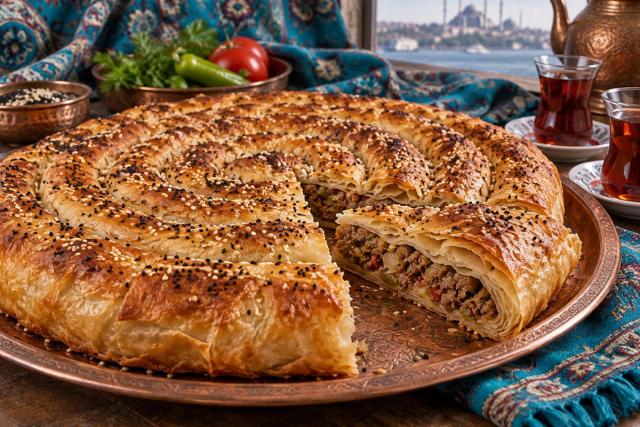
Golden coils of thin yufka filled with seasoned minced beef, onion and green pepper.
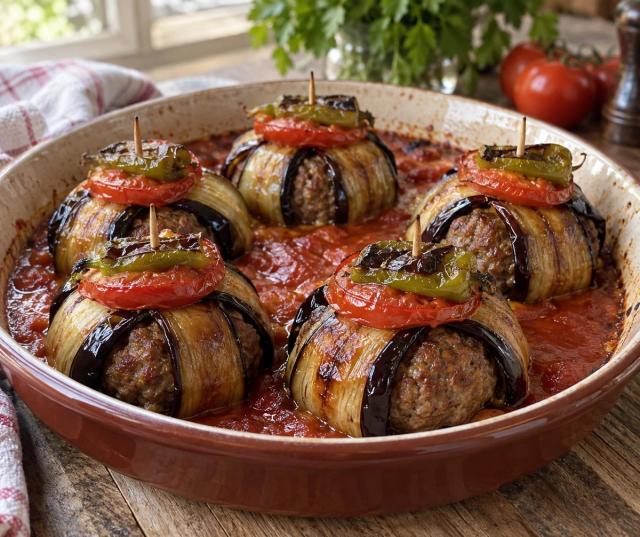
Individual meatballs wrapped in crossed eggplant strips and baked with tomato and pepper caps.
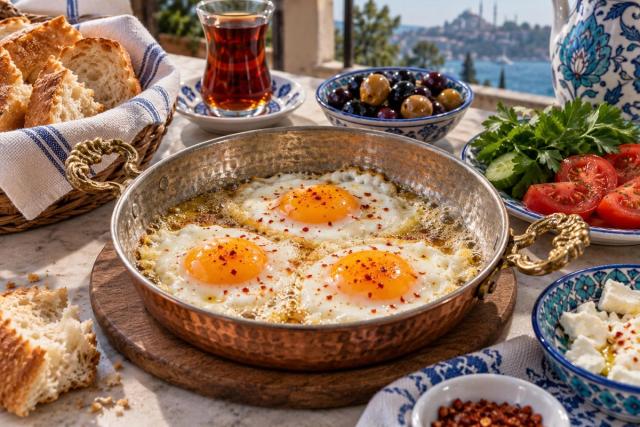
Eggs gently cooked in butter in a shallow pan and finished with pul biber.
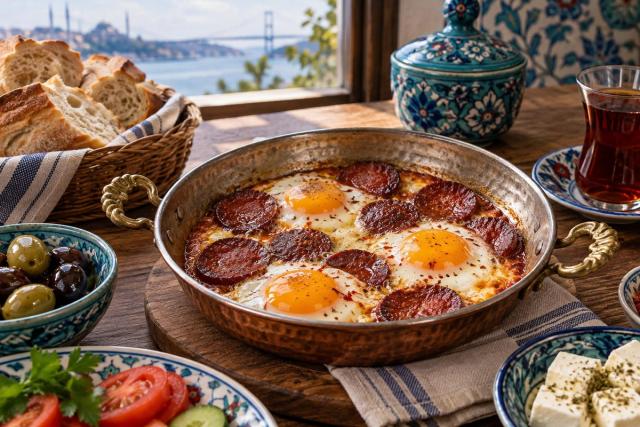
Eggs cooked among browned slices of garlicky beef sucuk, served hot with crusty bread.
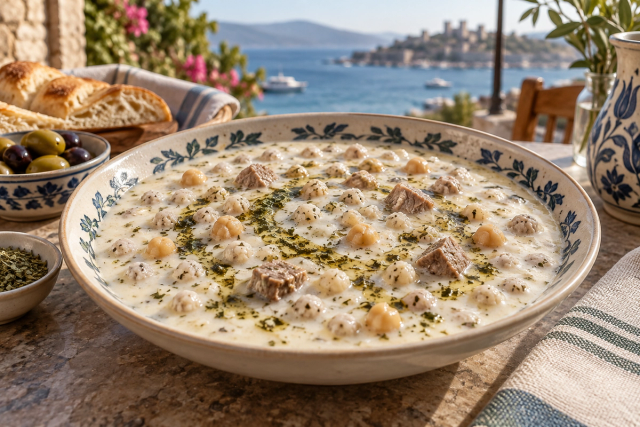
Tiny rice-and-lamb balls, chickpeas and tender lamb in a yogurt broth finished with mint butter. Gaziantep yuvalama is a substantial celebratory dish, often described locally as a meal rather than an everyday soup. This home adaptation uses rice flour for the small balls; traditional preparations may grind soaked rice with meat.
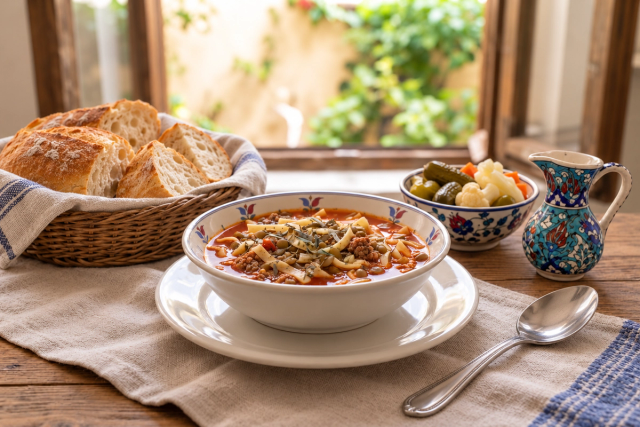
An Erzurum household soup of whole green lentils, hand-cut egg noodles and small beef meatballs, finished with onion and tarragon butter.
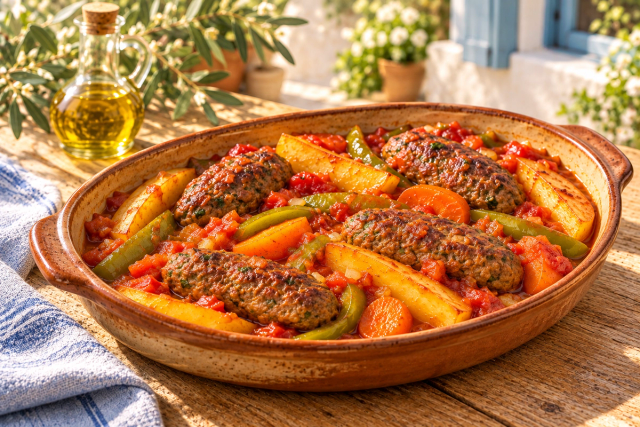
Finger-shaped beef meatballs baked with potatoes, carrot, green pepper and chopped tomatoes.
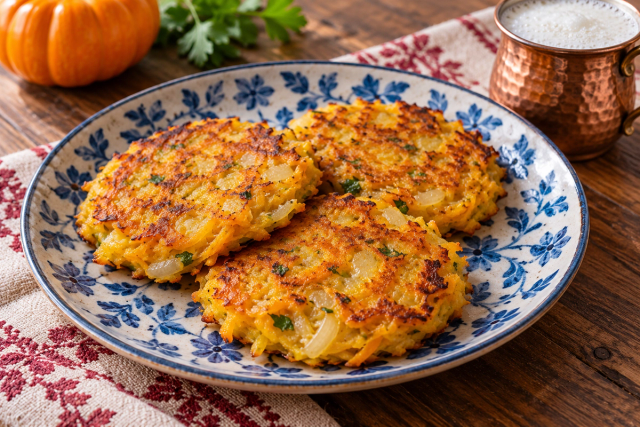
Fresh pumpkin, Parmesan and parsley come together in six savory fritters, pan-fried until golden and crisp.
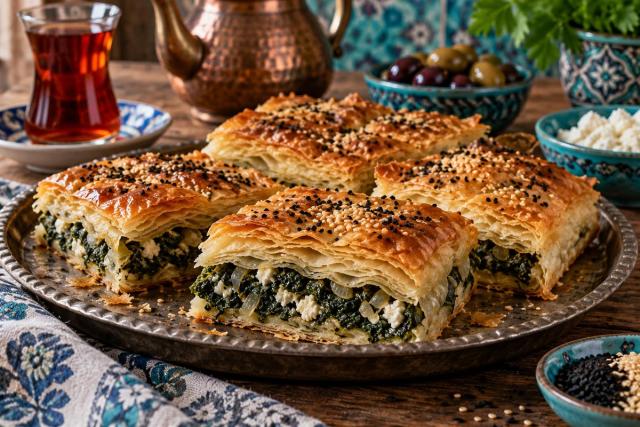
Crisp yufka layers with spinach, onion and an optional white-cheese filling.
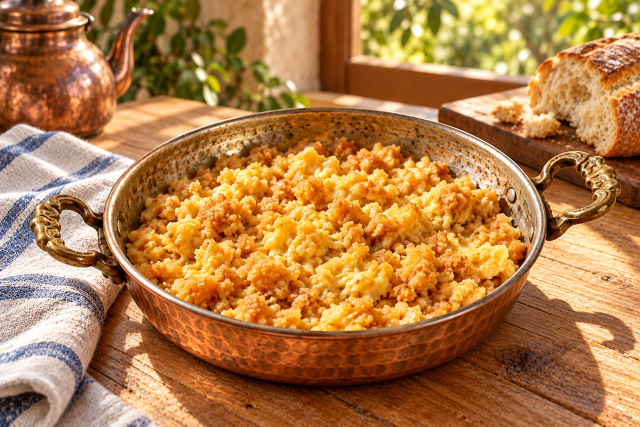
A rich Van breakfast dish in which beaten eggs bind flour toasted in butter.
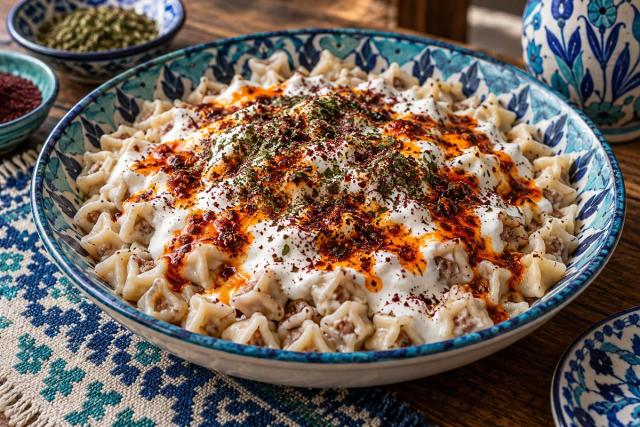
Small meat-filled dumplings with garlic yogurt, pepper butter, mint and sumac.