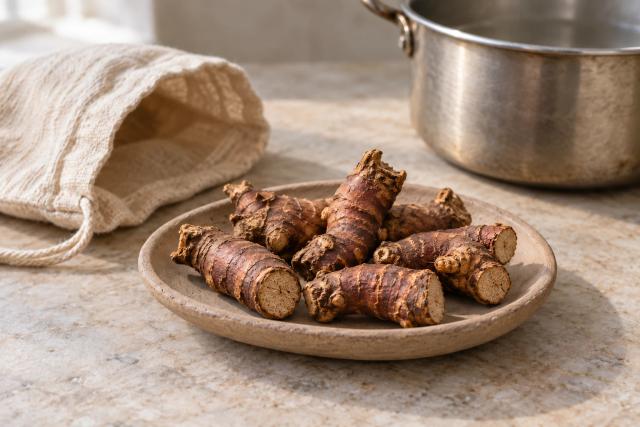
Dried aromatic rhizome pieces used alongside other whole spices in drinks such as Adana kaynar.
Last updated:
The Turkish Food Codex identifies havlıcan as Alpinia officinarum. International shops may use galangal for the distinct Alpinia galanga. Verify species and form rather than assuming fresh Thai galangal and Turkish dried havlıcan are identical.
Types & forms
Dried pieces or slices
For simmering and straining out.
Ground havlıcan
Disperses differently; not a spoon-for-spoon equivalent to pieces.
What to look for when buying
Prefer labeled food-grade pieces with a declared identity; extracts are outside this ingredient guide.
Choose dry pieces without visible mold or damp clumps.
Prepare & cook
Simmer with the recipe’s other spices, preferably in a spice bag, and remove before serving.
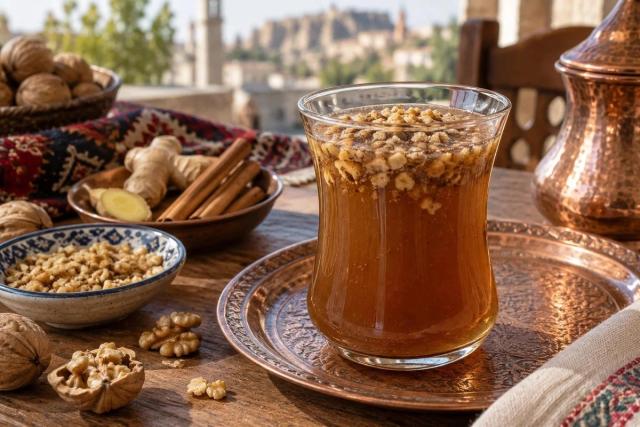
Adana’s documented kaynar includes havlıcan alongside ginger, cinnamon, cloves and cardamom; it does not treat havlıcan as ginger.
Store it well
Keep in a labeled, tightly closed container in a cool, dry, dark cupboard, away from heat and moisture. Follow the packet date and storage instructions.
Substitutions depend on the dish
Another form of the same species
Needs recipe adjustment; fresh and dried are not interchangeable one-for-one.
Ginger
Gives a different warm spice note. Describe an omission or adaptation honestly rather than relabeling ginger as havlıcan.
Nutrition
No verified nutrition data is available for this ingredient.
At the Turkish table
Adana kaynar is documented as a celebratory drink offered during birth visits. This is a hospitality connection, not a claim of a medicinal effect.
A warm spice infusion with galangal, ginger, cinnamon and cloves, topped with walnuts. In Adana, kaynar is associated with visits celebrating a new baby. That cultural association does not establish a medical or lactation benefit; this is a culinary serving recipe.