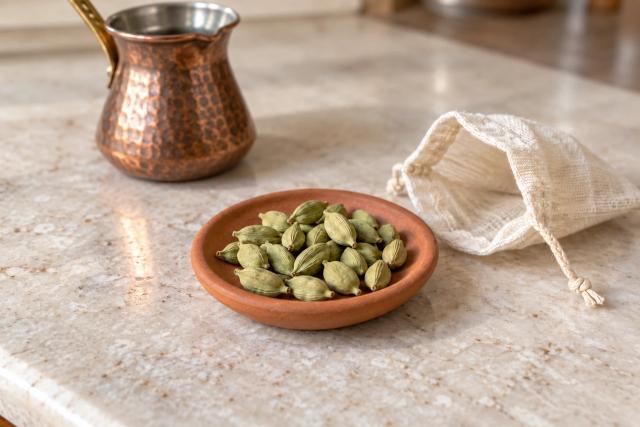
Aromatic pods enclose small seeds that perfume drinks and selected sweet or savory dishes. Check which kind of cardamom the recipe needs.
Last updated:
This guide covers whole cardamom pods. The Turkish kakule definition names green/small cardamom, Elettaria cardamomum; check the packet rather than assigning a species to unidentified pods. Large/black cardamom, Amomum subulatum, is a distinct spice, not a dark grade of the same product.
Types & forms
Whole pods
Seeds remain inside the husk, which is removed after infusing.
Seeds or ground seeds
A different preparation; pod counts and spoon measures of powder are not automatically equivalent.
What to look for when buying
Choose clearly labeled, mostly intact dry pods. Confirm the green or black type.
If the seller permits, smell a freshly opened pod. Avoid stale, damp or moldy stock.
Prepare & cook
Lightly crack pods to expose seeds for infusion, or remove and grind the seeds for a smoother mixture.
Remove whole husks after cooking. Grind only what the recipe needs.
Store it well
Keep in a labeled, tightly closed container in a cool, dry, dark cupboard, away from heat and moisture. Follow the packet date and storage instructions.
Substitutions depend on the dish
Ground green cardamom
A close flavor match to green pods, but follow a recipe adjustment and expect sediment in drinks.
Other spices
Cinnamon or clove makes a different drink. Black cardamom is not a neutral substitute for green.
Nutrition
No verified nutrition data is available for this ingredient.
At the Turkish table
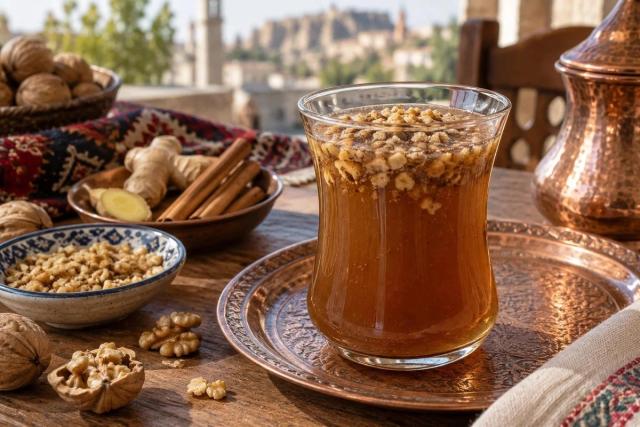
Documented uses include Adana kaynar and optional seeds added to Şanlıurfa mırra’s serving pot. Cardamom is not compulsory in every mırra or present in all Turkish coffee.
A warm spice infusion with galangal, ginger, cinnamon and cloves, topped with walnuts. In Adana, kaynar is associated with visits celebrating a new baby. That cultural association does not establish a medical or lactation benefit; this is a culinary serving recipe.