


Grilled Meatballs
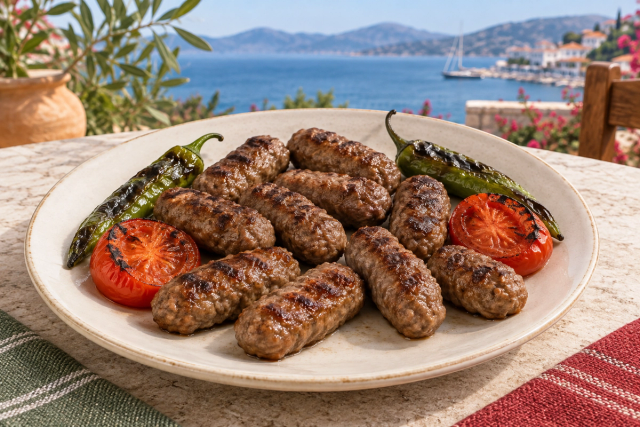
Mild beef-and-lamb meatballs, chilled before shaping into small fingers and grilling.
The Turkish pantry
A measured raising ingredient whose effect depends on the other ingredients in the recipe.
Last updated:
Culinary baking soda is sodium bicarbonate. Baking powder is a different product containing bicarbonate and acid ingredients. The two white powders are not interchangeable by equal spoonfuls.
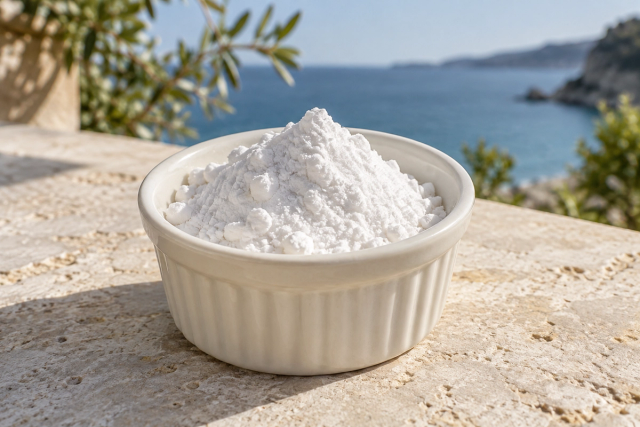
Plain sodium bicarbonate intended for cooking.
A formulated raising agent containing an acid component as well as bicarbonate.
Products intended for cleaning may contain additional ingredients; choose a culinary package for food.
Choose a recipe written for baking powder; the required acid balance and amount change.
Yeast requires fermentation and a different method. It is not a direct replacement in a soda-raised batter.
Leavening agents, baking soda [1]
| Nutrient | Amount |
|---|---|
| Energy | 0 kcal |
| Protein | 0 g |
| Total fat | 0 g |
| Saturated fat | 0 g |
| Carbohydrate | 0 g |
| Dietary fiber | 0 g |
| Total sugars | 0 g |
| Sodium | 27,400 mg |
| Cholesterol | 0 mg |
| Calcium | 0 mg |
| Iron | 0 mg |
| Potassium | 0 mg |
| Vitamin D | 0 µg |
Sodium bicarbonate as sold, per 100 g; a culinary dose is much smaller. This record is not baking powder. Values are rounded for readability; “not reported” does not mean zero. A “<” value is below the source’s measurement limit.
Nutrition values come from the reference source named above. They are published reference values, not our own measurements. Actual products and cooking methods may change the values.
The linked İnegöl köfte recipe uses a measured amount of karbonat in its meat mixture. Its role there differs from raising a cake; follow that recipe’s amount and resting instructions.
Mild beef-and-lamb meatballs, chilled before shaping into small fingers and grilling.
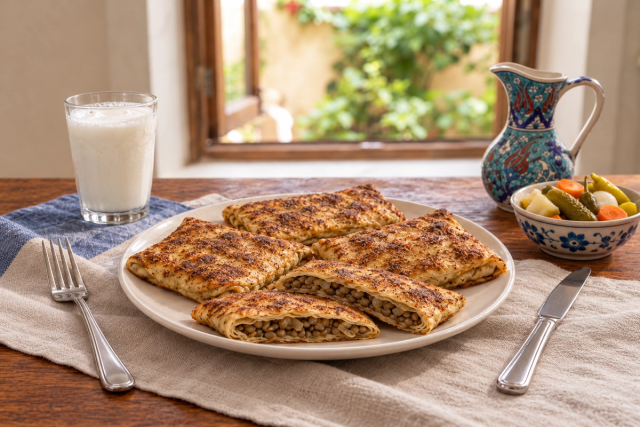
Thin, folded Afyon pastries filled with green lentils and onion, with olive oil and yellow poppy paste between the layers.