
Filleting fish
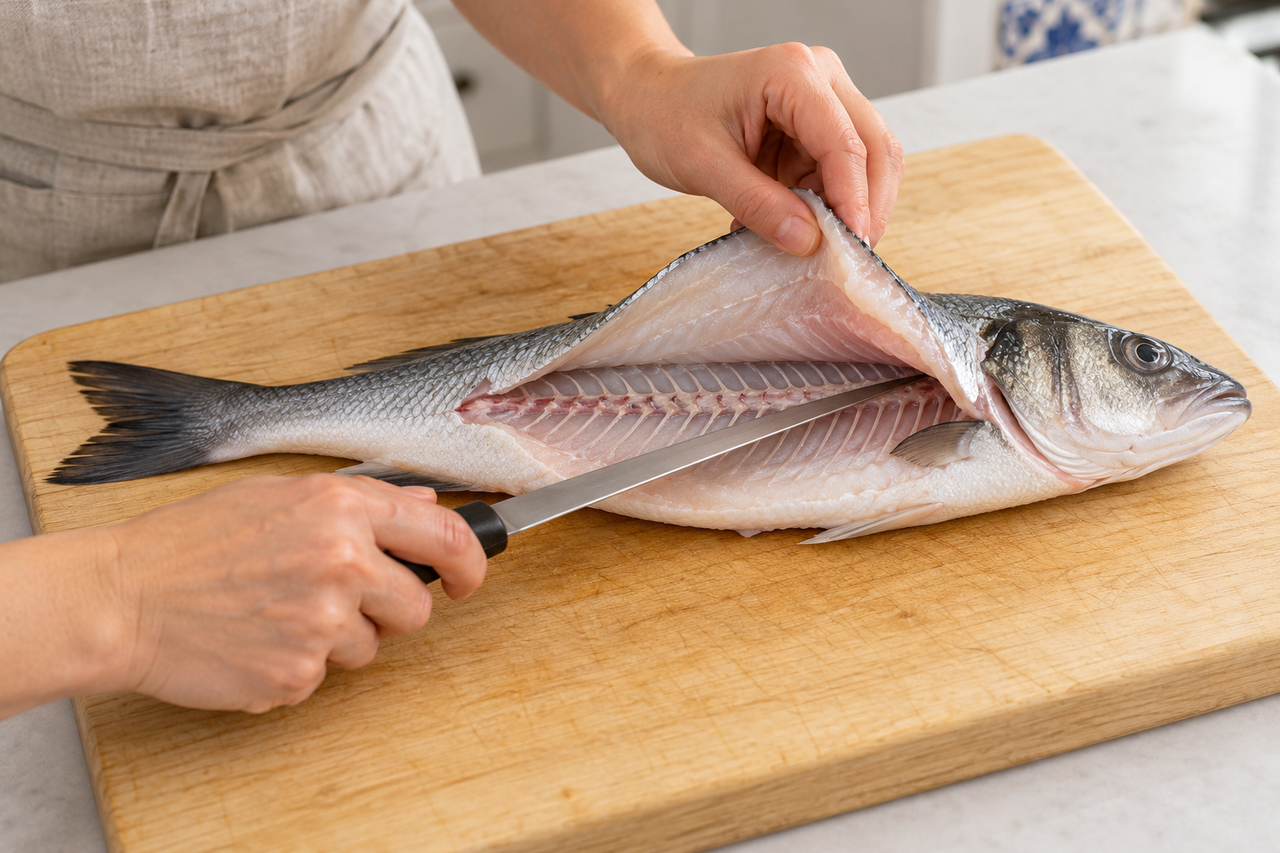
Follow the bones to lift two intact fillets from a round fish, then check carefully for the small bones left behind.
What this skill is for
Filleting separates the flesh on either side of a fish from its backbone and ribs. This lesson teaches a two-fillet method for round fish such as sea bass and mackerel. Start with a fish that has already been gutted and scaled; ask your fishmonger to do that preparation if needed.
Use this skill when a recipe calls for raw fish fillets. Flatfish such as sole, butterflied anchovies and removing bones from a cooked whole fish need different handling. Filleting does not automatically remove every small bone.
For practice, prepare mackerel fillets for the fish sandwich or sea bass fillets for the fish soup. Use the species, skin-on or skinless form and quantity the chosen recipe calls for; a whole fish's weight is not its usable fillet weight.
How to do it
- Prepare a clean, stable board, a sharp filleting knife, kitchen shears and fish-bone tweezers. Keep raw fish and its juices separate from ready-to-eat food. Take out only the fish you are working on; keep the rest refrigerated. Check that the fish is gutted and scaled. Trim obstructing fins with the shears, taking care around their sharp spines.
- Lay the fish on its side, with its back facing you. Just behind the gill cover and pectoral fin, make a diagonal cut towards the head until the blade meets the backbone. Stop at the bone; do not chop through it. Keep the holding hand clear of the blade's path.
- Turn the blade nearly flat against the bones and work from the head end towards the tail. Use controlled slicing strokes, staying close to the backbone. Gently lift the released flesh with your other hand so you can see where the tip is working. Follow the curve over the ribs rather than forcing through them, then release the fillet at the belly edge and tail.
- Put the first fillet on a clean plate. Turn the fish over, reposition it so you can cut comfortably, and repeat the cut behind the head. Follow the backbone and ribs to release the second fillet. Reposition the fish instead of cutting towards your holding hand.
- Lay each fillet skin-side down. Check for any rib bones still attached; slip the knife just underneath them and trim them away with as little flesh as possible. Trim ragged edges lightly. Leave the skin on at this stage; remove it separately only if your recipe calls for skinless fillets.
- Run your fingertips slowly along the thick middle of each fillet to locate pin bones. Grip each exposed bone firmly with fish-bone tweezers and ease it out in the direction it lies, supporting the flesh rather than yanking. Check the whole fillet again by touch and sight, including its edges. A tidy-looking fillet can still contain bones.
- Cover and refrigerate the fillets promptly at 40°F/4°C or below until cooking. Wash hands with soap and water for at least 20 seconds and wash the board, knife, tweezers and work surface with hot, soapy water before handling ready-to-eat food. Continue with the chosen recipe's bone check and preparation; cook fish to at least 145°F/63°C in the thickest flesh, checked with a food thermometer.
Recognize success
- You have two intact fillets with smooth cut surfaces, rather than torn pieces or deep gouges.
- The frame has little thick flesh left on it, and the ribs have stayed with the skeleton or been trimmed from the fillets.
- A careful second check finds no remaining bones. This check reduces the chance of missed bones; it is not a guarantee that every bone has been removed.
Common mistakes and what to do
- Using a blunt blade or pressing down hard: the flesh tears and the knife becomes harder to control. Stop, use a properly sharpened filleting knife and make controlled strokes close to the bones.
- Pulling the fillet away before cutting its attachments: delicate flesh tears. Lift just enough to see, then let the blade release it. Torn flesh cannot be made into an intact fillet again.
- Cutting through ribs or skipping the pin-bone check: bones can remain in otherwise neat fillets. Trim attached ribs and check the thick center and edges carefully with your fingers and tweezers.
- Using this same method for every fish, or replacing a recipe's whole fish or steaks with fillets: the anatomy and cooking behavior differ. Choose a fillet recipe that matches the fish you have.
- Keeping finished fillets on the worktop while preparing everything else: raw fish needs refrigeration. Cover and chill the fillets, then clean the equipment before preparing other food.
Last updated:
Practice with a real recipe