


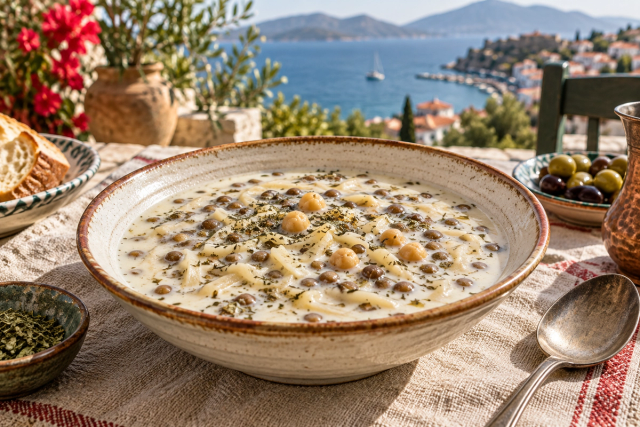
Lentil, Noodle and Yogurt Soup
Short wheat noodles, green lentils and chickpeas in a smooth yogurt broth.
The Turkish pantry
A strained cooking liquid for vegetable flavor in soups, rice and sauces, seasoned to support the dish.
Last updated:
Vegetables and aromatics simmer in water, then are strained. This guide means liquid at cooking strength. Homemade stock, cartons and diluted bouillon can have very different salt and ingredients.

Season for the final dish.
Use directly unless labeled otherwise.
Dilute as instructed before measuring as liquid stock.
Often replaces liquid volume but reduces vegetable flavor; adjust seasoning.
Changes flavor, vegetarian suitability or allergens; check recipe and diners’ needs.
No verified nutrition data is available for this ingredient.
Turkish vocational cookery teaches vegetable stock among base liquids for soups, sauces and dishes. This does not mean every traditional soup requires stock.
Short wheat noodles, green lentils and chickpeas in a smooth yogurt broth.