


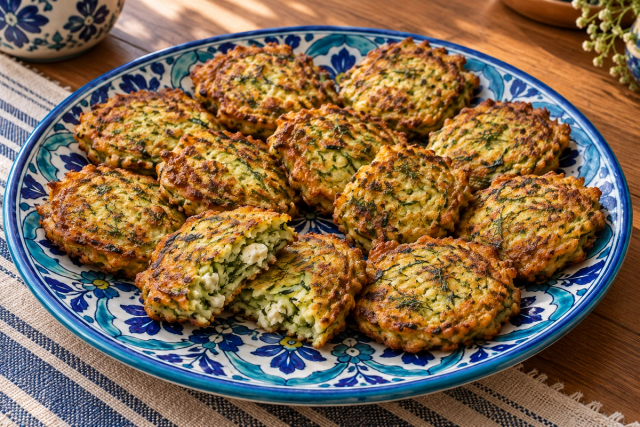
Zucchini Fritters
Kabak mücveri turns grated zucchini, white cheese and dill into small, golden pan-fried fritters.
The Turkish pantry
Conventional and high-oleic sunflower oils have different fatty-acid profiles.
Last updated:
Edible sunflower oil. The nutrition reference is the conventional high-linoleic type; high-oleic sunflower oil has a different fatty-acid profile.
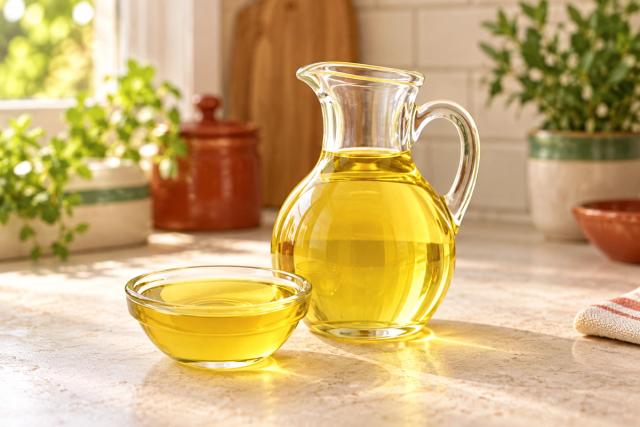
Check the producer’s stated cooking uses.
A distinct oil profile, not merely another bottle size.
Flavor and suitable uses depend on the product.
Choose one intended for frying; expect its composition to differ from this reference.
Oil, sunflower, linoleic, (approx. 65%) [1]
| Nutrient | Amount |
|---|---|
| Energy | 884 kcal |
| Protein | 0 g |
| Total fat | 100 g |
| Saturated fat | 10.3 g |
| Carbohydrate | 0 g |
| Dietary fiber | 0 g |
| Total sugars | 0 g |
| Sodium | 0 mg |
| Cholesterol | 0 mg |
| Calcium | 0 mg |
| Iron | 0 mg |
| Potassium | 0 mg |
| Vitamin D | 0 µg |
Linoleic sunflower oil, approximately 65% linoleic acid. High-oleic products have a different fatty-acid profile. Values are rounded for readability; “not reported” does not mean zero. A “<” value is below the source’s measurement limit.
Nutrition values come from the reference source named above. They are published reference values, not our own measurements. Actual products and cooking methods may change the values.
Our mücver uses sunflower oil for shallow frying. Oil depth is a pan instruction and does not multiply automatically with servings.
Kabak mücveri turns grated zucchini, white cheese and dill into small, golden pan-fried fritters.
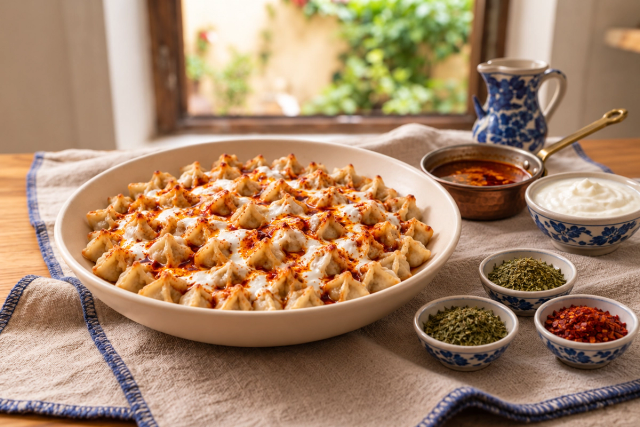
Small, closed lentil dumplings baked first until golden, then finished in hot water. Serve with garlic yogurt and red-pepper butter, with extra yogurt and herbs on the side.
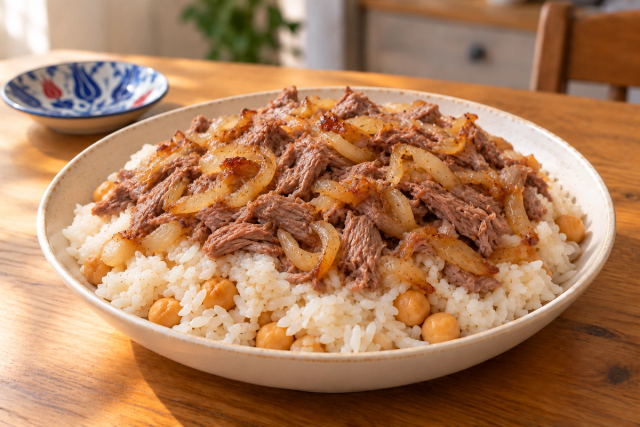
Layers of shredded beef, caramelized onion, rice and chickpeas, cooked in broth and turned onto a platter.
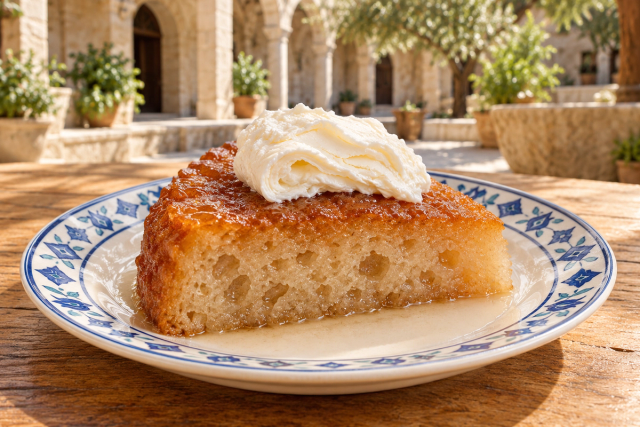
A porous, golden-brown bread absorbs plain sugar syrup and is served in wedges with buffalo-milk clotted cream. The bread is baked and dried before its final stovetop cooking.
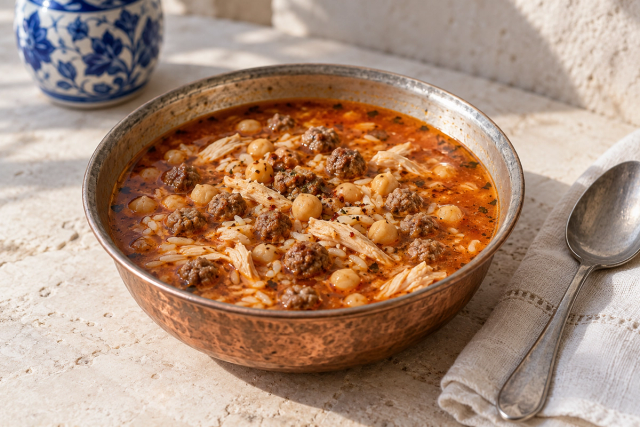
A tomato-based soup with chicken, chickpeas, rice and tiny meatballs, flavored with dried mint.
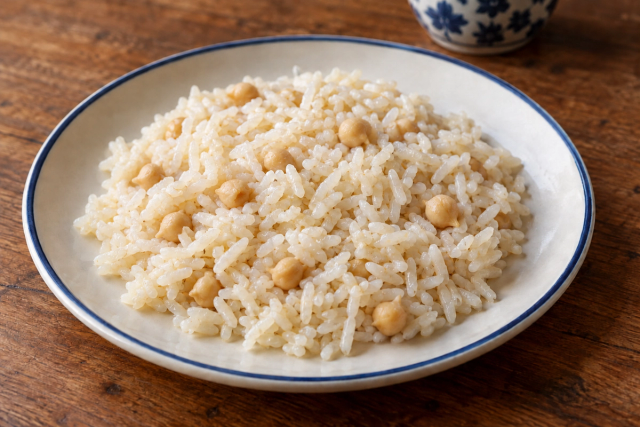
Buttery rice with tender chickpeas, inspired by Istanbul’s street-side pilaf carts. This version uses cooked chickpeas and water, with no chicken topping.
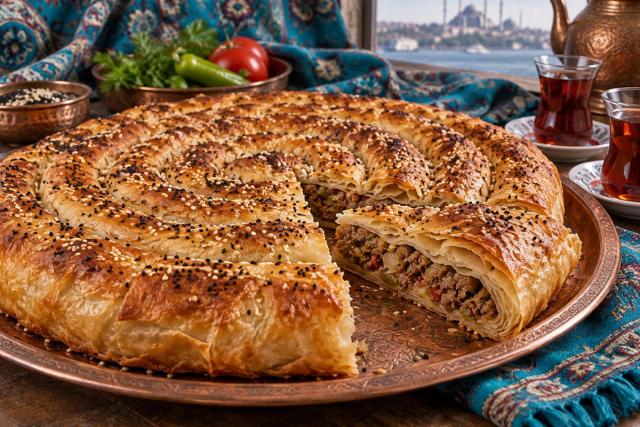
Golden coils of thin yufka filled with seasoned minced beef, onion and green pepper.
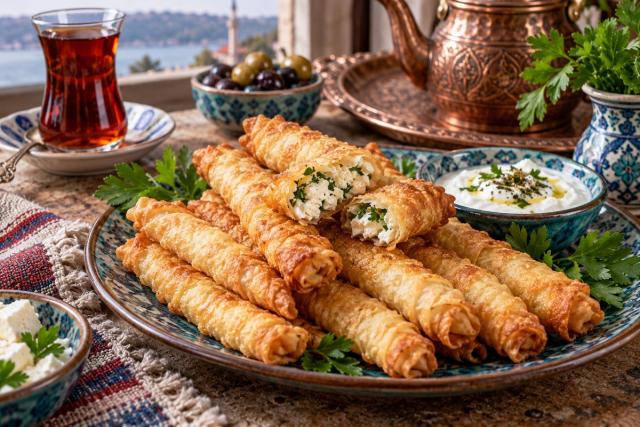
Crisp golden yufka rolls filled with white cheese, parsley and black pepper.
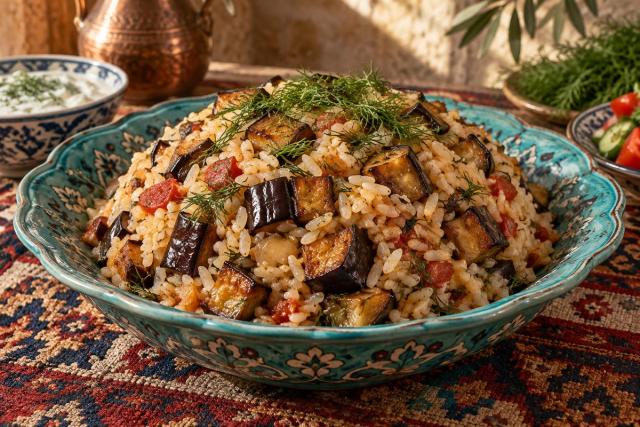
Tender Baldo rice with browned eggplant, tomato, onion, butter and fresh dill.
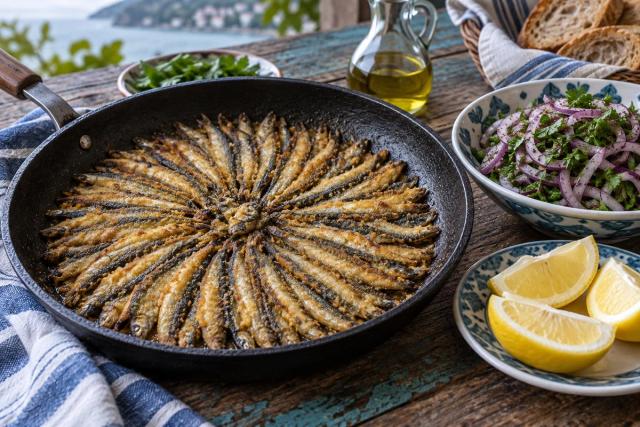
Small anchovies with a light cornmeal crust, served with lemon and red onion.
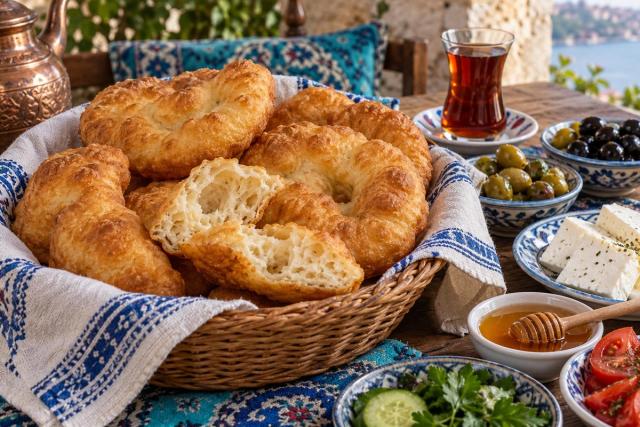
Puffy golden yeast dough with a crisp outside and a soft, airy center.
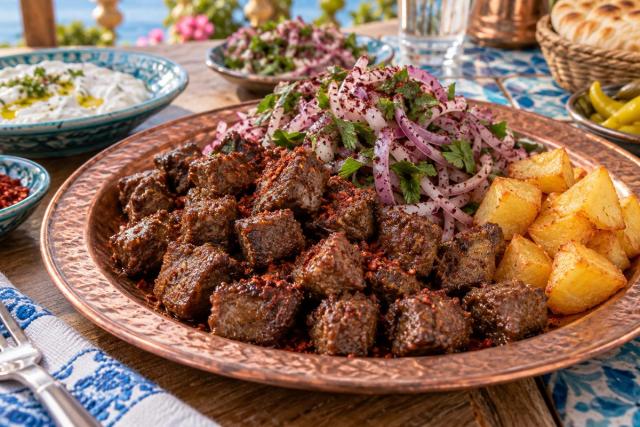
Lightly flour-coated calf liver with crisp potato cubes and a sharp sumac-onion salad.