


The Turkish pantry
Şile Chestnut Honey
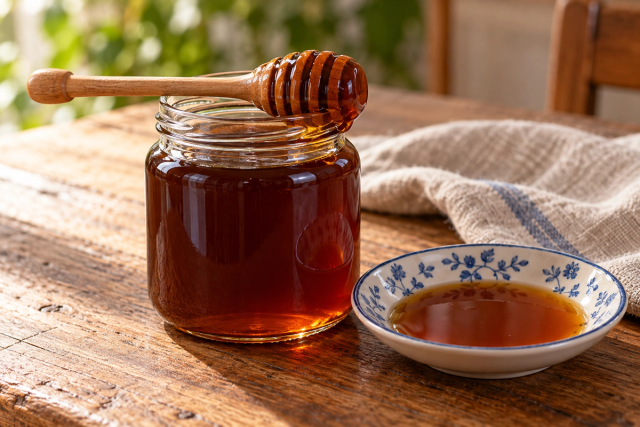
Dark chestnut honey from Şile, with a pronounced aroma and a sweet, sharp, slightly astringent taste.
Last updated:
Şile kestane balı is a regional honey produced in Şile’s chestnut-forest landscape. Its name identifies both the honey and its origin; chestnut honey from another district is a different regional product. This guide covers extracted honey, not chestnut purée, a flavored syrup or honey vinegar.
Types & forms
Extracted honey
Honey separated from the comb and sold in a jar. Its dark brown color can look lighter in a thin layer.
Honeycomb and honey vinegar
Comb honey contains wax; honey vinegar is fermented and acidic. Neither is the same form as a measured quantity of extracted honey.
What to look for when buying
- Look for the full Şile kestane balı name, producer information and traceable origin rather than relying on dark color alone.
- Read the label to distinguish pure honey from mixtures or honey-flavored syrups.
Prepare & cook
- Taste a small amount before adding it to a dish; its pronounced flavor differs from a mild floral honey.
- Use a clean, dry spoon and measure the honey in the form your recipe requests.
- Do not give honey to children younger than 12 months.
Store it well
- Keep the jar tightly closed in the producer’s recommended storage conditions, away from excess heat and moisture.
- Follow the label for the product’s storage and best-before information; keep wet utensils out of the jar.
Substitutions depend on the dish
Chestnut honey from elsewhere
It may provide a similar strongly flavored sweetness, but does not have the Şile origin. Taste before substituting.
Mild floral honey
It can supply sweetness where the recipe allows, with a less assertive flavor. It does not reproduce Şile chestnut honey’s regional character.
Nutrition
Honey composition varies by product and harvest; use the jar’s nutrition label rather than treating one analysis as universal.
At the Turkish table
Chestnut honey is part of Şile’s forest-based beekeeping tradition and is sold through local producers and markets.