


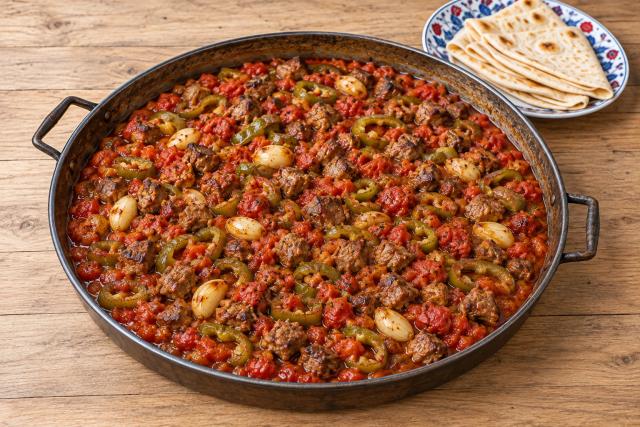
Aksaray Tava
Small pieces of lamb baked with tomatoes, green peppers and whole garlic in a rich tomato and pepper sauce, served with warm lavaş.
The Turkish pantry
Sea salt is made by evaporating seawater. Its crystals range from fine to coarse and flaky, which changes how much fits in a spoon.
Last updated:
Culinary sea salt (deniz tuzu) is salt produced by evaporating seawater. By weight it is as salty as table salt: most of it is sodium chloride. It is usually less refined than table salt and often has no added iodine.
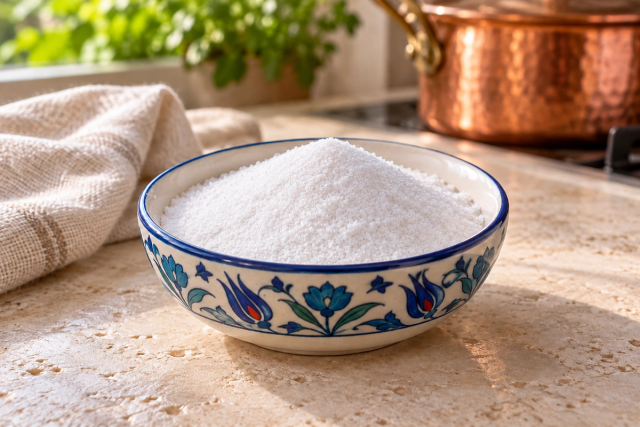
Small crystals that measure close to table salt by the spoon. Use it when a recipe calls for sea salt without saying coarse.
Larger crystals. Fewer fit in a spoon, so a spoonful is less salty than the same spoon of fine salt. Grind it or weigh it.
Thin, light flakes for sprinkling over a finished dish, not for measured seasoning.
Fine table salt can replace fine sea salt spoon for spoon. In place of coarse sea salt, use less by volume or match the weight.
Sea salt products differ in crystal size, added iodine and trace minerals, so no single table is shown. Missing values are not zero.
Small pieces of lamb baked with tomatoes, green peppers and whole garlic in a rich tomato and pepper sauce, served with warm lavaş.