


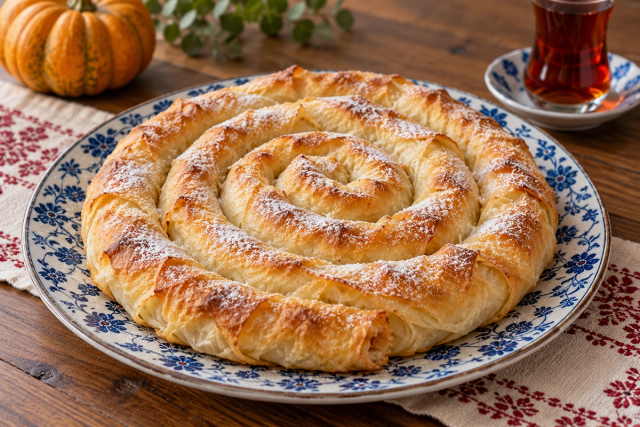
Pumpkin and Walnut Börek
A sweet spiral of crisp yufka filled with finely grated pumpkin, walnuts and cinnamon, finished with powdered sugar.
The Turkish pantry
A fine white sugar powder for smooth icings, tender cookies and a light finishing dusting.
Last updated:
Powdered sugar, also called confectioners’ sugar or icing sugar, is white sugar ground to a fine powder. Many packaged versions contain a small amount of starch, often cornstarch, to help prevent clumping. The ingredients vary by brand.
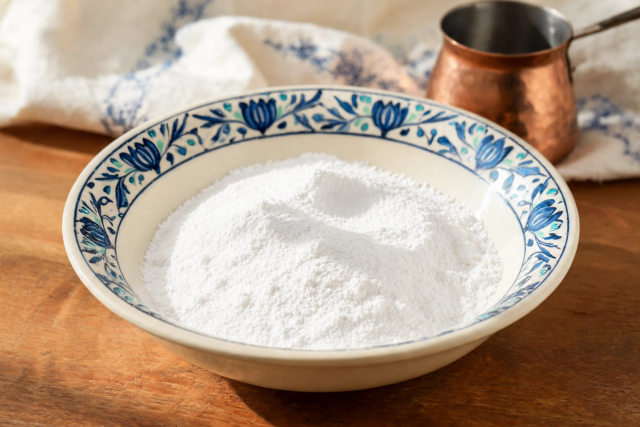
The everyday baking form is a fine white powder, often labeled confectioners’ sugar or 10X. Use it for recipes calling for powdered sugar and for a soft dusting over finished pastries.
Some products include vanilla or another flavoring. Read the ingredient list if you want a plain finish; a flavored version will also season the dessert.
This similar-looking topping is formulated to keep a white finish on moist pastries. It is a different product from ordinary powdered sugar and belongs on the surface rather than being assumed interchangeable in a dough or icing.
Neither gives the same powdery dusting or dissolves into an icing in the same way. Do not replace powdered sugar cup for cup with these sugars in a baking recipe.
Use a product intended for decorative dusting when you need the white surface to last on a moist pastry. Check its instructions and ingredients; it is not the standard powdered sugar specified for a dough or frosting.
Powdered sugar [1]
| Nutrient | Amount |
|---|---|
| Energy | 389 kcal |
| Protein | 0 g |
| Total fat | 0 g |
| Carbohydrate | 99.77 g |
| Total sugars | 97.81 g |
| Dietary fiber | 0 g |
| Sodium | 2 mg |
Representative values for powdered sugar. Starch, flavoring and other ingredients vary by brand; check your package for product-specific values.
Nutrition values come from the reference source named above. They are published reference values, not our own measurements. Actual products and cooking methods may change the values.
A sweet spiral of crisp yufka filled with finely grated pumpkin, walnuts and cinnamon, finished with powdered sugar.