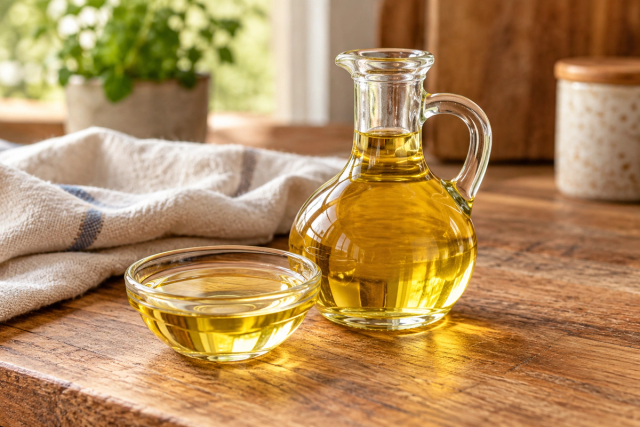
Cold-pressed poppy-seed oil has a light, nutty flavor. Food-grade oil can be used in dressings or to finish a dish; it is distinct from ground poppy-seed paste.
Last updated:
This guide covers food-grade cold-pressed poppy-seed oil. Choose an edible product whose label identifies that processing; a clear golden color alone cannot establish how an oil was made.
Types & forms
Cold-pressed edible oil
Food-grade liquid oil extracted by cold pressing. Select an edible product and follow its label.
What to look for when buying
Check that the label identifies poppy-seed oil, cold pressing and suitability for food use.
Choose a sealed food product and follow its handling instructions. Cosmetic oils are outside this guide.
Prepare & cook
Its light, nutty flavor suits raw uses such as salad dressings or drizzling over a finished dish.
Follow the product label for culinary use and heating guidance. Poppy-seed paste is a different ingredient and is not an equal-volume replacement for the extracted oil.
Store it well
Keep the bottle tightly closed, away from heat and direct light. Follow its label for storage and use after opening.
Substitutions depend on the dish
Sunflower or olive oil
Other edible oils have different flavors. Follow a recipe that explicitly offers that substitution.
Nutrition
Verified nutrition values for this exact product and prepared form are not available.
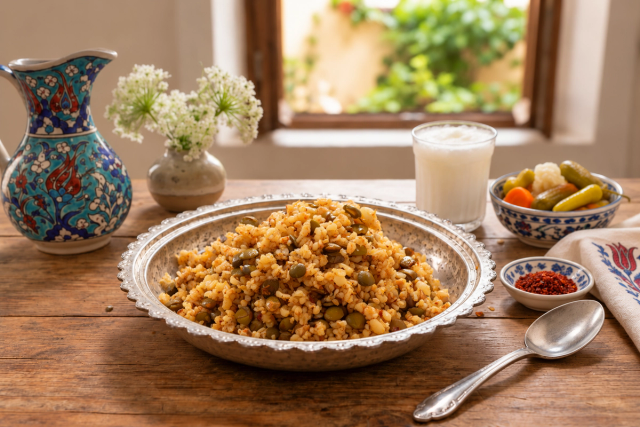
Dry green lentils are soaked and simmered, then cooked with coarse bulgur in their own liquid. Hot cold-pressed poppy-seed oil is stirred through, and the pilaf rests under a paper towel so the grains stay separate.