


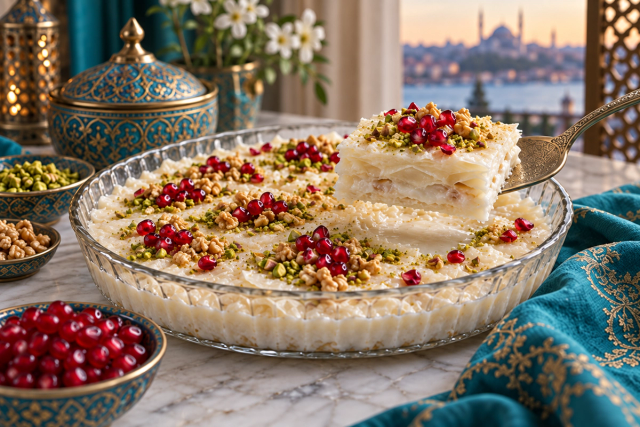
Milk and Rose Dessert
Delicate starch sheets soaked in sweet milk, layered with walnuts and finished with pistachios and pomegranate.
The Turkish pantry
Juicy flesh-covered seeds for a tart, crunchy finish.
Last updated:
The edible aril includes the juicy covering and its seed. This guide concerns fresh arils with the leathery rind and white membranes removed; juice and pomegranate molasses are separate ingredients.
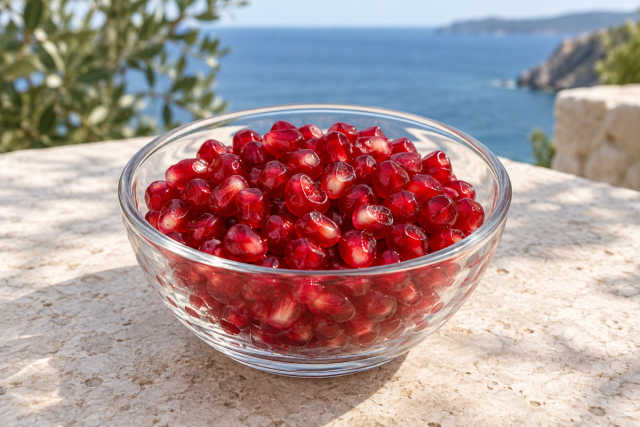
The edible flesh-covered seeds shown here.
Useful in prepared dishes; thawing can soften their texture.
Liquids with different texture and concentration, not substitutes for the crunch of whole arils.
It contributes liquid and tartness but no seed crunch; it cannot replace a finishing garnish in the same way.
Where the recipe explicitly marks arils optional, omission is a valid choice. Preserve any required main ingredient.
Pomegranates, raw [1]
| Nutrient | Amount |
|---|---|
| Energy | 83 kcal |
| Protein | 1.67 g |
| Total fat | 1.17 g |
| Saturated fat | 0.12 g |
| Carbohydrate | 18.7 g |
| Dietary fiber | 4 g |
| Total sugars | 13.7 g |
| Sodium | 3 mg |
| Cholesterol | 0 mg |
| Calcium | 10 mg |
| Iron | 0.3 mg |
| Potassium | 236 mg |
| Vitamin D | 0 µg |
Raw edible pomegranate portion, including seed and juicy covering; rind and membranes excluded. Values are rounded for readability; “not reported” does not mean zero. A “<” value is below the source’s measurement limit.
Nutrition values come from the reference source named above. They are published reference values, not our own measurements. Actual products and cooking methods may change the values.
This collection’s güllaç pairs pomegranate arils with the milk-soaked dessert. The arils supply a distinct juicy seed texture; pomegranate molasses would instead add a concentrated liquid. This is the linked recipe’s garnish choice, not a claim that every güllaç needs pomegranate.
Delicate starch sheets soaked in sweet milk, layered with walnuts and finished with pistachios and pomegranate.
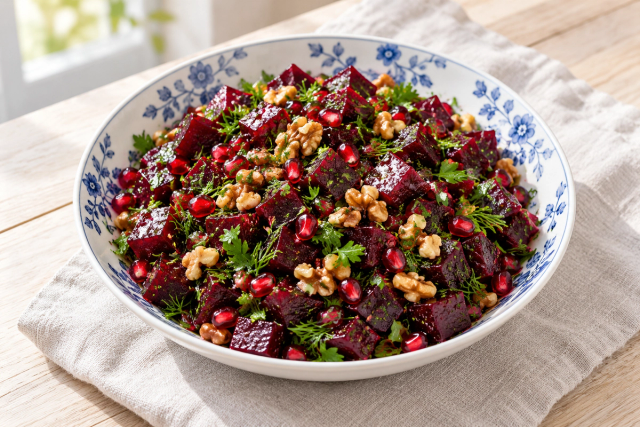
Tender beets with dill, parsley, walnuts and pomegranate in a lemon and olive oil dressing.