


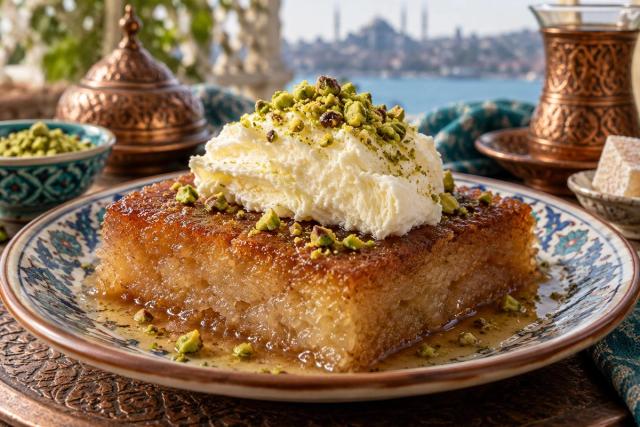
Turkish Bread Pudding with Clotted Cream
A dried ekmek kadayıfı base slowly soaked with caramel syrup and served with kaymak.
The Turkish pantry
Plain kernels for chopping or grinding; distinguish raw and roasted products before choosing.
Last updated:
This guide concerns unsalted shelled pistachio kernels. The recipe identity does not specify raw or roasted, so check the method and product label. Antep fıstığı is the Turkish ingredient name here, not certification that every package was grown in Gaziantep.
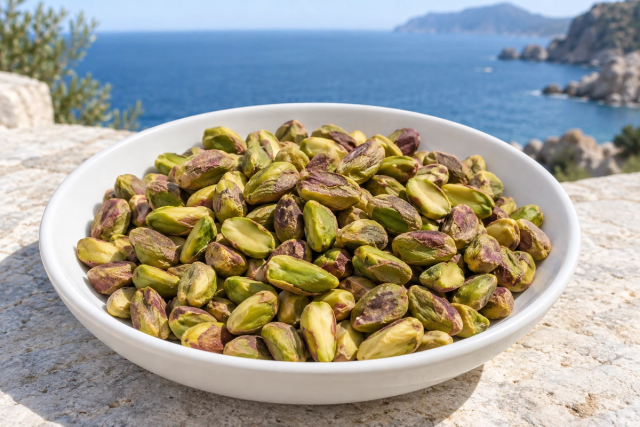
Unroasted kernels, shown in the picture. Nutrition below labels raw and dry-roasted reference values separately.
A different preparation with a toasted flavor; reference nutrition differs from raw kernels.
Additional salt, coatings or shell weight make these different purchasing and measuring choices.
Flavor, color, texture and allergens change; use a recipe variation written for the chosen nut.
Sugar, oil and texture may differ substantially. It cannot replace chopped kernels by equal weight without reformulating the dish.
Pistachio kernels, raw and unsalted [1]
| Nutrient | Amount |
|---|---|
| Energy | 560 kcal |
| Protein | 20.2 g |
| Total fat | 45.3 g |
| Saturated fat | 5.91 g |
| Carbohydrate | 27.2 g |
| Dietary fiber | 10.6 g |
| Total sugars | 7.66 g |
| Sodium | 1 mg |
| Cholesterol | 0 mg |
| Calcium | 105 mg |
| Iron | 3.92 mg |
| Potassium | 1,020 mg |
| Vitamin D | 0 µg |
Raw edible kernels per 100 g, without hard shells; not a claim that the linked recipe requires raw rather than roasted nuts. Values are rounded for readability; “not reported” does not mean zero. A “<” value is below the source’s measurement limit.
Nutrition values come from the reference source named above. They are published reference values, not our own measurements. Actual products and cooking methods may change the values.
Unsalted pistachio kernels appear in this collection’s künefe, güllaç and ekmek kadayıfı, and in the cheese-and-herb meze Girit ezmesi. Their use in both sweet and savory dishes is a reason to check the recipe’s required texture and roasting, rather than buying a sweetened pistachio cream.
A dried ekmek kadayıfı base slowly soaked with caramel syrup and served with kaymak.
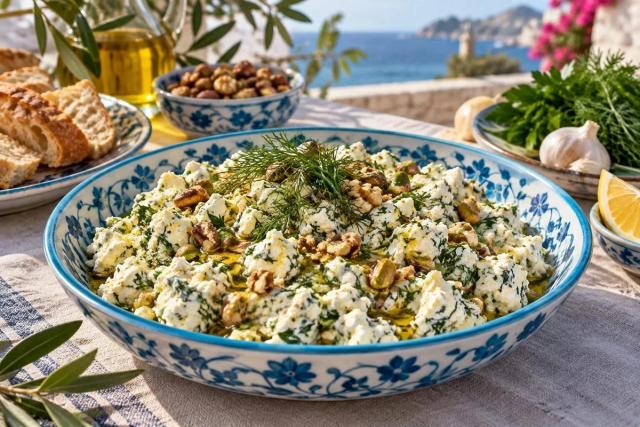
A textured white-cheese meze with strained yogurt, walnuts, pistachios and fresh herbs.
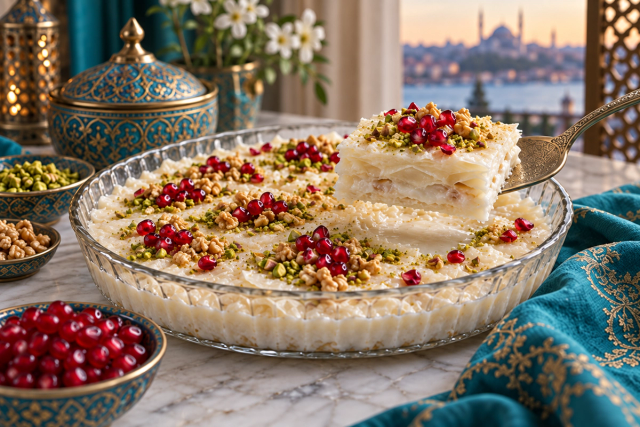
Delicate starch sheets soaked in sweet milk, layered with walnuts and finished with pistachios and pomegranate.
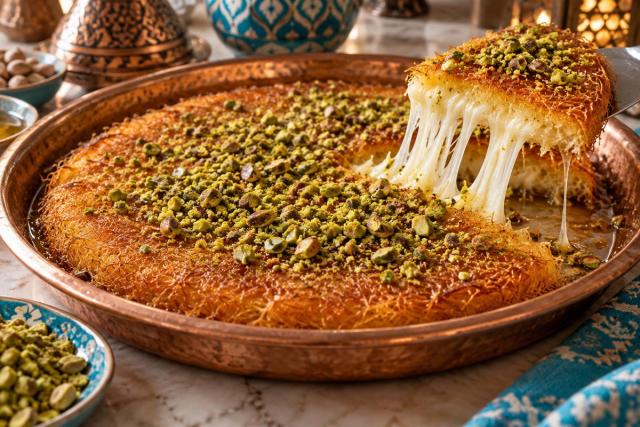
Crisp buttered kadayıf surrounding melting unsalted cheese, finished with syrup and pistachios.
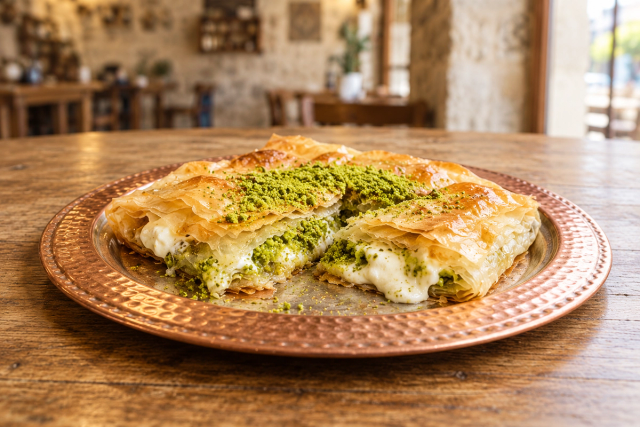
Paper-thin pastry folds around pistachios, kaymak and sugar, then bakes until golden and crisp. The handmade dough rests before stretching, while melted clarified butter enriches the delicate layers.