


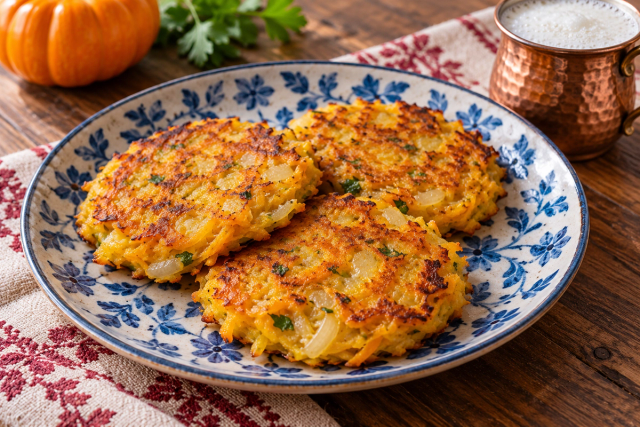
Savory Pumpkin Fritters
Fresh pumpkin, Parmesan and parsley come together in six savory fritters, pan-fried until golden and crisp.
The Turkish pantry
A firm aged grating cheese with a savory, nutty flavor, used in small pieces, shavings or fresh gratings.
Last updated:
This guide covers hard Parmesan cheese bought as a wedge or block and grated when needed. Parmesan sold by different producers can vary in milk treatment, aging and composition. Parmigiano Reggiano is a protected designation for cheese made to its own production rules; the general word Parmesan alone does not identify every cheese as that PDO product.
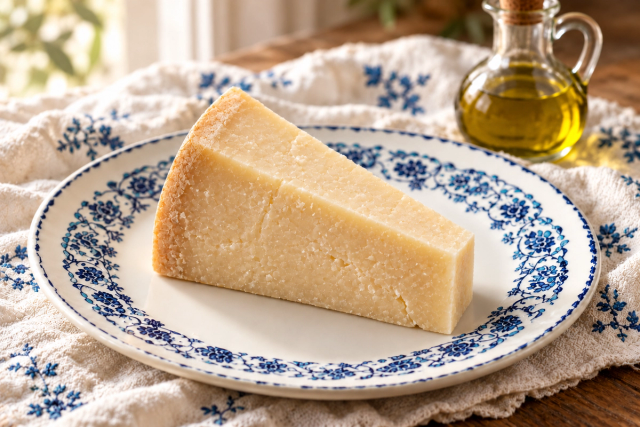
The firm cheese can be finely grated, shaved or broken into small pieces. Buying a piece lets you prepare the texture the recipe asks for.
Fine gratings from the hard cheese mix through a batter. For our pumpkin fritters, grate the cheese first and then measure the stated volume.
Some packaged grated cheeses contain added starches or cellulose to prevent clumping. A dry shaker-style powder is a different form from the freshly grated hard cheese specified in our fritters; read the label rather than assuming all grated products are alike.
A hard wedge of Parmigiano Reggiano can supply the freshly grated Parmesan called for here. Its protected name identifies a particular product; it does not mean that all other Parmesan cheeses have the same flavor or composition.
Do not substitute it automatically when the recipe specifies freshly grated hard Parmesan. Its texture and possible anti-caking ingredients differ; use the stated form for our fritters.
Hard Parmesan cheese [1]
| Nutrient | Amount |
|---|---|
| Energy | 392 kcal |
| Protein | 35.75 g |
| Total fat | 25 g |
| Saturated fat | 14.85 g |
| Carbohydrate | 3.22 g |
| Total sugars | 0.11 g |
| Dietary fiber | 0 g |
| Sodium | 1,175 mg |
| Calcium | 1,184 mg |
Representative values for hard Parmesan cheese. Aging, producer and product formulation can change the values; check the label for your cheese.
Nutrition values come from the reference source named above. They are published reference values, not our own measurements. Actual products and cooking methods may change the values.
Fresh pumpkin, Parmesan and parsley come together in six savory fritters, pan-fried until golden and crisp.