


Rice Pilaf with Orzo
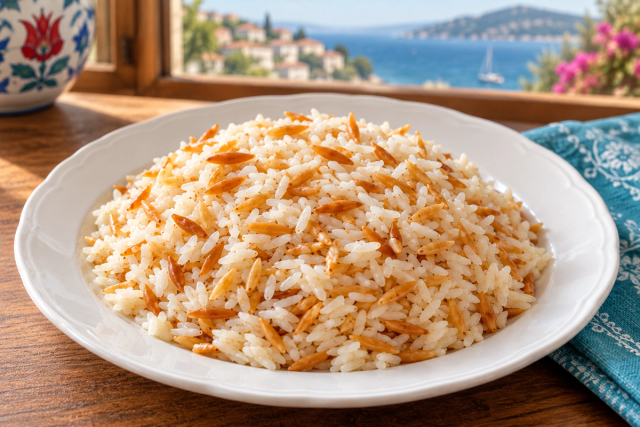
Buttery white rice and golden toasted orzo, gently simmered and rested until the grains are separate.
The Turkish pantry
Orzo is small, rice-shaped wheat pasta. For rice pilaf, brown it carefully in the cooking fat before adding the rice and liquid as the recipe directs.
Last updated:
Dried wheat pasta shaped like small grains, called arpa şehriye in Turkish. It is not rice or barley, despite its shape and Turkish name.
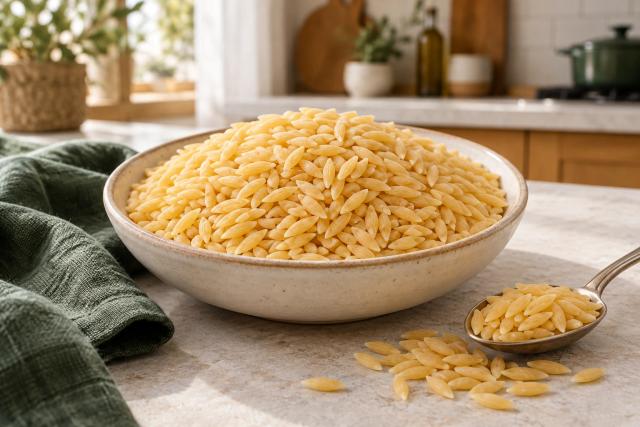
Firm wheat-pasta grains suited to browning before a pilaf’s simmering stage.
Has absorbed water and cannot replace the same weight of dry pasta or follow the dry-toasting stage.
Broken vermicelli changes the shape and may brown more quickly; use only with a recipe that allows it.
These are grains, not equivalent pasta shapes; do not use as a direct dry-orzo replacement.
Dry unenriched wheat pasta [1]
| Nutrient | Amount |
|---|---|
| Energy | 371 kcal |
| Protein | 13 g |
| Total fat | 1.51 g |
| Saturated fat | 0.28 g |
| Carbohydrate | 74.7 g |
| Dietary fiber | 3.2 g |
| Total sugars | 2.67 g |
| Sodium | 6 mg |
| Cholesterol | 0 mg |
| Calcium | 21 mg |
| Iron | 1.3 mg |
| Potassium | 223 mg |
| Vitamin D | 0 µg |
USDA composition reference per 100 g of dry unenriched pasta; orzo is a pasta shape. No cup weight is transferred from another shape. Not cooked orzo, rice or buttered pilaf. Values are rounded for readability; “not reported” does not mean zero. A “<” value is below the source’s measurement limit.
Nutrition values come from the reference source named above. They are published reference values, not our own measurements. Actual products and cooking methods may change the values.
Arpa Şehriyeli Pirinç Pilavı uses browned orzo alongside rice. Its toasted color and separate small shape are part of this particular pilaf’s character.
Buttery white rice and golden toasted orzo, gently simmered and rested until the grains are separate.