


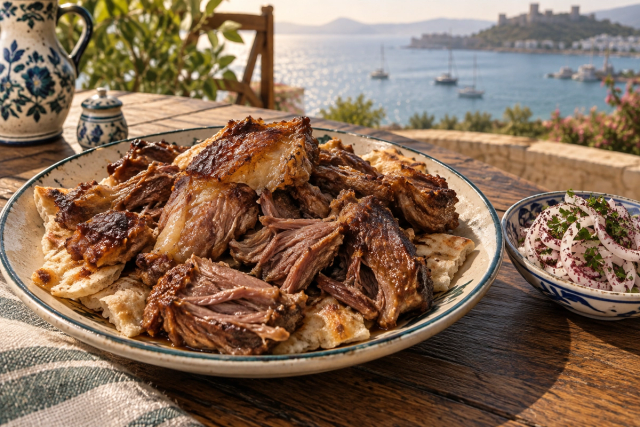
Slow-Roasted Lamb
Simply seasoned lamb slowly roasted until tender, served on pide with its cooking juices. A covered home oven followed by uncovered browning adapts the long bakery-oven preparation.
The Turkish pantry
Bone-in lamb shoulder suits the long roasting used for tender lamb dishes. Keep the large pieces specified by the recipe and give them time to soften before the final browning stage.
Last updated:
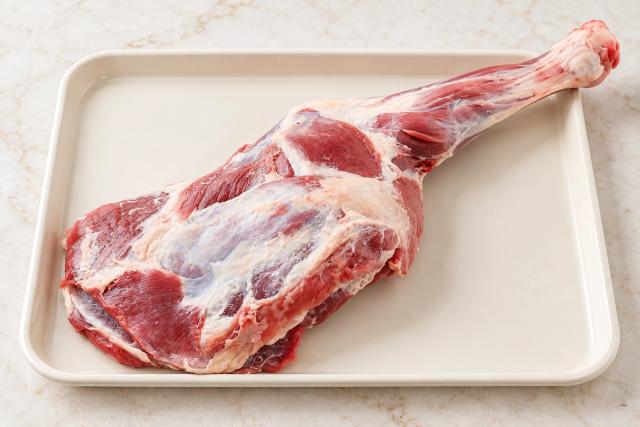
Raw lamb shoulder with bone, kept distinct from boneless shoulder. Nutrition describes edible meat and fat from the whole arm-and-blade shoulder, excluding bone weight.
Suited to a recipe planned around its size, shape and long cooking time.
Ask the butcher to cut them as the recipe requires; random small chops cook differently.
Has a different edible yield and shape. It needs an adjusted amount and cooking plan rather than a direct bone-in weight swap.
A different cut; do not assume shoulder’s long roasting method gives the same result.
Raw lamb shoulder meat and fat, excluding bone [1]
| Nutrient | Amount |
|---|---|
| Energy | 264 kcal |
| Protein | 16.6 g |
| Total fat | 21.4 g |
| Saturated fat | 9.28 g |
| Carbohydrate | 0 g |
| Dietary fiber | 0 g |
| Total sugars | 0 g |
| Sodium | 61 mg |
| Cholesterol | 72 mg |
| Calcium | 16 mg |
| Iron | 1.5 mg |
| Potassium | 230 mg |
| Vitamin D | 0.1 µg |
USDA reference per 100 g of edible raw whole shoulder (arm and blade), choice grade, trimmed to 1/4-inch outer fat. Excludes bone; do not apply to bone-in purchase weight. Trimming and cooking change composition. Values are rounded for readability; “not reported” does not mean zero. A “<” value is below the source’s measurement limit.
Nutrition values come from the reference source named above. They are published reference values, not our own measurements. Actual products and cooking methods may change the values.
Konya Fırın Kebabı and Tandır Kebabı use bone-in shoulder in our recipes. Their extended cooking aims for tender meat, while the final treatment of the surface follows each individual method.
Simply seasoned lamb slowly roasted until tender, served on pide with its cooking juices. A covered home oven followed by uncovered browning adapts the long bakery-oven preparation.
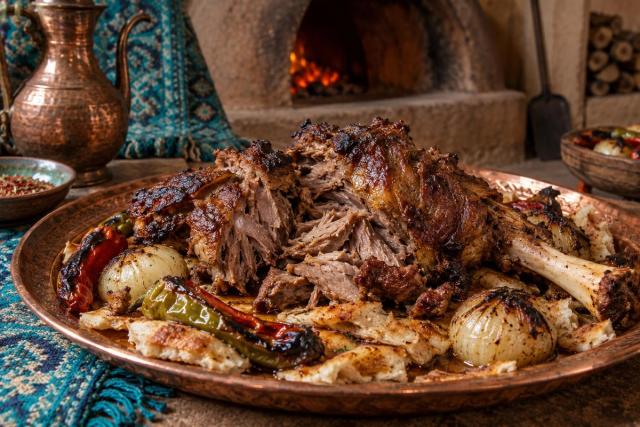
Lamb shoulder roasted slowly over onions until it pulls apart, served with pide and pan juices. A low home oven is a practical adaptation; it does not duplicate a traditional tandır oven. Keep the pan covered during the tenderizing stage.