Bone-in lamb neck gives long-simmered soups and stews tender pieces of meat. Ask the butcher to cut it, then remove the bones carefully before shredding where the recipe requires.
Last updated:
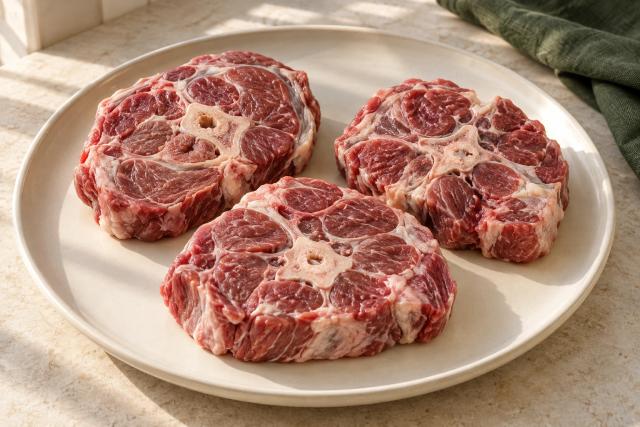
Raw bone-in lamb neck. The nutrition reference describes the edible lean and fat of New Zealand neck chops, not the bones or the whole purchased piece.
Types & forms
Bone-in neck pieces
Cross-cut pieces fit a soup or stew pot; ask the butcher to cut through the bone.
Boneless neck meat
Has a different edible yield and cannot replace a bone-in weight one for one.
What to look for when buying
Ask for lamb neck rather than shank or shoulder. Request pieces suited to your pot and the recipe’s serving style.
Inspect the cut surfaces for loose bone fragments and keep the meat chilled during transport.
Prepare & cook
Remove visible loose bone fragments without splashing raw meat juices around the sink. Keep handling surfaces separate from ready-to-eat food.
Simmer as directed until the meat is tender. For shredded soup meat, lift it out, remove every bone and tough piece, then return only the edible meat.
Keep raw meat and its utensils away from ready-to-eat food. Check whole cuts reach at least 145°F, followed by a 3-minute rest; these slow-cooked dishes need further cooking for tenderness, not merely the minimum temperature.
Store it well
Keep raw meat in a leak-proof container at 40°F or below, separate from ready-to-eat food. Use whole cuts within 3–5 days; use cubed stew meat within 1–2 days, or freeze. Follow an earlier package date.
Thaw in the refrigerator. Refrigerate cooked meat within 2 hours, or 1 hour above 90°F; use refrigerated leftovers within 3–4 days and reheat to 165°F.
Substitutions depend on the dish
Bone-in shank
Has different bones and proportions; use only when the recipe names it as an alternative or is adapted.
Boneless shoulder
Changes bone content and yield; do not replace the same purchase weight automatically.
USDA New Zealand reference per 100 g of edible raw neck-chop lean and fat. Excludes bones; not the whole bone-in purchase weight or prepared soup. Animal and trimming differences affect composition. Values are rounded for readability; “not reported” does not mean zero. A “<” value is below the source’s measurement limit.
Nutrition values come from the reference source named above. They are published reference values, not our own measurements. Actual products and cooking methods may change the values.
At the Turkish table
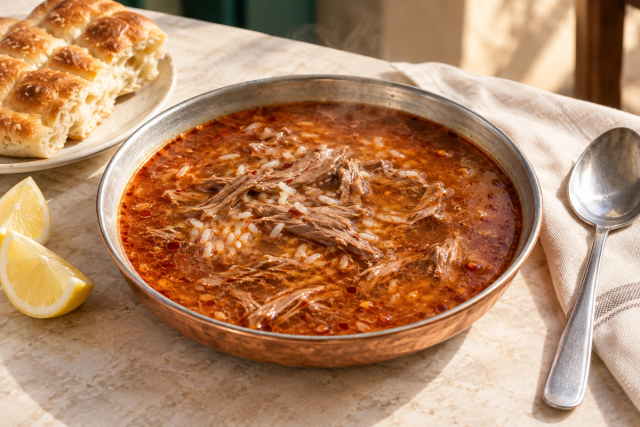
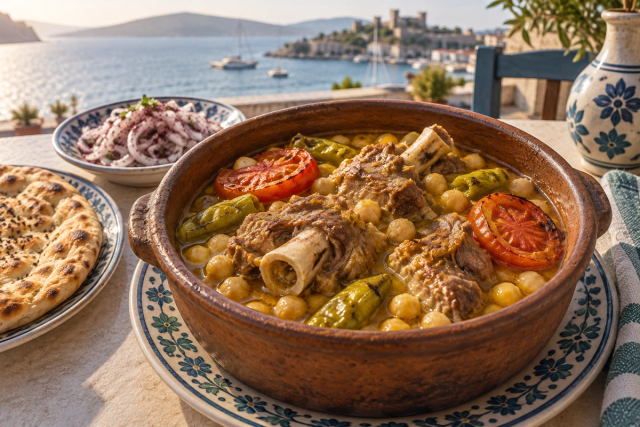
Beyran uses tender lamb with rice and broth; Piti uses butcher-cut bone-in pieces in a slow stew. These methods explain why neck needs time rather than quick frying.
Shredded lamb and rice in a hot garlic-and-red-pepper broth inspired by Gaziantep’s cuisine. The home method uses a regular saucepan and avoids the dramatic flame of specialist beyran service. Longer professional cooking and individual copper-pan assembly give a different result.
Lamb and chickpeas in turmeric broth, finished with tomato and green pepper in an earthenware casserole. This home adaptation follows the Kars lamb-and-chickpea preparation. It is distinct from other regional dishes also called piti. Use oven-safe cookware and protect the table from the hot casserole.