


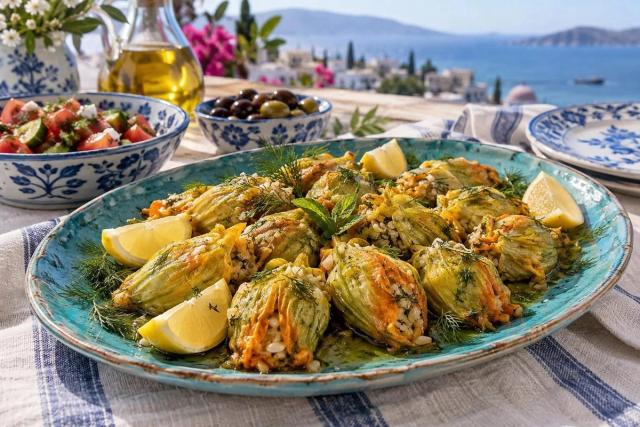
Stuffed Zucchini Blossoms
Delicate zucchini blossoms loosely filled with rice, tomato and fresh herbs.
The Turkish pantry
Fresh mint adds leafy aroma to kısır, lemonade and stuffed zucchini blossoms. Use sound leaves, wash them gently and chop near the time they are added.
Last updated:
Fresh culinary mint, with no species specified in the recipe ingredient. Spearmint and peppermint are distinct mints; dried mint is a different preparation.
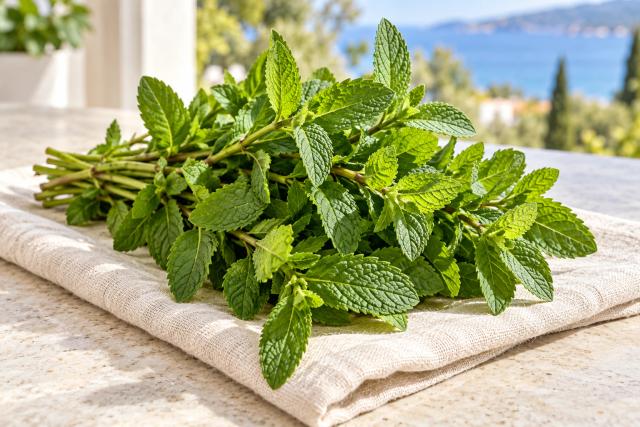
Useful chopped into food or added to a drink; remove coarse stems when the recipe calls for leaves.
Has a different water content and texture. It is not a same-volume replacement for a handful of fresh leaves.
Use only in a recipe that allows it and adjust deliberately; fresh and dry handfuls do not match.
Other herbs with different flavors, not mint equivalents.
Government reference example: Fresh spearmint (Mentha spicata) [1]
| Nutrient | Amount |
|---|---|
| Energy | 44 kcal |
| Protein | 3.29 g |
| Total fat | 0.73 g |
| Saturated fat | 0.19 g |
| Carbohydrate | 8.41 g |
| Dietary fiber | 6.8 g |
| Total sugars | Not reported |
| Sodium | 30 mg |
| Cholesterol | 0 mg |
| Calcium | 199 mg |
| Iron | 11.9 mg |
| Potassium | 458 mg |
| Vitamin D | 0 µg |
Per 100 g of the stated reference food. The ingredient is fresh mint with no species specified. This example is fresh spearmint, not all mints, dried mint or the nutrients extracted into a strained drink. Values are rounded for readability; “not reported” does not mean zero. A “<” value is below the source’s measurement limit.
Nutrition values come from the reference source named above. They are published reference values, not our own measurements. Actual products and cooking methods may change the values.
Kısır and stuffed zucchini blossoms use fresh herbs as part of their filling or mixture, while Limonata and Nane Limon use mint in drinks. These examples describe flavor and preparation, not medicinal effects.
Delicate zucchini blossoms loosely filled with rice, tomato and fresh herbs.
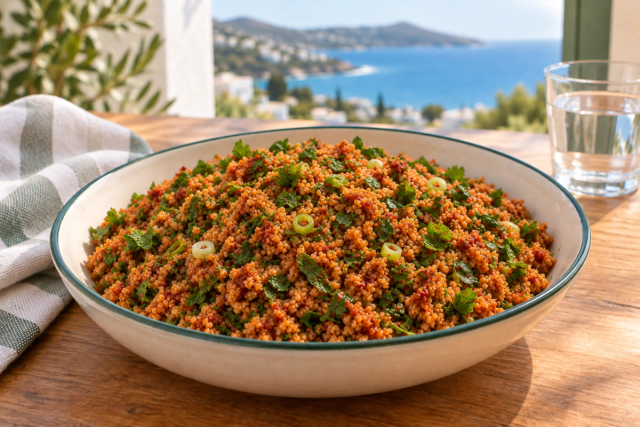
Fine bulgur coated with tomato and pepper pastes, lemon, pomegranate molasses and fresh herbs.

Lemon-and-orange lemonade scented with citrus zest and fresh mint.

A fragrant hot infusion of dried mint and lemon, lightly sweetened if desired.