


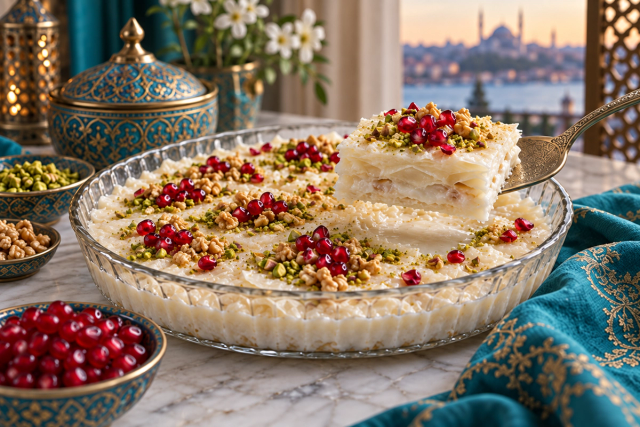
Milk and Rose Dessert
Delicate starch sheets soaked in sweet milk, layered with walnuts and finished with pistachios and pomegranate.
The Turkish pantry
Delicate dry starch-based sheets soften in milk to form güllaç. Their brittleness before soaking is normal.
Last updated:
Thin starch-containing batter is cooked on a hot surface and dried. These sheets are not baklava phyllo or rice-paper wrappers. Ingredients vary: starch-based does not automatically mean gluten-free.
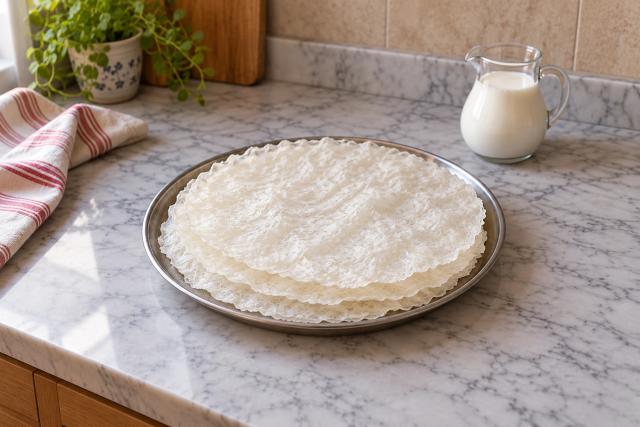
Fit to the dish before wetting.
Fill gaps; sheet count is no longer a reliable measure.
Perishable dessert, unlike dry sheets.
No dependable one-for-one swap; use a recipe for that alternative.
Layer by weight; appearance may be less even.
No verified nutrition data is available for this ingredient.
Güllaç is strongly associated with Ramadan in Türkiye. Isparta’s documented version rolls softened sheets around sweetened curd, showing regional variation.
Delicate starch sheets soaked in sweet milk, layered with walnuts and finished with pistachios and pomegranate.