


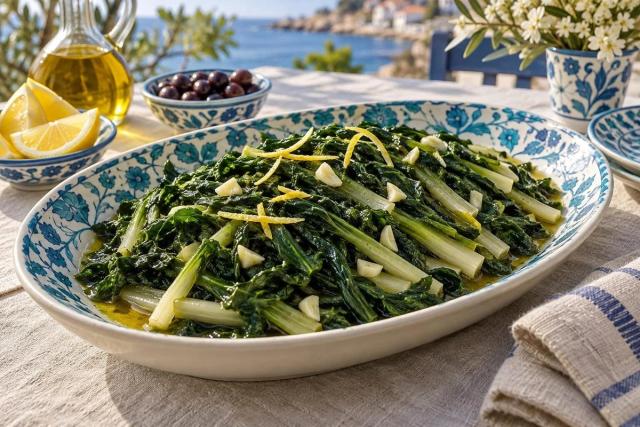
Aegean Dandelion Salad
Pleasantly bitter dandelion greens with lemon and olive oil.
The Turkish pantry
Bitter edible dandelion leaves, bought correctly identified for food use and prepared according to the recipe.
Last updated:
This guide concerns food-grade common dandelion leaves, Taraxacum officinale. Regional names such as radika may be used broadly, and some products called Italian dandelion are chicory. Confirm the actual plant identity; this illustration is not a foraging identification guide.
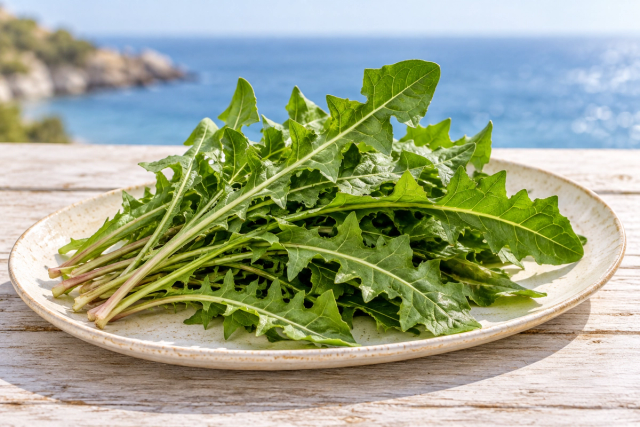
The edible leafy ingredient discussed here; younger leaves are generally more tender.
Cooking softens the leaves and changes the edible portion’s water content.
Different identities, even where common market names overlap; do not silently substitute or mix unknown plants.
A deliberate change with a different plant identity and bitterness; label the variation and adjust preparation for that green.
Milder and quicker to soften. It changes the character of the dish rather than reproducing dandelion’s bitterness.
Dandelion greens, raw [1]
| Nutrient | Amount |
|---|---|
| Energy | 45 kcal |
| Protein | 2.7 g |
| Total fat | 0.7 g |
| Saturated fat | 0.17 g |
| Carbohydrate | 9.2 g |
| Dietary fiber | 3.5 g |
| Total sugars | 0.71 g |
| Sodium | 76 mg |
| Cholesterol | 0 mg |
| Calcium | 187 mg |
| Iron | 3.1 mg |
| Potassium | 397 mg |
| Vitamin D | 0 µg |
Raw edible dandelion greens. Not chicory, a mixed wild-green salad or cooked dressed greens. Values are rounded for readability; “not reported” does not mean zero. A “<” value is below the source’s measurement limit.
Nutrition values come from the reference source named above. They are published reference values, not our own measurements. Actual products and cooking methods may change the values.
The linked radika salad is the collection’s specific use of these greens. Common names and an illustrated leaf do not establish that every locally gathered bitter green is the same edible species.
Pleasantly bitter dandelion greens with lemon and olive oil.