


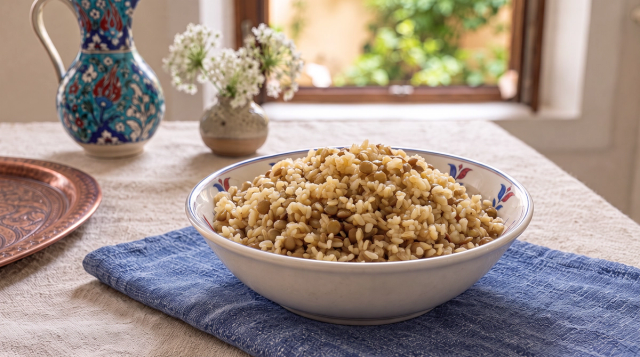
Green Lentil and Bulgur Pilaf
A plain, buttered pilaf of coarse bulgur and whole green lentils. The lentils are boiled separately, then folded into the bulgur as the cooking liquid is absorbed.
The Turkish pantry
Coarse bulgur gives pilafs and hearty soups a distinct wheat texture. Its larger broken grains soften during cooking while remaining more visible than fine bulgur.
Last updated:
Pilavlık bulgur is wheat that has been cooked, dried and broken into coarse pieces. This guide covers the dry ingredient before it is cooked into a dish.
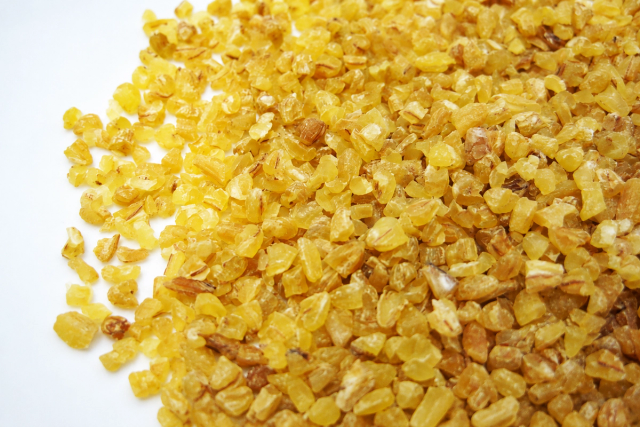
Look for pilavlık or coarse bulgur. The fragments are larger than the fine bulgur used for many köfte mixtures.
Fine bulgur and whole hulled wheat are separate forms. Whole wheat kernels are not another grind of bulgur.
Its smaller particles soften differently and change the texture and liquid needs; it is not a direct substitute in a pilaf.
Whole kernels need a different cooking method. Use a recipe written for that form rather than substituting it by the cup.
Verified nutrition values for this exact product and prepared form are not available.
A plain, buttered pilaf of coarse bulgur and whole green lentils. The lentils are boiled separately, then folded into the bulgur as the cooking liquid is absorbed.
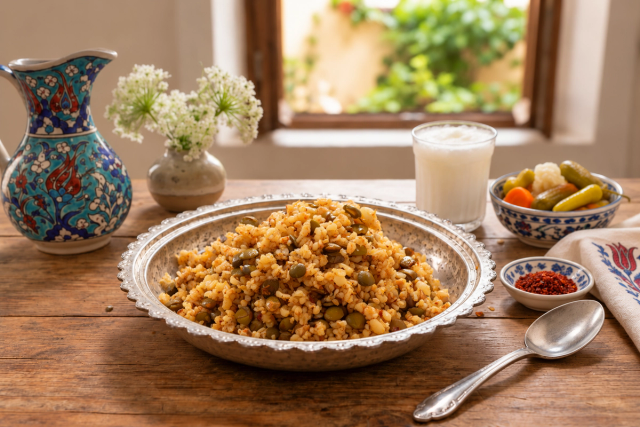
Dry green lentils are soaked and simmered, then cooked with coarse bulgur in their own liquid. Hot cold-pressed poppy-seed oil is stirred through, and the pilaf rests under a paper towel so the grains stay separate.
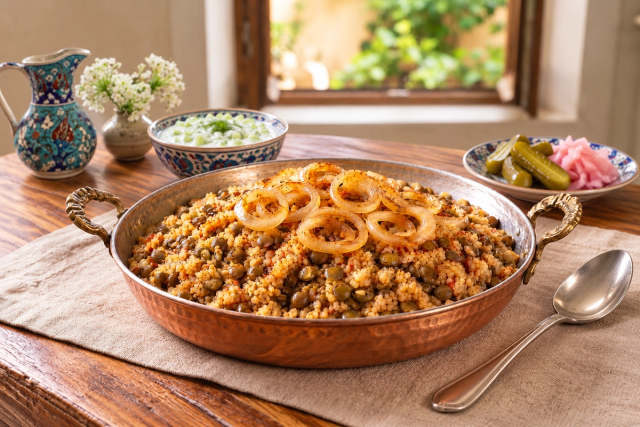
A Kilis pilaf of green lentils and coarse bulgur with soft, sweet onions, olive oil and a little butter and tomato paste.
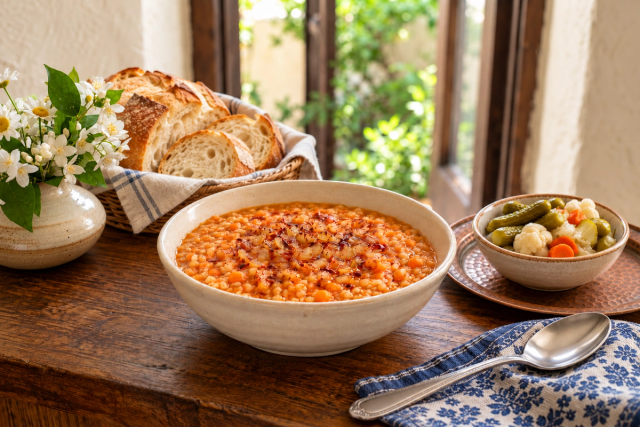
A soft Gaziantep porridge of red lentils and coarse bulgur with tomato and pepper pastes, finished with hot onion and red-pepper oil.