


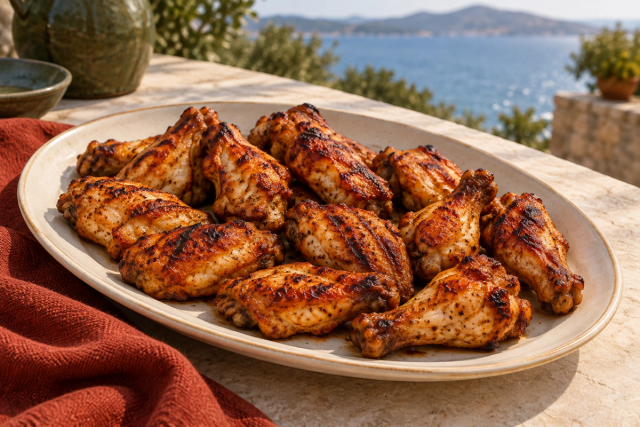
Grilled Chicken Wings
Juicy grilled chicken wings with a yogurt, tomato, garlic and spice marinade, browned gently over a two-zone grill.
The Turkish pantry
Skin-on wing pieces for grilling, with the joints separated so they can be turned individually. Browned skin needs a thermometer check in the meat underneath.
Last updated:
Raw chicken wings divided at the joints, with skin and bones. USDA nutrition covers the edible meat and skin only; it does not include bone weight.
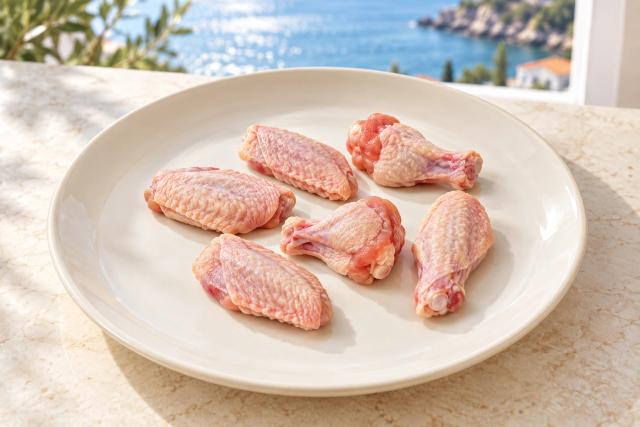
Drumettes and flats remain bone-in but can be arranged and turned separately.
Whole wings include tips; boneless meat has a different edible yield and cooking behavior.
Separate at the joints if required; do not count a whole wing as one split piece.
Suitable only for a recipe adapted to that cut; it does not give the same skin, bones or yield.
Raw chicken wing meat and skin [1]
| Nutrient | Amount |
|---|---|
| Energy | 191 kcal |
| Protein | 17.5 g |
| Total fat | 12.8 g |
| Saturated fat | 3.54 g |
| Carbohydrate | 0 g |
| Dietary fiber | 0 g |
| Total sugars | 0 g |
| Sodium | 84 mg |
| Cholesterol | 111 mg |
| Calcium | 11 mg |
| Iron | 0.46 mg |
| Potassium | 187 mg |
| Vitamin D | 0.1 µg |
USDA reference per 100 g of edible raw wing meat and skin. Bone is excluded; do not apply to the total weighed bone-in wing. Marinades and cooking change composition. Values are rounded for readability; “not reported” does not mean zero. A “<” value is below the source’s measurement limit.
Nutrition values come from the reference source named above. They are published reference values, not our own measurements. Actual products and cooking methods may change the values.
Izgara Tavuk Kanat uses split wings for grilling. Turning separate pieces and controlling flare-ups lets the skin brown while the meat reaches a safe temperature.
Juicy grilled chicken wings with a yogurt, tomato, garlic and spice marinade, browned gently over a two-zone grill.