


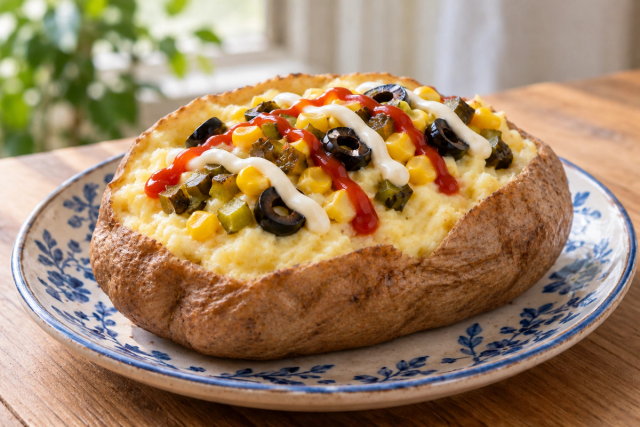
Loaded Baked Potato
A large baked potato mashed inside its skin with butter and kaşar cheese, then topped with corn, olives, cornichons, mayonnaise and ketchup—an Ortaköy favorite.
The Turkish pantry
Prepared black table olives, sold with pits or pitted, for eating and cooking.
Last updated:
These are processed black table olives, not freshly harvested raw olives or olive oil. Curing method and variety affect texture, saltiness and flavor. The name does not identify one regional variety.
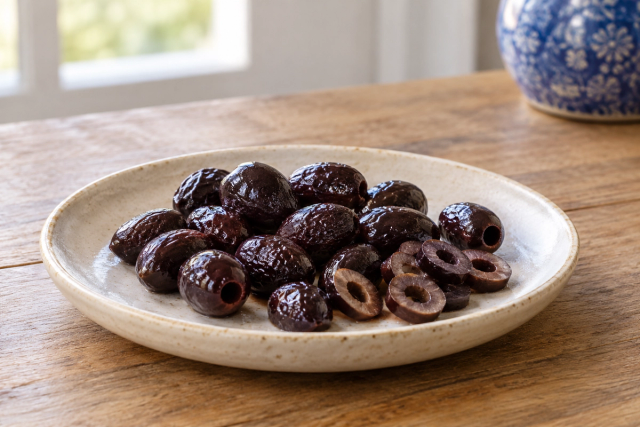
May be sold in brine or dry-cured. Check for pits before adding to a dish.
Ready-pitted olives are convenient for toppings, but check the package and remove any remaining pit fragments.
May suit a dish when the flavor and firmness fit, but green and black olives are not identical in taste.
Provides fat and aroma rather than the texture of whole olives; it does not replace a measured amount of table olives.
Nutrition and salt vary with the product and curing method; refer to its label.
Black table olives appear at breakfast and in salads, breads and toppings in Turkish home cooking.
A large baked potato mashed inside its skin with butter and kaşar cheese, then topped with corn, olives, cornichons, mayonnaise and ketchup—an Ortaköy favorite.