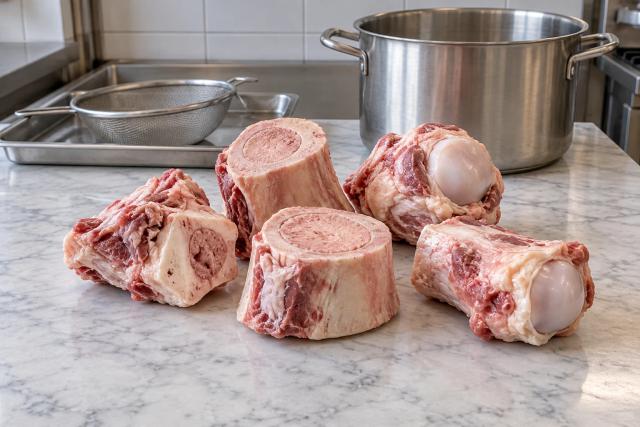
A mixture of marrow and joint bones can supply richness and body to a stock. Specify the mix when buying, and keep the purchased bones distinct from the strained broth you serve.
Last updated:
Raw beef bones for stock, including marrow-bearing and joint pieces with variable attached meat, cartilage and connective tissue. They are not pure marrow, a boneless beef serving or ready-made bone broth. Bone weight does not establish the nutrition of an edible portion.
Types & forms
Marrow-bearing cut bones
Exposed marrow can add fat and richness; ask the butcher for safely cut pieces that fit the pot.
Joint and connective-tissue pieces
A different balance of cartilage, connective tissue and attached meat; useful for the stock’s body.
Prepared broth or extracted marrow
These are products obtained from or separated from bones, not an equal-weight bag of stock bones.
What to look for when buying
Order food-grade beef stock bones from a traceable butcher, specifying marrow and joint pieces rather than an undefined bag of scraps. Ask whether they are fresh or frozen and when to use them.
Choose chilled, cleanly cut pieces without sour odor, slime or loose bone fragments from sawing. Ask the butcher to finish trimming and cleaning rather than attempting heavy bone cutting at home.
Prepare & cook
Keep raw bones and their drips separate from cooked food. Do not wash raw meat-covered bones under a running tap; it can spread contamination. Use professionally prepared pieces.
Follow the stock recipe for any roasting, liquid and simmering. Skim as directed, then strain through a fine sieve into a clean container; remove bones and fragments. Do not blend the bones into soup.
Marrow and attached meat must be cooked, not sampled raw. Follow the complete soup method, including any later egg or dairy additions; do not treat a long simmer as permission to leave broth cooling on the counter.
Store it well
Use a conservative 1–2-day plan for refrigerated raw stock bones at 40°F or below, following earlier butcher or label instructions; freeze promptly for longer storage. Thaw in the refrigerator in a leakproof container.
Divide cooked food into shallow containers and refrigerate within 2 hours, or 1 hour above 90°F. Use refrigerated cooked fish, meat or broth within 3–4 days; reheat leftovers to 165°F. Follow a shorter recipe-specific limit where given.
Substitutions depend on the dish
Ready-made beef stock
Use the recipe’s stock volume and check salt, other ingredients and concentration. It cannot be exchanged gram for gram with raw bones.
Only marrow bones or another animal’s bones
Changes the fat, body and flavor balance. Choose a stock recipe for that mixture instead of claiming an unchanged result.
Nutrition
No verified nutrition data is available for this ingredient.
At the Turkish table
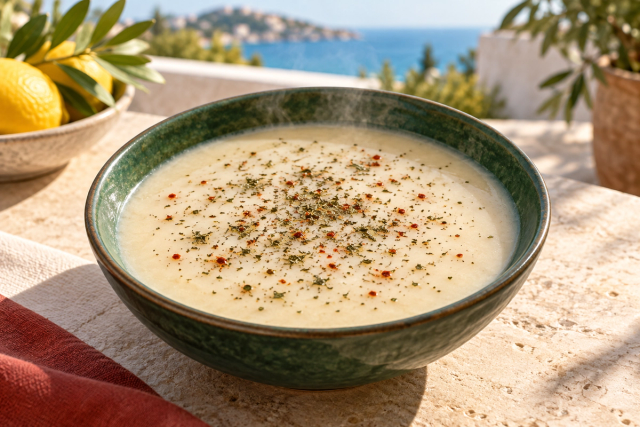
Our kemik suyu çorbası uses beef bones to make a strained base. The Ministry of Education’s stock material explains why bones and attached tissues belong to stock preparation; this culinary use does not establish a medicinal benefit or a fixed nutrient extraction.
Slow-simmered beef-bone broth made silky with yogurt, egg yolk and lemon, with garlic and a light dried-mint finish. This terbiyeli version turns homemade beef-bone broth into a smooth, lightly tangy soup. A terbiye is the whisked yogurt, egg-yolk and lemon mixture added gradually to the hot broth; a little flour helps it hold together.