



Taste and balance seasoning
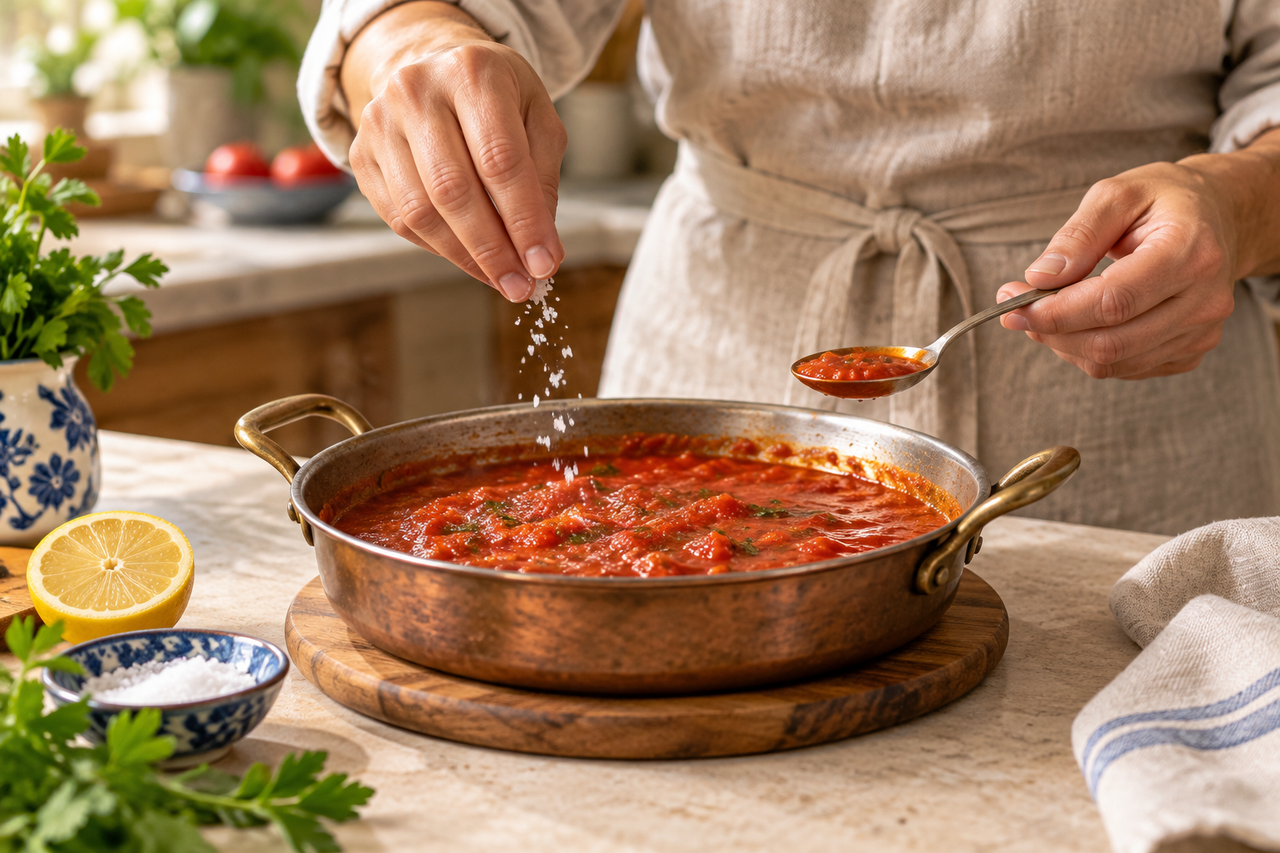
Taste the mixture before adding more, especially when salty or sour ingredients are already present.
What this skill is for
Balancing means deciding what the dish needs rather than adding the same seasoning automatically. Use it in dressings, meze and the finishing stages of recipes that ask you to taste and adjust.
How to do it
- Bring the mixture to the recipe's tasting stage before making the final adjustment.
- Taste a small portion with a clean spoon. Ask what stands out and what seems missing.
- Adjust only the seasoning the recipe allows, in small additions. Mix through before tasting again.
- Check a representative bite of the finished combination; a dressing on its own can taste different from the dressed vegetables or beans.
Recognize success
- The seasoning supports the main ingredients instead of hiding them.
- You can explain the adjustment you made: for example, less added salt because the paste already supplied it.
Common mistakes and what to do
- Adding salt automatically before tasting can oversalt a mixture containing paste or cheese.
- Do not keep adding sweetness to every sour dish. There is no universal correction that rescues every imbalance.
Last updated:
Practice with a real recipe

Related ingredients
Related skills
Seasoning & Flavor Balance
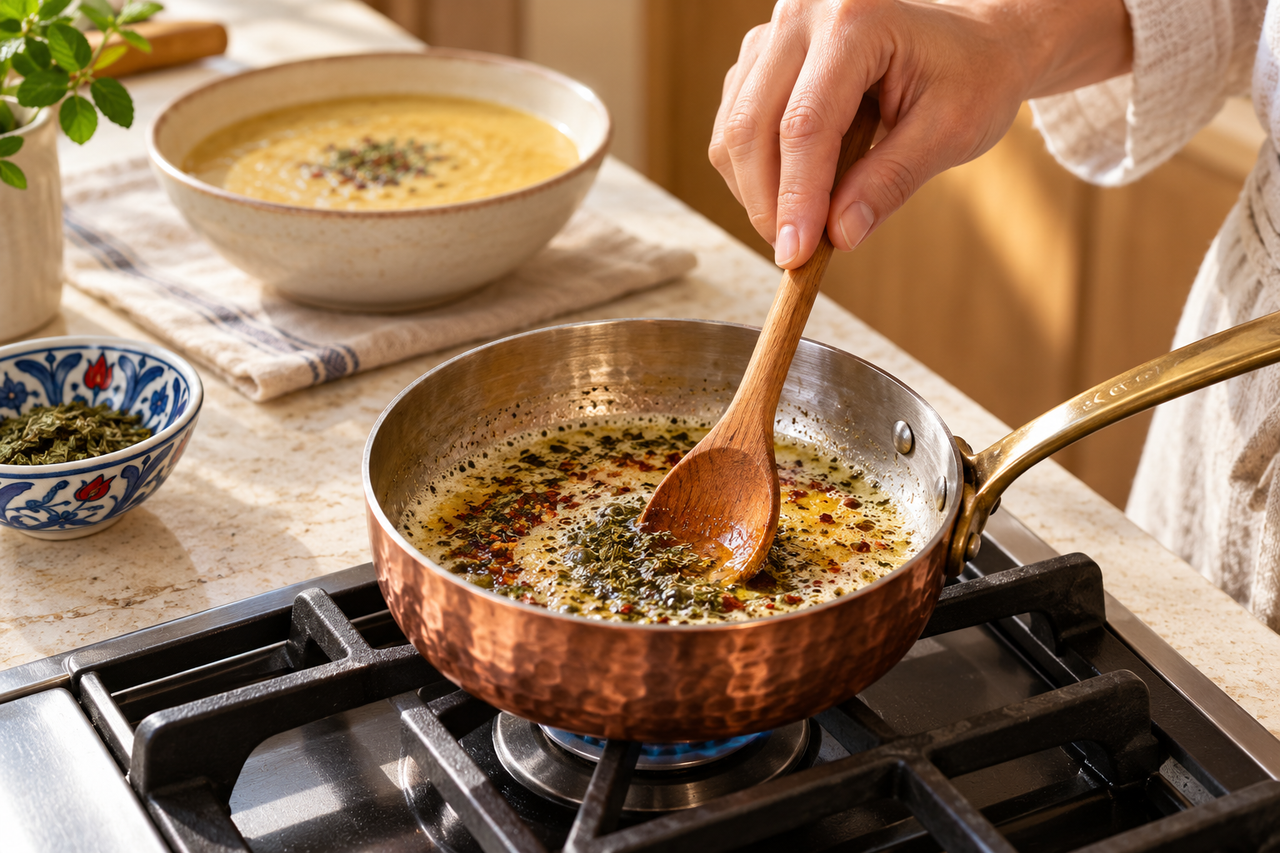
Bloom spices in fat
Warm the recipe's spices in fat until fragrant, then stop before they scorch.