


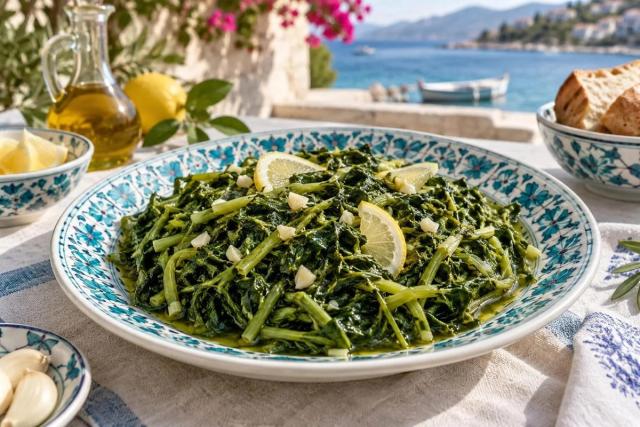
Wild Radish Salad
Tender wild radish greens in a simple lemon-and-garlic dressing.
The Turkish pantry
Food-grade wild-radish greens are used in cooked salads and vegetable dishes in Aegean market cooking. They are different from the familiar round radish root.
Last updated:
TürKomp and an Ege University study identify turp otu or eşek turpu as Raphanus raphanistrum. Common names vary; a market name alone is not a botanical guarantee. Buy clearly identified food-grade greens from a traceable supplier.
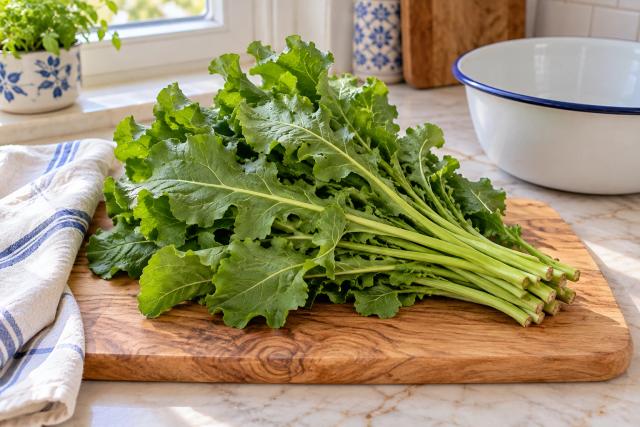
Leaves and tender shoots for cooking.
A related alternative, not automatically the same market ingredient.
Tender cultivated radish tops or mustard greens can take the vegetable role; bitterness and stem texture differ.
Gives a softer, milder result without reproducing turp otu’s character.
No verified nutrition data is available for this ingredient.
İzmir market research records turp otu sold for cooking and commonly eaten after boiling. This documents a regional use, not exclusive ownership by one province.
Tender wild radish greens in a simple lemon-and-garlic dressing.