


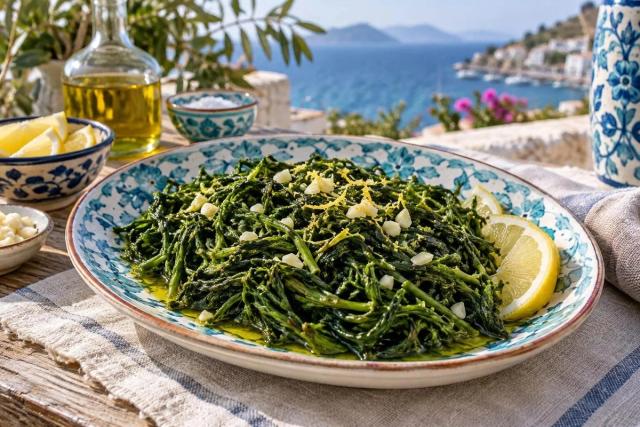
Wild Fennel Salad
Anise-scented fennel greens with lemon, garlic and olive oil.
The Turkish pantry
Young fennel leaves and shoots are cooked as a vegetable in the Aegean. Dried fennel seed has a different role as a spice.
Last updated:
Ege University research records arapsaçı, sıra and rezene as Foeniculum vulgare, with young stems and leaves used for food. This guide covers the greens, not fennel bulbs or seed infusions.
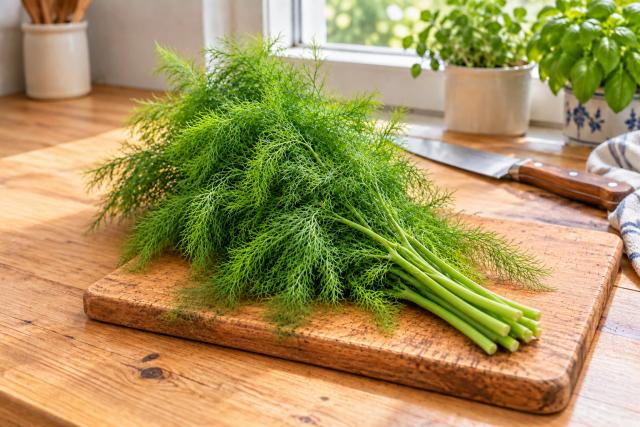
Fronds and tender stalks used as a vegetable.
An alternative green; dried fennel seed remains a separate spice.
Fronds and tender stems are a close practical option, but aroma and texture vary.
Dill provides leafy volume with a different aroma. Fennel seed cannot replace the bulk of a vegetable bunch.
No verified nutrition data is available for this ingredient.
Aydın’s official arapsaçı recipe is a concrete Aegean example, not proof of an exclusive origin.
Anise-scented fennel greens with lemon, garlic and olive oil.