


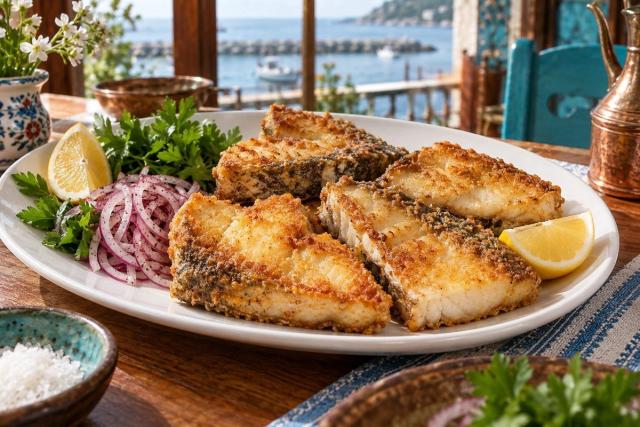
Fried Turbot
Lightly floured turbot steaks fried until golden, with sumac onions and lemon.
The Turkish pantry
Bone-in turbot steaks have a firm center and irregular edges. Choose similar thicknesses, dry the surface before coating and turn carefully during frying.
Last updated:
Raw European turbot cut into bone-in steaks. The nutrition record covers the edible fish portion, not the bones or the total weight of a purchased steak.
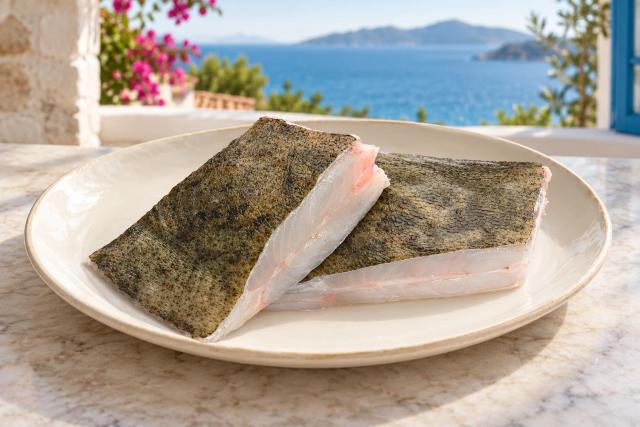
Cut across the fish and include bone; inspect each portion carefully when serving.
Have a different thickness and yield, so the same frying time and purchase weight do not automatically apply.
Use a method suited to the thinner, boneless cut and check doneness separately.
Flavor and firmness vary; it is an alternative only when the recipe permits it, not the same nutrition identity.
Raw edible European turbot [1]
| Nutrient | Amount |
|---|---|
| Energy | 95 kcal |
| Protein | 16 g |
| Total fat | 2.95 g |
| Saturated fat | 0.75 g |
| Carbohydrate | 0 g |
| Dietary fiber | 0 g |
| Total sugars | Not reported |
| Sodium | 150 mg |
| Cholesterol | 48 mg |
| Calcium | 18 mg |
| Iron | 0.36 mg |
| Potassium | 238 mg |
| Vitamin D | Not reported |
USDA reference per 100 g of edible raw turbot, excluding bones. Not the total weight of bone-in steaks or a fried portion containing flour and oil. Values are rounded for readability; “not reported” does not mean zero. A “<” value is below the source’s measurement limit.
Nutrition values come from the reference source named above. They are published reference values, not our own measurements. Actual products and cooking methods may change the values.
Kalkan Tava uses bone-in slices for frying. Even thickness and careful turning help preserve the fish’s shape; remove bones at the table before eating.
Lightly floured turbot steaks fried until golden, with sumac onions and lemon.