


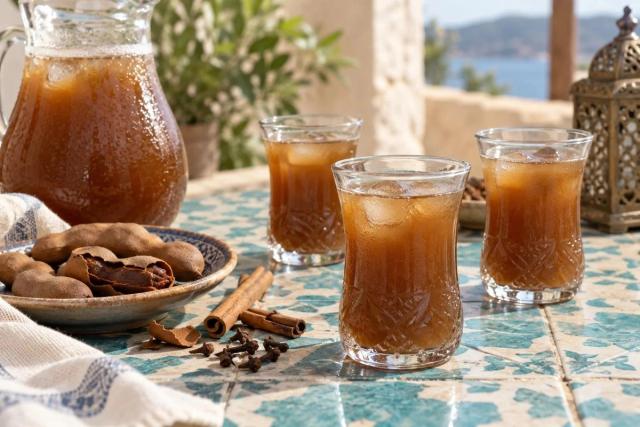
Spiced Tamarind Sherbet
A tangy chilled tamarind drink scented with cinnamon, cloves and fresh ginger.
The Turkish pantry
Sticky, tangy tamarind pulp is loosened in water and strained for şerbet. The shelled pulp here still contains seeds, which must be removed before serving.
Last updated:
Shelled tamarind pulp with seeds, not a sweetened syrup or concentrated bottled sauce. The nutrition reference is for edible raw pulp only, excluding seeds and shell.
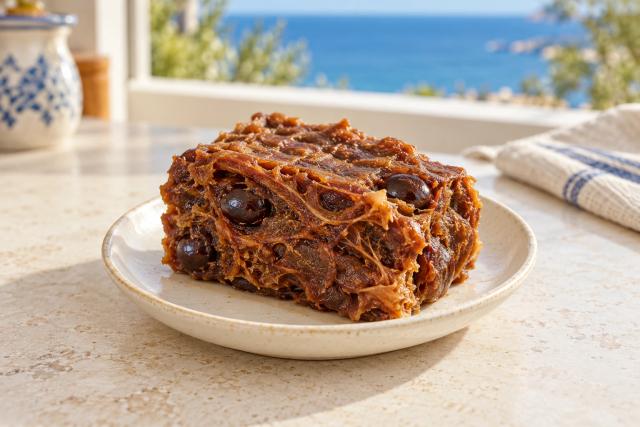
Pull apart or soak as the recipe directs, then strain away seeds and coarse fibers.
Strength, dilution and added ingredients vary. Read the label; do not assume an equal spoonful gives the same acidity.
Use only with an adjustment for its concentration and the recipe’s water; taste after dilution.
Different acidity, sweetness and aroma; they cannot reproduce tamarind by a fixed one-for-one conversion.
Raw edible tamarind pulp, without seeds or shell [1]
| Nutrient | Amount |
|---|---|
| Energy | 239 kcal |
| Protein | 2.8 g |
| Total fat | 0.6 g |
| Saturated fat | 0.27 g |
| Carbohydrate | 62.5 g |
| Dietary fiber | 5.1 g |
| Total sugars | 38.8 g |
| Sodium | 28 mg |
| Cholesterol | 0 mg |
| Calcium | 74 mg |
| Iron | 2.8 mg |
| Potassium | 628 mg |
| Vitamin D | 0 µg |
USDA reference per 100 g of edible raw tamarind pulp. Shell and seeds are excluded; do not apply to the full purchase weight of seeded pulp, concentrate or sweetened şerbet. Values are rounded for readability; “not reported” does not mean zero. A “<” value is below the source’s measurement limit.
Nutrition values come from the reference source named above. They are published reference values, not our own measurements. Actual products and cooking methods may change the values.
Demirhindi Şerbeti combines strained tamarind with spices and measured sweetness. Straining is a practical part of making a smooth drink from pulp that contains seeds.
A tangy chilled tamarind drink scented with cinnamon, cloves and fresh ginger.