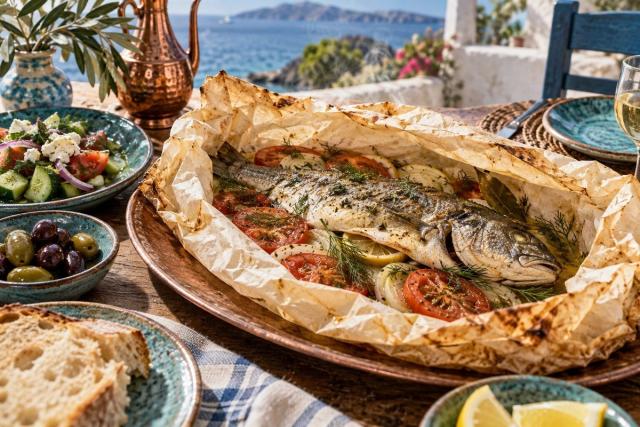
A cleaned whole European sea bass keeps its shape for baking in paper. Match the fish size to the recipe and account for the head and bones when planning portions.
Last updated:
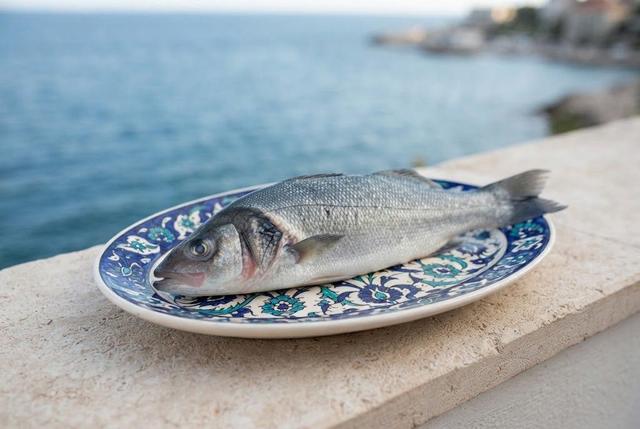
Raw European sea bass, Dicentrarchus labrax, also called branzino, scaled and gutted with gills removed. The whole fish retains its skeleton. Chilean sea bass is a different fish; a generic sea-bass label alone does not verify this species.
Types & forms
Cleaned whole fish
Head, tail and skeleton remain, while scales, gills and viscera have been removed by the fishmonger.
Fillets
A separate prepared form with a different edible yield and cooking time.
Frozen whole fish
Check species and whether cleaning has already been completed.
What to look for when buying
Ask for European sea bass of the recipe’s size, professionally scaled and gutted, with gills removed. Ask whether it was previously frozen.
Choose properly chilled fish with firm flesh, clear eyes and a mild smell. These are quality cues, not proof of an uninterrupted cold chain or a particular farming method.
Prepare & cook
Inspect the cleaned cavity and remaining scales; ask the fishmonger to correct incomplete preparation. Pat dry and keep the raw fish separate from serving dishes and salad.
Follow the paper-baking recipe for wrapping, added liquid and oven setting. A whole fish does not cook like the same weight of thin fillets.
Check the thickest flesh reaches 145°F away from the backbone. Open hot paper cautiously for escaping steam and remove the backbone and small bones while portioning.
Store it well
Keep raw fish in a leakproof container at 40°F or below and use within 1–2 days, or freeze promptly. Follow an earlier use-by date. Thaw in the refrigerator, keeping drips away from other food.
For vacuum-packed fish labeled to remain frozen until use, remove it from the vacuum bag before refrigerator thawing. Follow the package instructions; a sealed thawing bag is not a substitute for this step.
Divide cooked food into shallow containers and refrigerate within 2 hours, or 1 hour above 90°F. Use refrigerated cooked fish, meat or broth within 3–4 days; reheat leftovers to 165°F. Follow a shorter recipe-specific limit where given.
Substitutions depend on the dish
Whole sea bream
A different species and body shape; use a recipe that accommodates its thickness and portion yield.
Sea bass fillets
Use the fillet recipe’s amount and method. Whole-fish weight includes bones and cannot be exchanged directly for edible fillet weight.
Nutrition
No verified nutrition data is available for this ingredient.
At the Turkish table
Ordu’s documented levrek buğulama pairs sea bass with tomato and garlic. Our kağıtta levrek is a separate whole-fish preparation; the regional example does not make every levrek dish an Ordu recipe.