


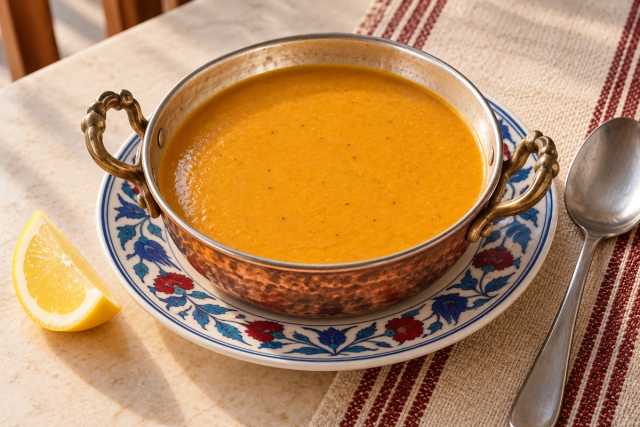
Red Lentil Soup
A smooth red lentil soup with onion, carrot and potato, finished with cumin and lemon. This version uses olive oil and water.
The Turkish pantry
Choose split red lentils for a soft soup or lentil patties, and learn why whole green lentils behave differently.
Last updated:
This guide focuses on dried, peeled split red lentils—the small orange-red pieces pictured here. Green and brown lentils are separate shopping choices, not mixed into this ingredient.
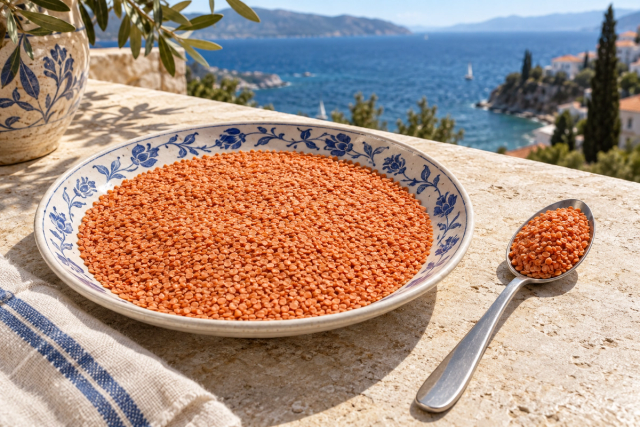
Peeled halves soften and break down readily; useful when a soup or patty mixture needs a soft base.
Whole and split describe form. Check the packet rather than assuming every product called red lentils cooks identically.
Whole lentils with their skins tend to keep their shape. They are not a direct replacement in a recipe relying on split red lentils breaking down.
Whole green or brown lentils change the color, cooking time and texture. Choose a recipe written for them rather than copying the red-lentil timing.
Keep the specified split red lentils and fine bulgur. A different pulse may not produce the same soft binding mixture; no universal replacement ratio is established.
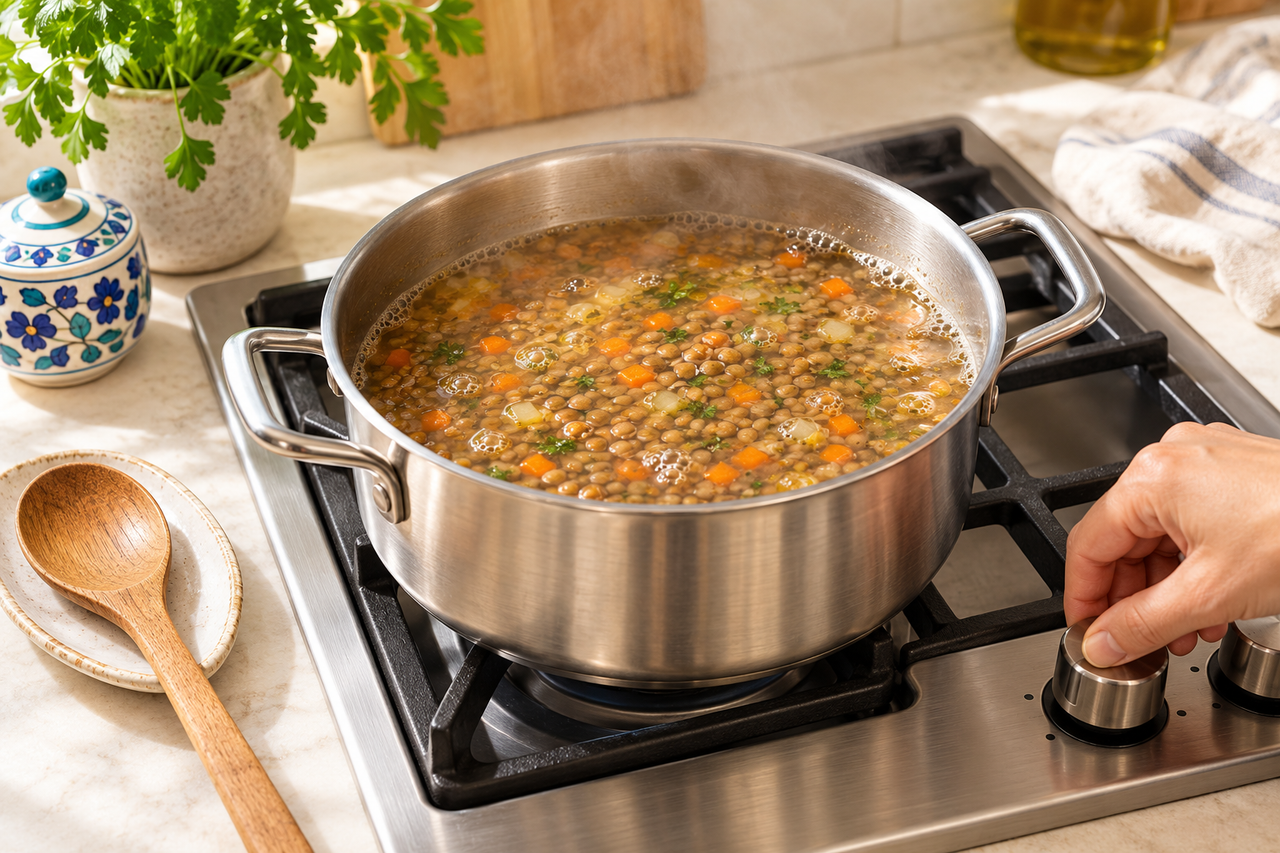
Moist-Heat Cooking
Adjust the heat by watching the liquid, rather than relying only on the stove setting.
Dried pink or red lentils, uncooked [1]
| Nutrient | Amount |
|---|---|
| Energy | 358 kcal |
| Protein | 23.9 g |
| Total fat | 2.17 g |
| Saturated fat | 0.38 g |
| Carbohydrate | 63.1 g |
| Dietary fiber | 10.8 g |
| Total sugars | Not reported |
| Sodium | 7 mg |
| Cholesterol | 0 mg |
| Calcium | 48 mg |
| Iron | 7.39 mg |
| Potassium | 668 mg |
| Vitamin D | 0 µg |
USDA’s pink-or-red raw lentil record; not generic green lentils and not a cooked portion. It does not separately analyze every split product or cultivar. Cooking adds water and changes the values per 100 g. Values are rounded for readability; “not reported” does not mean zero. A “<” value is below the source’s measurement limit.
Nutrition values come from the reference source named above. They are published reference values, not our own measurements. Actual products and cooking methods may change the values.
Mercimek çorbası and mercimek köftesi show two uses for red lentils: a soft soup and a mixture that can be shaped with fine bulgur. The Ministry of Culture documents red lentils with bulgur in lentil balls; this is a culinary connection, not an exclusive-origin claim.
A smooth red lentil soup with onion, carrot and potato, finished with cumin and lemon. This version uses olive oil and water.
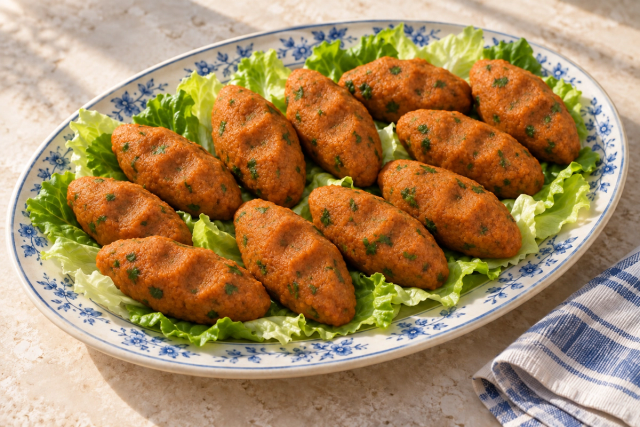
Mercimek köftesi combines soft red lentils, fine bulgur and herbs in hand-shaped patties served on lettuce.
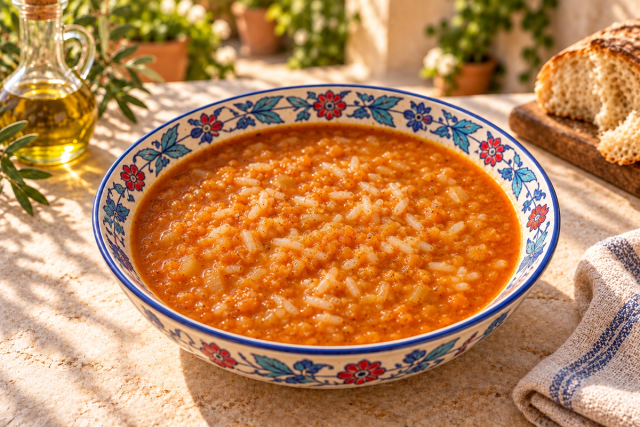
Red lentils and rice simmer together, finished with onion, tomato paste and cumin.
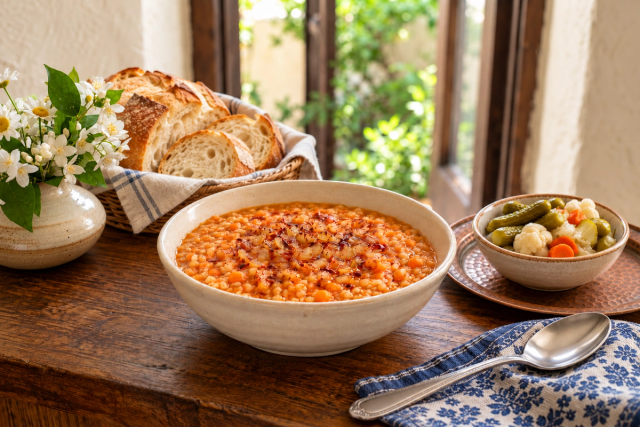
A soft Gaziantep porridge of red lentils and coarse bulgur with tomato and pepper pastes, finished with hot onion and red-pepper oil.
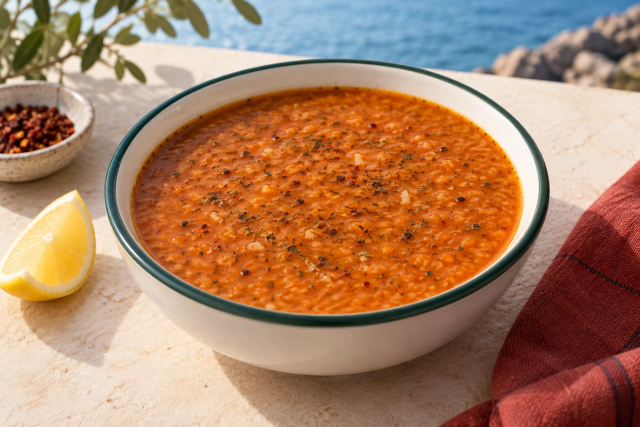
A warming red lentil soup with bulgur, rice, tomato, dried mint and pul biber.