


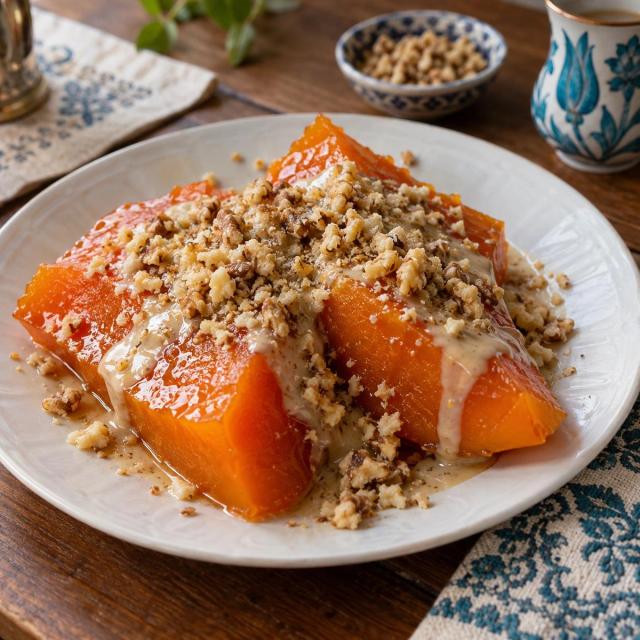
Pumpkin Dessert
Pumpkin slowly cooked in its own syrup, lightly browned in the oven and finished with double-roasted tahini and walnuts.
The Turkish pantry
Firm orange cooking-pumpkin flesh for cutting into even pieces before cooking.
Last updated:
The recipe identity is raw cooking pumpkin, not a decorative gourd. The nutrition table describes raw edible flesh; peel, seeds, sweetened pumpkin dessert and canned pie filling are outside that portion. Varieties differ in firmness and water content.
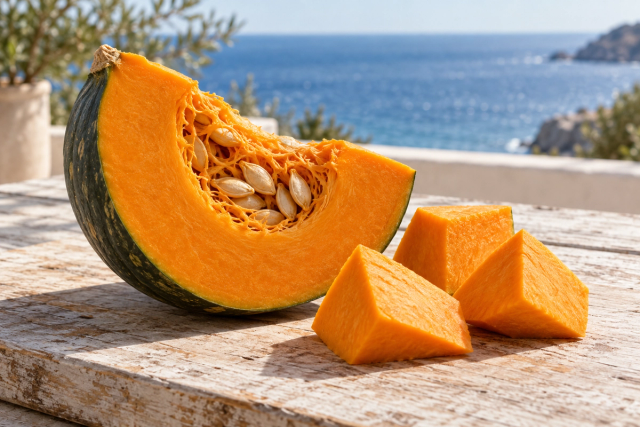
Rind, seeds and cavity must be accounted for when buying enough edible flesh.
The prepared ingredient for recipes that specify peeled pumpkin weight.
Cooked and possibly seasoned; unsuitable where intact raw pieces are required.
Use a firm-fleshed cooking variety as a deliberate variation; water content and softening time may differ.
Useful for a puréed dish, but it cannot replace intact pieces in a pumpkin dessert. Check for added sugar and spices.
Pumpkin, raw [1]
| Nutrient | Amount |
|---|---|
| Energy | 26 kcal |
| Protein | 1 g |
| Total fat | 0.1 g |
| Saturated fat | 0.05 g |
| Carbohydrate | 6.5 g |
| Dietary fiber | 0.5 g |
| Total sugars | 2.76 g |
| Sodium | 1 mg |
| Cholesterol | 0 mg |
| Calcium | 21 mg |
| Iron | 0.8 mg |
| Potassium | 340 mg |
| Vitamin D | 0 µg |
Raw pumpkin edible flesh, excluding rind and seeds. Not sweetened pumpkin dessert, canned filling or a separate analysis of every cooking variety. Values are rounded for readability; “not reported” does not mean zero. A “<” value is below the source’s measurement limit.
Nutrition values come from the reference source named above. They are published reference values, not our own measurements. Actual products and cooking methods may change the values.
The linked kabak tatlısı recipe cooks pumpkin with sugar. The raw-pumpkin nutrition values below describe the starting flesh, not the finished sweetened dessert.
Pumpkin slowly cooked in its own syrup, lightly browned in the oven and finished with double-roasted tahini and walnuts.
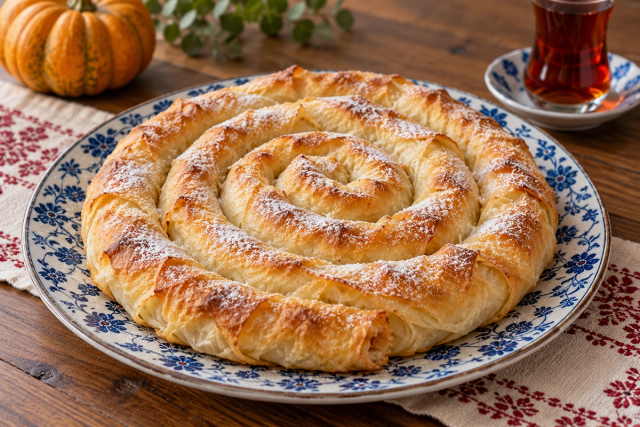
A sweet spiral of crisp yufka filled with finely grated pumpkin, walnuts and cinnamon, finished with powdered sugar.
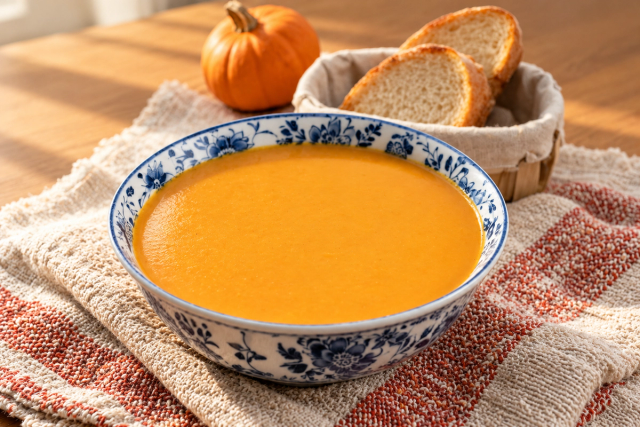
Roasted pumpkin, leek and carrot blended into a smooth soup with cumin, turmeric and a buttery finish.
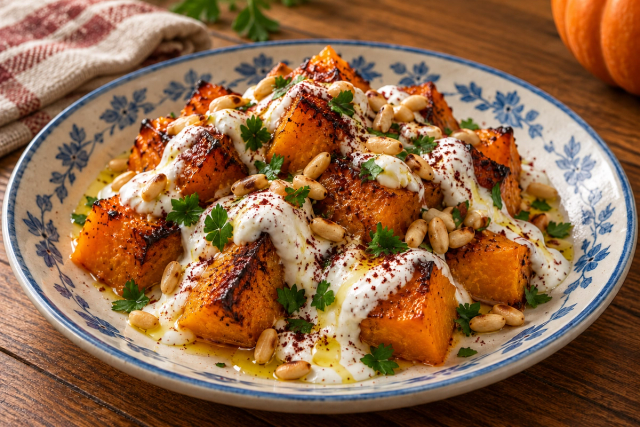
Golden roasted pumpkin with garlic-lemon yogurt, toasted pine nuts, parsley and a light sprinkle of sumac.
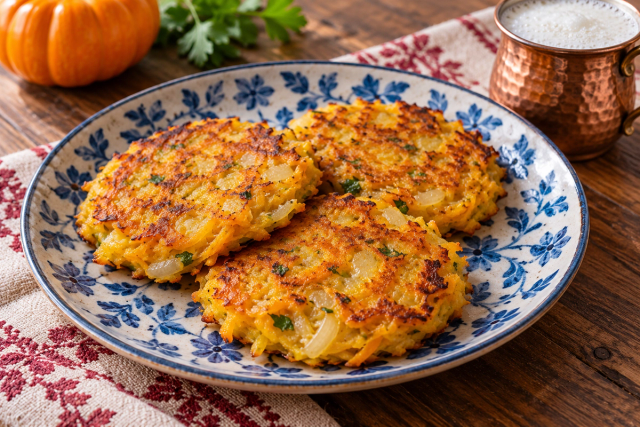
Fresh pumpkin, Parmesan and parsley come together in six savory fritters, pan-fried until golden and crisp.