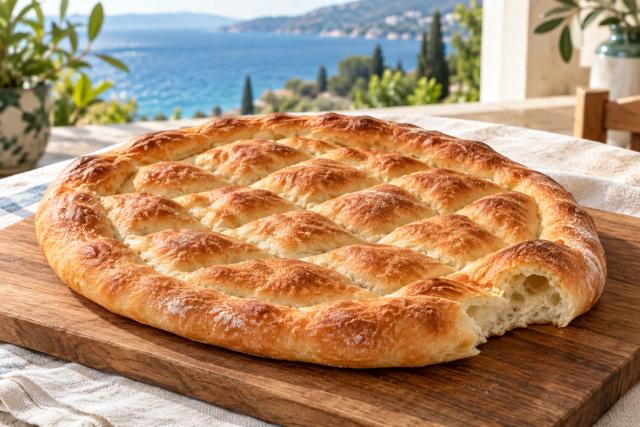
Plain wheat pide is a soft, substantial bread for serving with soup, roast lamb or döner. Choose an unfilled loaf and warm it gently so the inside stays soft while the surface refreshes.
Last updated:
Plain wheat pide bread. This ingredient is bread served alongside a dish, not a boat-shaped pide with meat, cheese or another filling.
Types & forms
Plain serving bread
A loaf or portion ready to warm, tear or slice; its thickness affects how it absorbs broth and meat juices.
Filled pide
A separate prepared dish, not the plain bread required by these recipes.
What to look for when buying
Look for a soft interior and intact crust, without mold or an unusually damp, sticky surface. Ask for plain pide when ordering from a bakery.
Check toppings and the label if avoiding sesame, egg or milk; plain wheat bread does not guarantee their absence.
Prepare & cook
Warm only the portion needed shortly before serving. Cover loosely while warming if the bread is drying out; avoid turning it into hard toast unless the recipe asks.
For döner, cut to suit the serving style. For soup or slow-cooked lamb, keep pieces large enough to hold the juices without falling apart immediately.
Store it well
Let warm bread cool before wrapping so steam does not collect inside the package. Follow the bakery or package storage instructions and use while fresh.
Freeze spare plain bread in useful portions, well wrapped. Discard moldy bread rather than cutting away only the visible spot.
Substitutions depend on the dish
Another plain wheat flatbread
Can serve the same purpose, but a thin wrap absorbs liquid differently from a thicker pide.
Filled or strongly seasoned bread
Changes the dish; it is not a neutral replacement for plain pide.
Nutrition
No verified nutrition data is available for this ingredient.
At the Turkish table
The linked recipes use pide as an accompaniment or a base for serving meat. This use is separate from Türkiye’s many filled pide dishes.
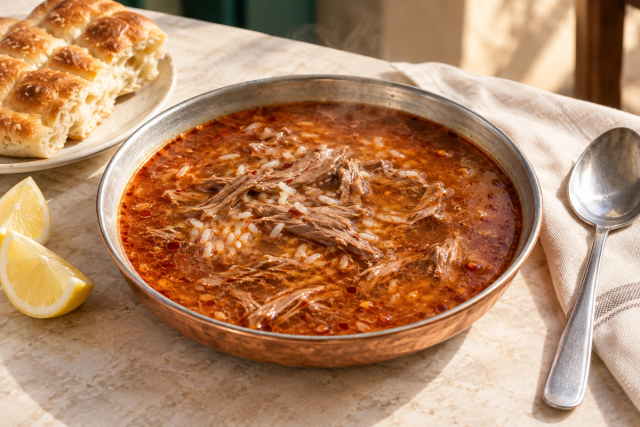
Shredded lamb and rice in a hot garlic-and-red-pepper broth inspired by Gaziantep’s cuisine. The home method uses a regular saucepan and avoids the dramatic flame of specialist beyran service. Longer professional cooking and individual copper-pan assembly give a different result.
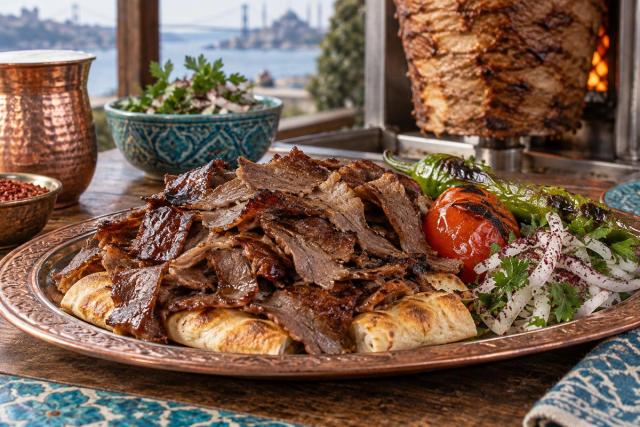
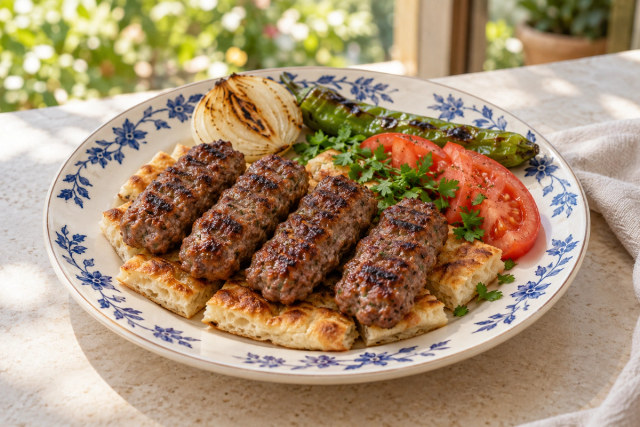
Thin layers of seasoned beef and mince, chilled into a roll, sliced and quickly browned in a skillet. This is a skillet adaptation of layered döner. A restaurant spit uses a different cooking process. Slice only when the roll is firm but safely cuttable; never force a knife through a solid frozen block.
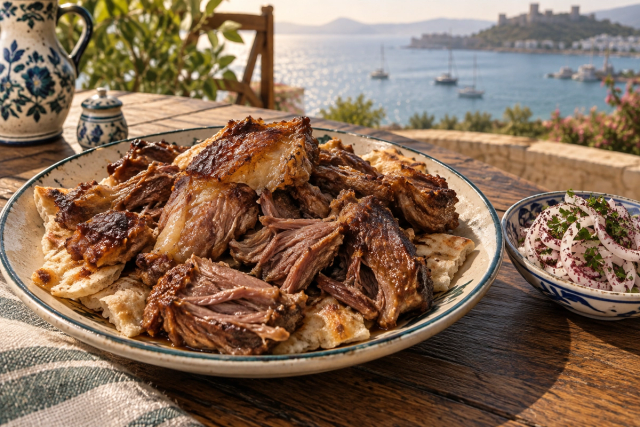
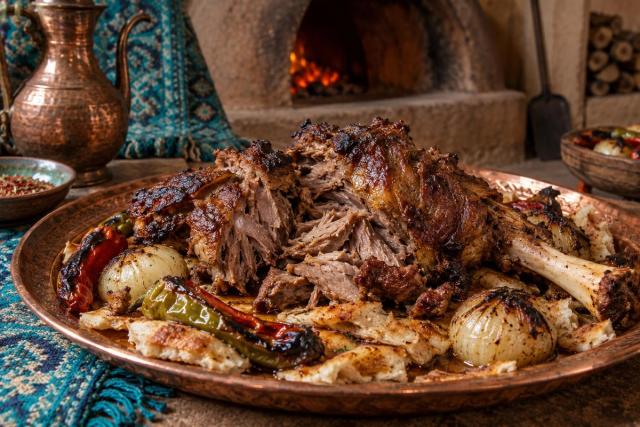
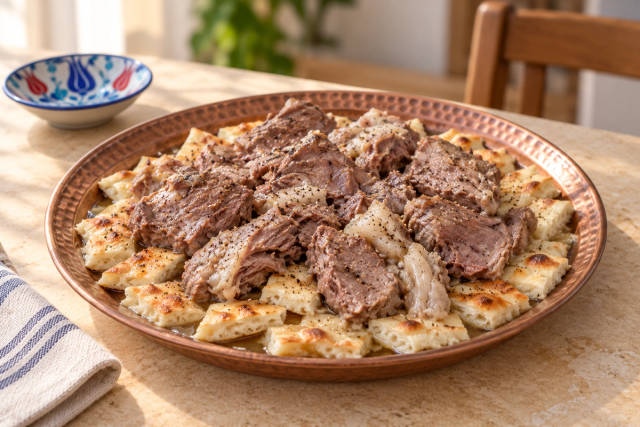
Simply seasoned lamb slowly roasted until tender, served on pide with its cooking juices. A covered home oven followed by uncovered browning adapts the long bakery-oven preparation.
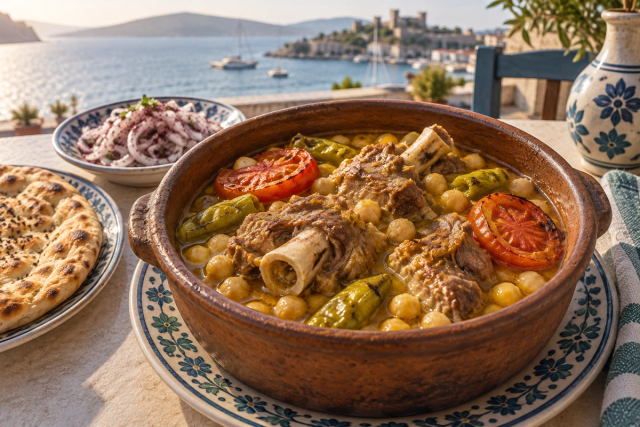
Lamb and chickpeas in turmeric broth, finished with tomato and green pepper in an earthenware casserole. This home adaptation follows the Kars lamb-and-chickpea preparation. It is distinct from other regional dishes also called piti. Use oven-safe cookware and protect the table from the hot casserole.
Lamb shoulder roasted slowly over onions until it pulls apart, served with pide and pan juices. A low home oven is a practical adaptation; it does not duplicate a traditional tandır oven. Keep the pan covered during the tenderizing stage.