Boneless lamb shoulder can be cut into small, even cubes for Yuvalama. Trim tough tissue, keep the meat cold and simmer until tender before the yogurt finishing stage.
Last updated:
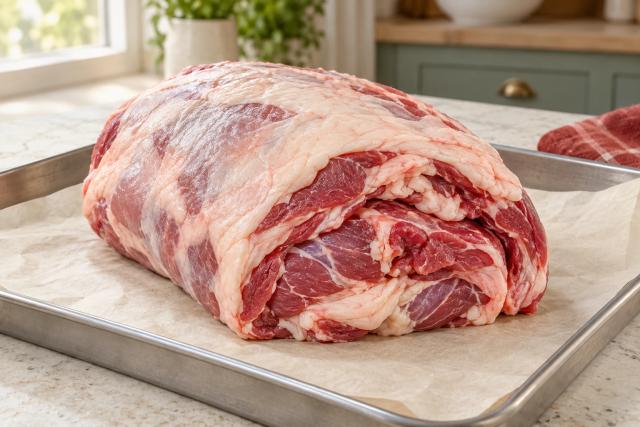
Raw boneless lamb shoulder. The USDA reference is New Zealand rolled, netted shoulder with edible lean and fat; the netting is not food and the figures are not cooked-meat values.
Types & forms
Boneless shoulder piece
Can be unrolled and cut into the small cubes a soup or stew requires.
Rolled and netted shoulder
A purchase form intended to hold a roast together; remove netting before cutting for this recipe.
What to look for when buying
Ask for boneless shoulder and confirm that no bone remains. Plain meat is required, not a seasoned or stuffed rolled roast.
Check the amount of visible fat and ask for even cubes if you want the butcher to prepare the meat.
Prepare & cook
Remove packaging and netting, then trim tough surface tissue. Cut evenly without confusing the shoulder cubes with the separate ground meat used for tiny meatballs.
Simmer the shoulder as the recipe directs until tender before completing the yogurt-based dish.
Keep raw meat and its utensils away from ready-to-eat food. Check whole cuts reach at least 145°F, followed by a 3-minute rest; these slow-cooked dishes need further cooking for tenderness, not merely the minimum temperature.
Store it well
Keep raw meat in a leak-proof container at 40°F or below, separate from ready-to-eat food. Use whole cuts within 3–5 days; use cubed stew meat within 1–2 days, or freeze. Follow an earlier package date.
Thaw in the refrigerator. Refrigerate cooked meat within 2 hours, or 1 hour above 90°F; use refrigerated leftovers within 3–4 days and reheat to 165°F.
Substitutions depend on the dish
Bone-in shoulder
Requires bone removal and an adjusted purchase amount; the same weighed amount gives less edible meat.
Ground lamb
Belongs to a different part of Yuvalama’s preparation and does not replace its shoulder cubes.
USDA New Zealand reference per 100 g of raw netted rolled boneless shoulder lean and fat. Netting, packaging and cooked meat are excluded. Trimming and animal differences affect composition. Values are rounded for readability; “not reported” does not mean zero. A “<” value is below the source’s measurement limit.
Nutrition values come from the reference source named above. They are published reference values, not our own measurements. Actual products and cooking methods may change the values.
At the Turkish table
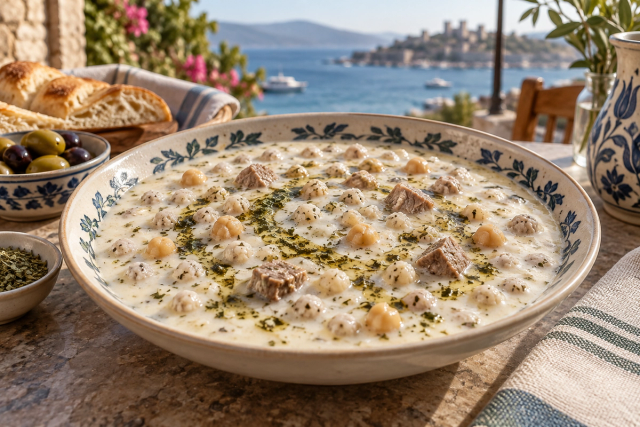
Yuvalama combines tender shoulder pieces with tiny meatballs in a yogurt-based soup. Keeping those two meat preparations separate preserves the contrast of textures in the recipe.
Tiny rice-and-lamb balls, chickpeas and tender lamb in a yogurt broth finished with mint butter. Gaziantep yuvalama is a substantial celebratory dish, often described locally as a meal rather than an everyday soup. This home adaptation uses rice flour for the small balls; traditional preparations may grind soaked rice with meat.