


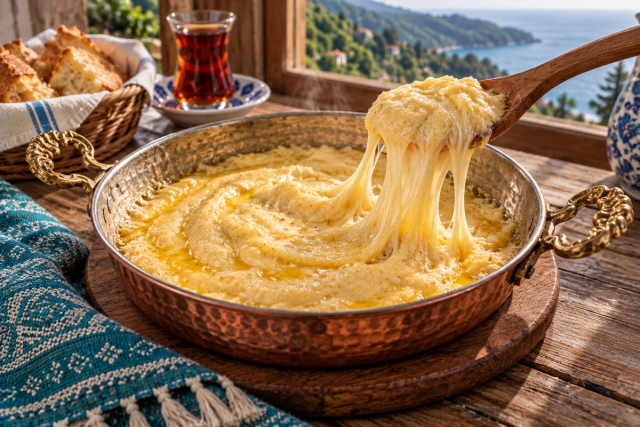
Melted Cheese and Cornmeal
A warm cornmeal, butter and melting-cheese dish inspired by Trabzon cooking.
The Turkish pantry
Read the actual cheese name, milk source and storage label.
Last updated:
Kolot is a pale semihard cow-milk cheese described by Türkiye’s Ministry of Agriculture for the Black Sea region. Processed cheese mixtures are a separate category.
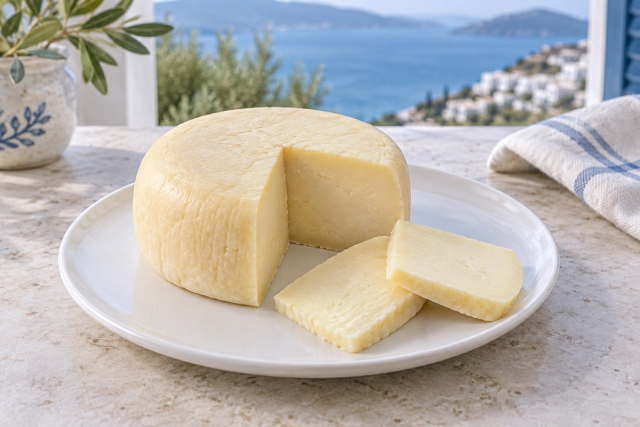
The Ministry describes a smooth, semihard cheese with a pale yellow color.
Read the full ingredient list. Added whey cheese, cream and emulsifying salts identify a different formulation.
The result is an adaptation.
Kolot / Golot cheese: the Ministry’s cited 2005 study [1]
| Nutrient | Amount |
|---|---|
| Energy | Not reported |
| Protein | 35.68 g |
| Total fat | 7.41 g |
| Saturated fat | Not reported |
| Carbohydrate | Not reported |
| Dietary fiber | Not reported |
| Total sugars | Not reported |
| Sodium | Not reported |
| Cholesterol | Not reported |
| Calcium | Not reported |
| Iron | Not reported |
| Potassium | Not reported |
| Vitamin D | Not reported |
| Water | 51.37 g |
| Salt | 3,070 mg |
This historical study is the composition reference shown by the Ministry, not an analysis of every modern Kolot product. Its reported fat value differs from many full-fat retail cheeses. Energy, carbohydrate and unlisted nutrients were not supplied; they have not been calculated. Salt is reported as salt, not sodium. Values are rounded for readability; “not reported” does not mean zero. A “<” value is below the source’s measurement limit.
Nutrition values come from the reference source named above. They are published reference values, not our own measurements. Actual products and cooking methods may change the values.
The Ministry places Kolot in the eastern and central Black Sea context, including Trabzon, Rize and Artvin. Our Trabzon-style kuymak uses it for melting.
A warm cornmeal, butter and melting-cheese dish inspired by Trabzon cooking.